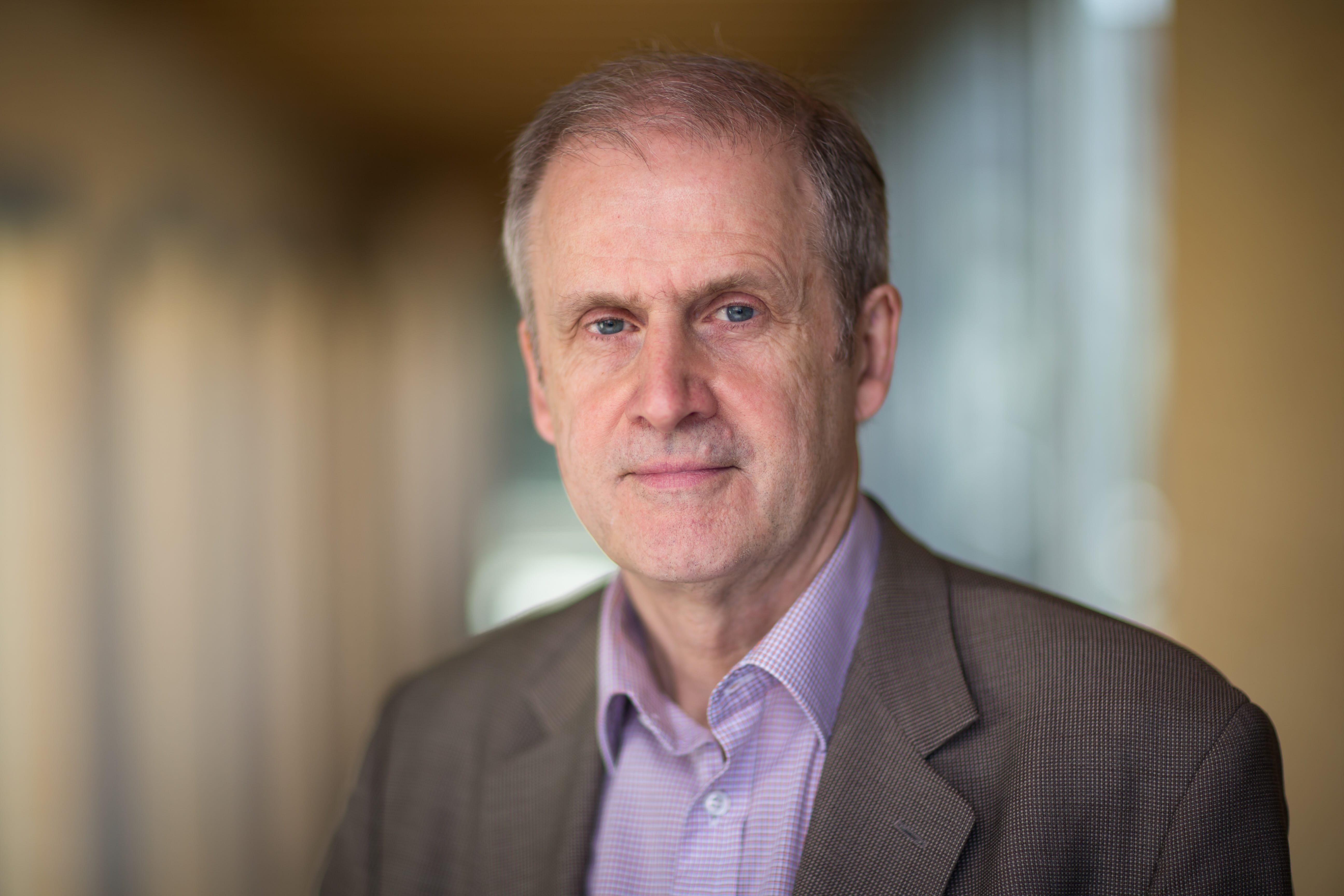
Helen Feilden serves as a Researcher at the Strathclyde Institute Of Pharmacy And Biomedical Sciences, University of Strathclyde, contributing to pharmaceutical research with expertise in engineering applications for medicine development. Her work spans multiple interdisciplinary domains at the intersection of chemical engineering and pharmaceutical sciences. Her research focuses on Product Quality Engineering, Particle Size Chemistry, and Crystallization processes within pharmaceutical development. She specializes in applying digital design methodologies to optimize medicine manufacturing, with significant contributions to Robust Design Engineering, Predictive Capability systems, and Data Source integration for pharmaceutical applications. Her work addresses critical challenges in controlling particle attributes and ensuring consistent product quality through advanced process design. Analysis of her publications reveals a strong trend toward integrating digital engineering principles with pharmaceutical manufacturing processes. Her research demonstrates how computational approaches can enhance control over crystallization and particle formation, leading to more reliable medicine production with improved sustainability profiles. This work has significant implications for accelerating drug development while maintaining rigorous quality standards. Feilden has contributed to major collaborative research initiatives including the EPSRC-funded SMSdrug.net project (2011-2015), which aligned synthesis, medicinal chemistry, and structural genomics to accelerate UK drug discovery. Her collaborative network spans multiple academic and research institutions, reflecting the interdisciplinary nature of modern pharmaceutical development.
Alex Edwin Bunker is an Adjunct Professor in the Department of Chemistry at the Faculty of Science, University of Helsinki. He also holds the Title of Docent in the Department of Chemistry and serves as a University Researcher in the Division of Pharmaceutical Biosciences Drug Research Program. Bunker is the Principal Investigator of the Pharmaceutical Biophysics group and supervises doctoral students in the Doctoral Programme in Chemistry and Molecular Sciences, the Doctoral Programme in Materials Research and Nanosciences, and the Doctoral Programme in Drug Research. Dr. Bunker shares leadership of the Pharmaceutical Biophysics group with Dr. Tapani Viitala. Their research combines computational methodologies with experimental approaches to develop a mechanistic understanding of interactions between lipid membranes, proteins, and polymers. They study the behavior of these elements in the bloodstream and work on designing safe and efficient drug delivery systems that interact effectively with biological membranes and cells. This collaborative approach leverages the experimental expertise of Dr. Viitala and the computational expertise of Dr. Bunker, creating synergistic insights into bionanovector systems. His research spans multiple disciplines including Pharmacy, Physical Sciences, Biological Sciences, Chemical Sciences, and Nano-technology. Key research areas include molecular dynamics simulations, drug delivery systems, polymer science, and computational biophysics. Dr. Bunker's work often focuses on applying advanced computational techniques to solve pharmaceutical challenges, particularly in understanding how different materials interact at the molecular level for drug delivery applications. Recent publications demonstrate a trend toward integrating machine learning with traditional molecular dynamics simulations to enhance predictive capabilities in drug delivery system design. Dr. Bunker has received the Innoopeli Prize in 2022, recognizing significant contributions to innovation in pharmaceutical research. This prestigious award was shared with a team of researchers for collaborative work that likely relates to his expertise in drug delivery and pharmaceutical biophysics. In terms of academic service, Dr. Bunker has been actively involved in peer review of manuscripts, with 27 instances of manuscript review documented. He has organized and participated in numerous conferences, workshops, and seminars (20 instances), delivered public talks (14 instances), and made academic visits to other institutions (8 instances). His supervisory roles include serving on doctoral thesis committees, acting as an opponent for doctoral dissertations, pre-examining theses, and directly supervising doctoral and Master's students. Dr. Bunker leads the Pharmaceutical Biophysics group, which operates at the intersection of computational and experimental pharmaceutical research. The group's work is highly collaborative, involving partnerships across multiple institutions and disciplines. Their research has practical applications in developing more effective drug delivery systems, with potential impact on pharmaceutical development and therapeutic efficacy.
Kristian Hoelscher serves as Research Director at the Peace Research Institute Oslo (PRIO), where he leads interdisciplinary research at the intersection of cities, markets, politics, conflict, and development in the Global South. His work spans Sub-Saharan Africa, South Asia, and Latin America, employing both quantitative and qualitative methodologies to examine urban political transformations and peacebuilding processes. Hoelscher earned his PhD in Political Science from the University of Oslo, complemented by an MSc in Population and Development Studies from the London School of Economics and Political Science, and dual undergraduate degrees (BA in Business and BSc Honors in Psychology) from the University of Queensland, Australia. His multilingual capabilities include fluency in English and Norwegian, with working knowledge of Portuguese and Spanish. His research agenda centers on understanding how urbanization shapes political change in the Global South, with particular focus on African cities. A distinctive thread throughout his work examines small and medium enterprises (SMEs) as critical actors in conflict-affected urban environments, exploring how businesses navigate insecurity while contributing to community resilience and peacebuilding. His approach integrates political science, urban studies, development economics, and peace and conflict studies to address complex urban challenges in rapidly transforming cities across the Global South. Analysis of Hoelscher's recent publications reveals three interconnected research streams: 1) Urban political transformations in Africa, examining how demographic shifts reshape state-society relations; 2) SME resilience in conflict zones, documenting business strategies for navigating polycrises in cities like Kampala and Beirut; and 3) Digital peacebuilding, critically assessing technology's role in conflict resolution. His work consistently emphasizes place-based approaches that account for local context while identifying broader patterns across regions. Hoelscher has secured significant research funding including: Young Researcher Talent Funding from the Research Council of Norway for the Political Change in African Cities (PACE) project Funding for The Crime-Reducing Effect of Education project (CREED) He leads multiple collaborative initiatives including Peace Positive Private Sector Development in Africa (P3A), Working Through Violence; SMEs and the SDGs in Fragile Urban Spaces, and Critical Perspectives on Digital Peacebuilding. These projects involve partnerships with researchers across Africa, Latin America, and Europe, reflecting his commitment to globally engaged scholarship that bridges academic research with practical peacebuilding applications.
Tracey Connolly is a Lecturer in the School of Education at University College Cork, serving as the Professional Master in Education (PME) Co-Ordinator of School Placement. She teaches History and Structure of Irish Education and team-teaches School Placement Support on the PME programme while supervising Ph.D. and M.Ed. students. As Lead Tutor for PME School Placement, she coordinates the Educational Disadvantage and Multiculturalism module for the Masters in Guidance and Counselling programme, demonstrating her multifaceted role in teacher education and research leadership. Her academic credentials include: Ph.D. (NUI) in History from University College Cork (1999) M.Ed. in Education from University College Cork (2005) M.A. in History from University College Cork (1995) B.A. in History and English from University College Cork (1992) Postgraduate Diploma in Teaching and Learning in Higher Education (2006) Postgraduate Certificate in Teaching and Learning in Higher Education (2005) Diploma in Community & Youth Work (2004) Tracey's research centers on curriculum development, teacher education, and educational disadvantage, with significant contributions to inclusive education models. Her work with schools from 2001-2010 established innovative approaches to educational inclusion through curriculum development, cited by the Higher Education Authority in 2006 as an exemplary model. She emphasizes the OECD's 'Teachers Matter' framework, focusing on reflective practice and research capabilities in initial teacher education. Her scholarship extends to qualitative research methods, Multiple Intelligences theory, educational management, and Irish demographic history. Analysis of her recent publications reveals a strategic progression from historical studies to contemporary educational challenges, with increasing focus on cross-border educational issues between Northern Ireland and the Republic of Ireland. Her work consistently bridges theory and practice, particularly in assessment methodologies and school-university partnerships, demonstrating both academic rigor and practical application in real-world educational settings. Her recognition includes: President's Award for Research on Innovative Forms of Teaching from University College Cork (2005) Tracey has successfully supervised numerous graduate students across diverse research areas including mobile computing for eLearning, historical analysis of Irish secondary schools, and formative assessment practices. She secured €5,682.00 in research funding for the SCOTENS-funded 'Assessment in Teacher Education North and South' project, demonstrating her ability to generate external research support. Her collaborative work with Geraldine Magennis and Alicia Curtin has produced significant contributions to the field through publications, conference presentations, and multimedia educational resources. Professionally active beyond UCC, she serves as an external examiner for an initial teacher education college in Ireland, a Board of Management Member for a Cork City primary school, and an assessor for history teaching with the Teaching Council of Ireland, contributing substantially to educational standards and policy development at national levels.
Kirstin Petersen is an Associate Professor in the Department of Information Science at Cornell University's Bowers College of Computing and Information Science. She leads the Collective Embodied Intelligence Lab, focusing on collective robotic systems that exhibit emergent intelligent behaviors through local interactions. Her research interests center on collective robotic construction, swarm robotics, soft robotics, and human-robot interaction. Petersen's work explores how groups of simple robots can collaborate to build complex structures, with applications ranging from construction to agriculture. She investigates the principles of embodied intelligence, where the physical form and environment of robots contribute to their capabilities, reducing the need for complex centralized control. Her publication trends show a consistent focus on distributed robotic systems, with recent work expanding into agricultural robotics, human-drone interaction, and novel actuation methods using phase-changing materials. Her research bridges theoretical principles of collective behavior with practical implementations in soft and modular robotic systems. Petersen has advised numerous graduate students who have become prominent researchers in robotics, including Steven Ceron, Nialah Wilson-Small, and Jiahe Chen. Her lab has secured funding for projects related to swarm construction, agricultural monitoring, and soft robotic systems. She leads the Collective Embodied Intelligence Lab at Cornell, which brings together researchers from computer science, mechanical engineering, and biology to develop novel approaches to collective robotic systems. The lab emphasizes both theoretical foundations and practical implementations, with projects ranging from tiny modular robots to agricultural drones.
Carlos M. P. Sousa is Professor of Marketing and Business Strategy at Molde University College, Faculty of Business Administration and Social Sciences. He previously served as a Full Professor of Marketing at Durham University (UK) and Lecturer of Marketing at University College Dublin (Ireland). Professor Sousa has also been a visiting professor at universities across Australia, Brazil, Chile, Ireland, Italy, Portugal, Spain, and the UK. Professor Sousa earned his PhD from University College Dublin (Ireland). His academic journey reflects a deep commitment to international business education and research across multiple continents. Professor Sousa's research focuses on four interconnected domains that explore the complexities of global business operations. His work in international marketing examines how firms adapt strategies across diverse cultural contexts, while his international business strategy research investigates market entry, expansion, and exit decisions. His innovation management studies explore the relationship between R&D investment, technology transfer, and business performance, particularly in emerging markets. Additionally, his services marketing research examines employee creativity, customer orientation, and value creation in service contexts. These research streams demonstrate a cohesive approach to understanding how organizations navigate global markets while maintaining competitive advantage through strategic adaptation and innovation. Professor Sousa has published over 100 articles in leading journals including Research Policy, Journal of Product Innovation Management, R&D Management, Journal of International Marketing, Journal of World Business, Global Strategy Journal, British Journal of Management, and many others. His editorial leadership includes serving as Associate Editor for International Marketing Review, Journal of Business Research, and Journal of International Marketing, as well as sitting on the Editorial Review Board of Journal of International Business Studies and Industrial Marketing Management. This extensive publication record demonstrates consistent contributions to understanding international business strategy, market adaptation, and innovation across diverse economic contexts. Professor Sousa's scholarly excellence has been recognized through several prestigious awards: 2006 ADMES/MARKTEST scientific excellence award for the best paper in 2006 2012 Highly Commended Award Winner at the Literati Network Awards for Excellence for a paper published in European Journal of Marketing 2021 Hans B. Thorelli Award by the American Marketing Association for his influential article "Cultural Distance and Psychic Distance: Two Peas in a Pod?" published in Journal of International Marketing 2025 Molde University's Research Award recognizing his outstanding contributions to excellent and innovative research As an academic leader, Professor Sousa has supervised numerous doctoral and master's students, though specific names are not listed in the available information. His research has been supported by various grants that have enabled extensive international collaboration across multiple continents. His work bridges theoretical advancement with practical business applications, particularly in understanding how firms navigate cultural differences, adapt marketing strategies, and manage innovation in global contexts. Professor Sousa's research methodology often combines quantitative analysis with meta-analytic approaches to identify broader patterns in international business phenomena. Professor Sousa is affiliated with the Marketing, Innovation, International Business & Strategy (MIIBS) research group at Molde University College, which serves as a hub for collaborative research on global business strategy and innovation. This group brings together scholars examining the intersection of marketing, international business, and innovation management, with a particular focus on how organizations adapt to diverse market conditions and leverage strategic capabilities for competitive advantage in global markets.
Jon Stokes is an Associate Scholar at the Saïd Business School, University of Oxford, with expertise in leadership psychology and executive coaching. He previously served as a Senior Fellow in Management Practice, Visiting Professor at Strathclyde Graduate Business School, and Associate Fellow of the Institute for Government. Stokes holds an MA in Experimental Psychology from Oxford University and has over 20 years of experience in the NHS, including roles as head of the Adult Psychotherapy Department at the Tavistock Clinic and Founding Director of Tavistock Consulting. He currently leads Stokes & Jolly, a leadership advisory firm. His research focuses on leadership psychology, executive coaching, and organizational dynamics, with notable works exploring leadership capabilities for the Fourth Industrial Revolution, team psychodynamics, and stress management in institutions. Stokes teaches on programs such as the Oxford Strategic Leadership Programme, Executive MBA, and Women’s Leadership Development Programme, emphasizing practical leadership development. Stokes’ recent publications include studies on leadership in radical uncertainty and the transition from career-centric to life-focused approaches. His work bridges psychological theory with organizational practice, addressing challenges like institutional chaos and ethical governance. He has contributed to interdisciplinary discussions on emotion, spirituality, and ethics in professional settings. Through Stokes & Jolly, he advises organizations on leadership transformation and strategic change. His career reflects a deep engagement with both academic research and real-world applications in healthcare, consulting, and business education.
Pavel Bogolyubov is a Senior Teaching Fellow at the Management School of Lancaster University, specializing in the behavioral aspects of Web 2.0, including national culture, user adoption, online aggression, and deception. His research interests also span Knowledge Management, Learning Organizations, and Innovation. He teaches courses such as MNGT110, OWT508, and OWT521. Dr. Bogolyubov serves as an Editorial Board Member for The Learning Organization and an External Examiner for Edge Hill University’s HR/Organization Studies programs. His work bridges theoretical frameworks with practical applications, particularly in cross-cultural contexts. He is affiliated with the Centre for Technological Futures and has published extensively on topics like organizational learning, innovation barriers, and technology adoption models. Research Focus: Knowledge Management, Web 2.0 Behavior, Organizational Learning Teaching Roles: Courses on Management and Organizational Technology External Contributions: Editorial Board Member, External Examiner Dr. Bogolyubov’s research often employs mixed-methods approaches, as seen in studies on Big Data analytics and cross-cultural validation of technology adoption theories. His recent work explores holistic scholarship and the legacy of influential management theorists like Mark Easterby-Smith.
Marcel L.A.M. Bogers is a Full Professor of Open & Collaborative Innovation at Eindhoven University of Technology (TU/e), leading the Innovation, Technology Entrepreneurship and Marketing (ITEM) group within the Department of Industrial Engineering & Innovation Sciences. He also holds positions as Affiliated Professor at the University of Copenhagen and Garwood Research Fellow at UC Berkeley. His research focuses on open innovation ecosystems, business model innovation, and addressing societal challenges through collaborative approaches. Bogers has authored over 178 publications and contributed to projects like REWIRE and Fieldlabs@Scale, aiming to foster innovation across sectors. He has received multiple awards, including the Highly Cited Researcher (2019, 2020) and Best Teacher Award (2012). Education: MSc (distinction) from TU/e, PhD from EPFL (Switzerland), postdoc at University of Southern Denmark. Visiting roles at Chalmers, UC Berkeley, and others. Active in editorial roles for journals like Research Policy and conferences. Research Interests: Open innovation dynamics, innovation ecosystems, sustainability, and digital transformation. His work spans contexts such as healthcare, food systems, and emerging markets. Recent articles explore AI-driven innovation, public-sector open innovation, and ecosystem governance frameworks. Grants & Projects: Manages initiatives like the EU-funded COOPERATE project and Fieldlabs@Scale, focusing on circular agriculture and innovation ecosystems. Collaborates globally, emphasizing cross-sector partnerships for societal impact. Supervised 22 student works, advancing innovation management practices. Awards: Highlights include recognition for research impact, teaching excellence, and contributions to open science. His work aligns with UN Sustainable Development Goals, particularly in sustainability and health.
Professor Indrajit Roy is a faculty member in the Department of Politics and International Relations at the University of York. He holds a doctorate in Development Studies from the University of Oxford and has held prestigious fellowships including the ESRC Future Research Leader Fellowship at the Oxford Department of International Development and a Junior Research Fellowship at Wolfson College, Oxford. His research focuses on global development futures, citizenship, and state-society relations in the Global South, particularly in India, Brazil, and South Africa. He has pioneered critical approaches to development studies, emphasizing decolonization and diversification of academic frameworks. Key research initiatives include the ESRC/ EqUIP-funded 'Citizenship futures' project examining socially excluded communities in Mumbai, London, and Paris, and the AHRC-funded 'Reimagining Citizenship' project analyzing India's Citizenship Amendment Act. His work also explores the role of 'Rising Powers' in global development, including Chinese investments in Europe and India's multilateral partnerships in Eurasia and Africa. Teaching contributions include innovating curricula to decolonize the departmental framework at York. He has been recognized with a Teaching Excellence Award (2016) and is a Fellow of the Higher Education Academy. External engagements include media commentary on BBC Radio 3 Free Thinking and contributions to The Conversation and Open Democracy . Grants & Projects: ESRC Impact Acceleration Account grant on 'Portable Rights' (2017-19) Pushing the Boundaries grant on Chinese investments in Europe (2018) India-UK Development Partnership Forum grant on multilateral corridors (ongoing) Lab/Team Collaborations: Leads interdisciplinary teams including academics, activists, filmmakers, and poets in projects like 'Reimagining Citizenship'. His publications span monographs like Politics of the Poor: Negotiating Democracy in Contemporary India (CUP, 2018) and over 20 peer-reviewed articles on social protection, class politics, and citizenship. Current research interrogates the implications of Chinese investments in Europe and India's role in shaping Eurasian development corridors.
Christina Samuelsson is a Professor of Speech and Language Pathology at Karolinska Institutet, part of the Department of Clinical Science, Intervention and Technology. She holds a dual role combining academic and clinical practice. Her education includes a Speech Language Pathologist degree (1986), Master's (1999), PhD (2004), and senior lecturer title (2012). Her research focuses on communication challenges in populations with disabilities, including dementia patients, individuals with aphasia, children with language disorders, and hearing-impaired children. Key projects include the EU-funded Platform Uptake (evaluating digital platforms in elderly care), the FORTE-funded program on dementia communication, and collaborative work on cochlear implant assessments. Notable awards include the "Inspirer of the Year 2019" at Linköping University. She supervises PhD students and postdoctoral researchers, contributing to both clinical and academic advancements. Current projects involve digital welfare technology in dementia care, early language development studies, and cross-cultural assessment tools in Africa. Her work emphasizes participatory methodologies, advocating for inclusive practices that prioritize patient autonomy and accessibility. Collaborations span institutions like Stockholm University, Linköping University, and the Swedish Dementia Center.
Kendall Jarrett is a Senior Lecturer in the Department of Childhood, Education & Professional Development at the University of Chester. With a multidisciplinary background spanning Australia, Japan, New Zealand, and the UK, his work integrates sport pedagogy and teacher education to explore global educational leadership practices. He focuses on how leadership opportunities are accessed in higher education, collaborating with institutions in France, the USA, Spain, and beyond. He holds a Senior Fellowship of the Higher Education Academy and contributes to academic practice through roles as an external examiner for tertiary programs and peer reviewer for education-focused journals. His consultancy includes involvement with the Chevening Secretariat and Turing schemes in the UK. Research interests center on leadership dynamics in educational settings, comparing practices across sectors and climates. Notable work examines game-based approaches in physical education, teacher training, and the intersection of global-local leadership paradigms. He has published extensively on topics ranging from curriculum design innovations to leadership development strategies in complex systems. Teaching responsibilities include leading modules like CD7603 (Power, Policy & Politics in Educational Leadership) and CD7208 (Dissertation). He supervises EdD and PhD students in educational leadership and pedagogical innovation. Key achievements include advancing teaching and learning capabilities through collaborative frameworks and advocating for inclusive digital education to enhance social mobility.
M.S. Krishnan is the Accenture Professor of Computer Information Systems and Professor of Technology & Operations at the University of Michigan's Ross Business School. He currently serves as faculty director for the Business+Tech initiative and CK Prahalad and India Initiatives, following his tenure as associate dean for global initiatives (2014-2021). His educational background includes: PhD in Information Systems, Carnegie Mellon University (1997) MS, Carnegie Mellon University (1993) MS in Mathematics and Computer Applications, University of Delhi (1987) BS in Mathematics and Computer Applications, University of Delhi (1984) Dr. Krishnan's research centers on business model innovation, technology-enabled personalization, and ecosystem innovation, with significant contributions to corporate IT strategy and the business value of technology investments. His work bridges software quality, productivity, and customer satisfaction in global business contexts, emphasizing co-creation and networked value generation as demonstrated in his award-winning book with C.K. Prahalad. His publication trends reveal deep engagement with digital transformation across sectors, examining CEO compensation effects on IT investments, digital twin applications in construction, and IT's impact on government efficiency. Recent work increasingly integrates AI, blockchain, and human resource practices to amplify technology returns, reflecting his interdisciplinary approach spanning information systems, strategic management, and operations. Key recognitions include: ICIS Best Dissertation Prize for software product management research ASQ's 21 Voices of Quality for the 21st century (2000) Top Business Technology Thinker by Informationweek-Optimize (2004) The Economist/BusinessWeek Best Innovation Book award (2008) He actively advises doctoral students and leads major research initiatives, with extensive consulting for Ford, IBM, Tata Group, and Infosys across the US, India, and Thailand. His grant-funded work focuses on technology strategy implementation and organizational capability development. Dr. Krishnan co-founded Ross's Business+Tech initiative to integrate technology fluency across business disciplines and directs the CK Prahalad and India Initiatives to foster academic-industry collaboration with Indian enterprises.
Dr Sina Vafi is a Senior Lecturer in the Department of Engineering at Charles Darwin University's Faculty of Science and Technology. His research focuses on advancing forward error correction (FEC) codes and their applications in wireless transmission systems, particularly for high-speed broadband and video compression. He leads the Wireless Research Group, developing codes optimized for transmission delay and error correction in noisy environments. Key research projects include the 'Maximum Power Extraction from Hybrid Solar-Wind System by Using Fuzzy Logic Approach' (2021–present). His work addresses sustainable energy systems alongside wireless communication innovations. Research interests span error engineering, FEC code design, video bitstream protection, and low-density parity check codes. His recent publications explore braided block codes, convolutional interleavers, and adaptive error protection schemes for HEVC videos. Dr Vafi has supervised 5 Higher Degree by Research (HDR) projects, including work by student investigator V.S. Borra on hybrid renewable energy systems. He is actively involved in mentoring postgraduate researchers and contributes to CDU’s wireless communication initiatives.
Daniel Albert is an Assistant Professor of Management at Drexel University's LeBow College of Business. He serves on the Drexel University Standing Committee on Artificial Intelligence and is a Senior Fellow at The Wharton School’s Mack Institute of Technology Management. Previously, he held a tenure-track position at the University of Wisconsin-Milwaukee. His academic journey includes a Ph.D. from the University of St. Gallen, Switzerland, and research scholar roles at the Wharton School, University of Pennsylvania. Dr. Albert's research explores strategic management, organizational design, and innovation through computational modeling and empirical analysis. His work integrates psychology and neuroscience principles to study cognition and complex decision-making, with applications in financial services and healthcare industries. Current investigations focus on generative AI in strategic contexts, organizational structure optimization, and behavioral strategy experiments using large language models. Thematic analysis of his publications reveals three dominant clusters: computational approaches to organizational design (43%), cognitive and behavioral strategy frameworks (36%), and AI applications in management/education (21%). His work exhibits increasing methodological sophistication, with recent publications leveraging large-scale data analytics and AI simulation techniques to examine strategic decision-making patterns. Notable Scientific Recognition: Sumantra Goshal Award for Research & Practice (2021) Distinguished Paper Award from Academy of Management (2022) Research Methods Paper Prize from Strategic Management Society (2024) Freddie Reisman Award for scholarly impact (2022) Innovation in Teaching Award for AI integration (2022) Dr. Albert teaches strategy and competitive advantage courses across MBA and Executive MBA programs, incorporating generative AI tools for experiential learning. He provides editorial leadership for the Journal of Organization Design and has served on review boards for Long Range Planning and Organization Science . His research collaborations involve interdisciplinary teams from Wharton's Mack Institute and Drexel's AI initiative, focusing on technology-driven organizational innovation.