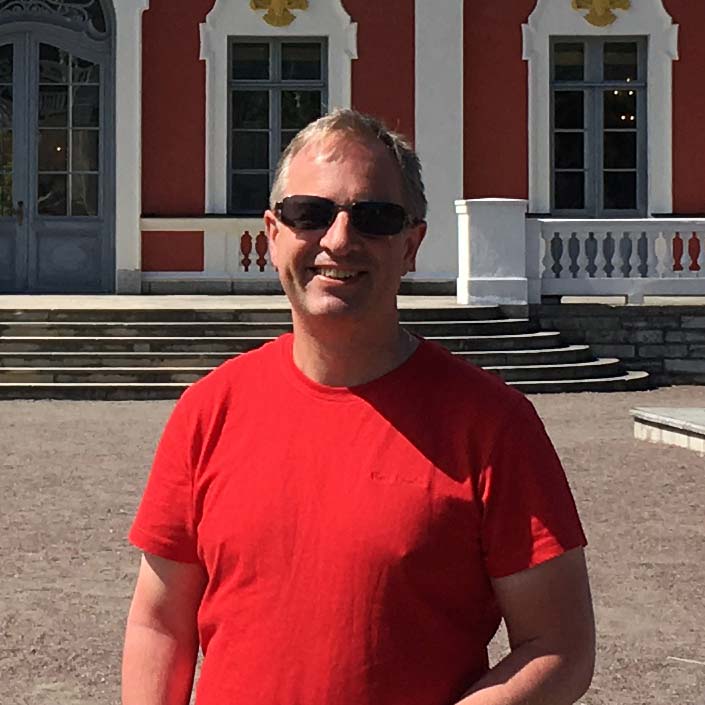
Brandon J. DeHart is an Adjunct Assistant Professor at the University of Waterloo. He is affiliated with the university's academic faculty and can be contacted at brandon.dehart@uwaterloo.ca or at location E5 3108. His research focuses on robotics, particularly humanoid robots, control systems, and roboethics. He has contributed to advancements in dynamic balance, gait metrics, and human-robot interaction. His work spans topics like legged mechanism design, sensor networks in art installations, and automated content generation systems. His research interests include the development of humanoid robots capable of child-friendly interactions, robust control strategies for uncertain environments, and ethical considerations in robotic design. He has explored technical challenges like foot placement estimators for balance recovery and momentum-based gait generation in bipedal systems. Notable contributions include methodologies for tracking visitor engagement in large art installations and frameworks for interconnecting cellular automata across hardware and software. His publications reflect a blend of robotics engineering, AI applications, and interdisciplinary approaches to technology design.
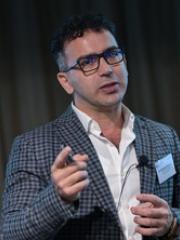
Dr. Gulhan Bizel serves as Assistant Professor, Director & Chair of the Data Science Institute at Saint Peter's University, overseeing six MS/PhD programs. She holds a Ph.D. in Management from Maltepe University, an MBA from Yeditepe University, and a B.S. in Chemistry from Bogazici University. With extensive industry experience at Whirlpool, Indesit Company, and Kenwood, she brings practical insights to her academic work. Her research focuses on data science applications in marketing analytics, healthcare, social media trends, and business intelligence. She has published extensively on topics including COVID-19 impacts, social determinants of health, and digital marketing strategies. Dr. Bizel teaches courses spanning marketing principles, business operations, data analytics, and digital marketing at both undergraduate and graduate levels. Her scholarly contributions demonstrate strong interdisciplinary approaches combining data science with business applications. Awards & Certifications: NSF I-Corps Hub: Northeast Region NJIT Propelus Program Upsilon Pi Epsilon Society Membership IBM Skills Academy Instructor Badges (IoT, AI, Data Science, Quantum Computing) She actively serves on university committees including Faculty Senate and Enrollment Committee, and volunteers for SCORE Small Business Organization.
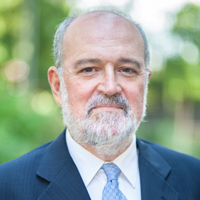
Marc V. Rugani is Assistant Professor of Theology and Director of the Center for Ethics at Saint Anselm College, with degrees from Georgetown University, University of Notre Dame, and Catholic University of America. His research examines medical ethics, social ethics, and Catholic social teaching through Thomistic frameworks. Publications explore human development ethics, protest rights in liberation theology, and responses to posthumanism. Recent works include analyses of virtue ethics in development (2021) and the capability approach in Catholic social doctrine (2023-2024). He teaches Conversatio sequences, Medical Ethics, Christian Social Ethics, and Biblical Theology.
Andrea Ordanini is a Full Professor in the Department of Marketing at Bocconi University, holding the BNP Paribas permanent Chair in Marketing & Service Analytics since 2017. He previously served as Chair of the Department of Marketing from 2013 to 2019. His research focuses on services marketing, cultural goods consumption (e.g., music), and business-to-business marketing, combining quantitative field studies with qualitative conceptual approaches. He teaches undergraduate, graduate, and executive courses such as Marketing Theory, Marketing Science, and Two-Sided Markets in Entertainment. His research explores how digital technologies impact service innovation and consumer behavior, with notable contributions to understanding authenticity in marketing, crowdfunding dynamics, and the role of in-store technology. He has collaborated with institutions like the London School of Economics and the University of California, Irvine. Key themes in his publications include the strategic implications of digital platforms, service recovery mechanisms, and the intersection of creativity with market success. His work often bridges theoretical frameworks with empirical analysis, offering insights into modern marketing challenges. Despite his extensive publications, no specific awards are highlighted in the provided materials.
CEULEMANS Kim is an Associate Professor at Toulouse Business School's Department of Management Control, Accounting and Auditing. His work focuses on sustainability in higher education, transformative learning through arts and pedagogy, and organizational change management. He actively contributes to global initiatives like the PRME network, emphasizing collaboration and knowledge exchange to address sustainability challenges. His research explores the intersection of management control systems with sustainability practices, curriculum design for ethical competence, and bridging theoretical research with practical implementation. Notable projects include the Guesthouse Project, leveraging art to foster sustainability mindsets, and studies on paradoxes in self-management and normative control. Kim's publications span over two decades, addressing topics such as sustainability reporting in higher education, competency frameworks for ESD, and pedagogical innovations using art. He has co-authored seminal works on curriculum assessment, organizational behavior in sustainability contexts, and the role of voluntary networks like PRME in advancing responsible management education.
Toni Brackin is a Professor in the School of Business at the University of Southern Queensland. Her research examines taxation literacy, financial capability, and educational approaches in accounting and business contexts, with particular focus on small businesses and university students. Research investigates: Tax knowledge assessment frameworks Overconfidence in financial literacy Superannuation policy understanding Authentic assessment methods Publications establish measurement approaches for tax literacy and reveal discrepancies between perceived and actual financial knowledge across different populations.
Dr. Charles Ranscombe is an Associate Professor at Swinburne University of Technology's School of Design and Architecture. He leads the Human Centred Product Development (HCPD) program within the Centre for Design Innovation (CDI), focusing on prototyping technologies, user-centred design, and bridging design with engineering. His research emphasizes emerging tools like AR/VR, generative AI, and mixed reality, with applications in healthcare spin-offs (e.g., H3d) and sustainable product development. Education: MEng and PhD from the University of Bath, UK. Specializes in product design and engineering education, emphasizing interdisciplinary collaboration and innovation. Research Interests: Prototyping technologies, generative AI in design, digital healthcare, and sustainable design. Key projects include developing a 3D-printed homeware range with Country Road Group and a Lower Body Negative Pressure Device for Baker Heart and Diabetes Institute. Grants: Secured $786,264 in external funding, including projects on AI design education, healthcare technologies, and architectural manufacturing. Over 11 grants since 2016, spanning industries like automotive, medical devices, and furniture. Teaching: Supervises PhD topics on design education, technology adoption barriers, and co-design frameworks. Active in curriculum development for 3D printing and futures-oriented innovation strategies.
Kristan Stoddart is an Associate Professor of Cyber Threats at Swansea University's School of Social Sciences, with additional affiliation at the Hillary Rodham Clinton School of Law. He serves as a member of the Cyber Threats Research Centre (CYTREC) and has previously held positions as a Reader in International Politics at Aberystwyth University, where he also served as Deputy Director of the Centre for Intelligence and International Security Studies. His research spans cybersecurity, cyberwarfare, cyberespionage, cyber terrorism, cybercrime, international security, intelligence studies, and nuclear weapons. Stoddart's work bridges historical analysis of Cold War nuclear strategy with contemporary cyber threats, creating a unique interdisciplinary approach to security studies. His expertise is particularly focused on the intersection of cyber operations with critical national infrastructure protection and geopolitical conflicts. Stoddart's publications reveal a clear evolution from historical nuclear strategy research to contemporary cyber security challenges. His recent works focus on Russian cyber campaigns against Ukraine, Chinese offensive cyberespionage, and threats to critical infrastructure. This progression demonstrates his ability to apply historical understanding of strategic competition to emerging cyber domains, with particular emphasis on the 'gray zone' between peace and war where cyber operations increasingly occur. Professional Recognition: Fellow of the Higher Education Academy Fellow of the Royal Historical Society Fellow of the Royal Society of Arts (FRSA) since 2022 Research Leadership: Stoddart has secured significant research funding including a €30,000 EU grant for 'EU Resilience Against Hybrid Warfare' (2021) and served as Principal Investigator for a £1.2 million project on 'SCADA Systems and Cyber Security Lifecycles' (2014-2017) funded by Airbus Group and the Welsh Government. He has supervised multiple PhD students working on topics including social media evidence, voluntary sector regulation, and crypto-crimes. Professional Engagement: Stoddart is an active member of the Project on Nuclear Issues at the Center for Strategic and International Studies in Washington DC. He has spoken at major international conferences including NATO, GCHQ, and US Strategic Command, and has provided expert commentary for media outlets including the BBC. His public engagement includes keynote lectures such as 'Edward Snowden and You: Negotiating the Post 9/11 Surveillance State' broadcast on C-Span.
Professor Mona Moufahim is a leading scholar in Critical Marketing and Consumer Behavior at the Stirling Management School , University of Stirling. Her research interrogates the intersections of Political Branding , Religious Identity , and Social Inclusion , with a focus on marginalized communities, ethical consumption, and transformative pedagogies. Research Themes Critical Marketing and Political Economy Religion, Spirituality and Consumption Migrant Networks and Cultural Integration Community Development and Co-operative Models Transnational Education Marketing Intersectionality in Marketplaces Her recent work explores bullshit consumption during lockdowns, disability and marketplace access , and political branding in turbulent times . She advocates for critical pedagogies to address inequality and inspire systemic change in marketing education.
Dr. April Kartikasari is a Postdoctoral Research Fellow in Immunology at RMIT University's Research & Innovation Capability department. Her work focuses on understanding the immunological and oncological mechanisms underlying cancer progression, particularly in ovarian cancer. She is actively involved in identifying novel diagnostic biomarkers and therapeutic strategies targeting inflammatory pathways such as interleukin-6 and TNFR2. Dr. Kartikasari collaborates with institutions like the Hudson Institute of Medical Research to advance early detection and personalized treatment approaches for ovarian cancer. Her research spans over two decades, with contributions to iron homeostasis, endoderm differentiation, and the role of regulatory T cells in carcinogenesis. She is open to supervising Masters and PhD students and has published extensively in high-impact journals like Cancers and Frontiers in Immunology . Her work emphasizes translational research, aiming to bridge laboratory findings with clinical applications in cancer diagnostics and therapy. Key research themes include cytokine modulation in tumor microenvironments, biomarker identification through meta-analyses, and improving therapeutic efficacy of PARP inhibitors via immune system modulation. Her interdisciplinary approach integrates immunology, genetics, and bioinformatics to address challenges in ovarian cancer management.
Dr. Morteza Namvar is a Senior Lecturer at The University of Queensland Business School and an Affiliate of both the Centre for the Business and Economics of Health and Centre for Enterprise AI. His work bridges business contexts with advanced computational techniques, focusing on practical applications of artificial intelligence in organizational and healthcare settings. Faculty of Business, Economics and Law - School of Business Centre for the Business and Economics of Health Centre for Enterprise AI - Faculty of Engineering, Architecture and Information Technology Dr. Namvar specializes in Machine Learning (ML), Natural Language Processing (NLP), and Large Language Models (LLMs), with research concentrated in three primary areas: leveraging NLP and LLMs for enhanced theory building in Information Systems research, text feature engineering using advanced language models, and personalization/user experience enhancement through contextual understanding. His work systematically analyzes unstructured text data to develop robust theoretical constructs and improve machine learning model capabilities. His recent publications reveal strong trends in healthcare applications of LLMs, hate speech detection, and cryptocurrency market analysis through social media. The research consistently applies NLP techniques to solve real-world problems across healthcare, finance, and e-commerce domains, with particular emphasis on sociotechnical aspects of technology implementation. Dr. Namvar has successfully secured competitive funding including the prestigious UQ Knowledge Exchange & Translation Fund grant for developing social media monitoring tools for small businesses, and multiple grants from Medical Protection Society Limited for machine learning applications in healthcare systems. 2021-2022: Developing a context-specific social media monitoring tool to empower Australian small business (UQKx&T Fund) 2021: Enhancing Education Development: Analysing Members' Feedback Using Machine Learning Techniques (Medical Protection Society) 2021: Investigating the effective use of data and analytics in Medical Protection Systems (Medical Protection Society) He currently supervises five PhD students working on NLP and LLM applications in healthcare, data privacy regulation, and patient outcomes. His research impacts include leading machine learning projects with industry partners like Medical Protection Society and PA Hospital, where his NLP techniques have helped improve organizational strategies through text data analysis.
Prof. Bettar Ould el Moctar is a Full Professor for Ship Technology and Ocean Engineering at the University of Duisburg-Essen, Germany, where he has served as Head of the Institute of Sustainable and Autonomous Maritime Systems (INAM) since 2008. He also directs the Model Basin: Development Centre for Ship Technology and Transport Systems (DST) in Duisburg. His academic career spans naval architecture, ocean engineering, and computational fluid dynamics with extensive industry experience in maritime technology. Prof. el Moctar earned his Graduate Engineer Degree in Naval Architecture & Ocean Engineering from the University of Hamburg (1990-1997), followed by a PhD in Computational Fluid Dynamics from the Hamburg University of Technology (1997-2001). His doctoral research focused on "Numerical Computation of Flow Induced Forces Acting on Manoeuvring Ships." Prof. el Moctar's research spans ship technology, ocean engineering, computational fluid dynamics, cavitation, hydrodynamics, and hydroelasticity. His work addresses critical challenges in maritime systems including wave-structure interactions, fluid-structure dynamics, cavitation control, and energy harvesting from marine environments. He has pioneered research in computational methods for seakeeping problems and developed innovative approaches for analyzing wave-induced loads and hydroelasticity effects. His extensive publication record demonstrates significant contributions across fluid dynamics, ship technology, and ocean engineering. Recent work shows a strong focus on cavitation phenomena, energy harvesting from marine environments, hydroelasticity of floating structures, and advanced computational methods. His research integrates experimental, numerical, and data-driven approaches to solve complex maritime engineering challenges. Georg Weinblum-Award (for dissertation, 2001) Landrini Award (for research activities, 2005) Prof. el Moctar has served as Editor in Chief of the Journal of Ship Technology Research and holds editorial positions with several prominent journals. His professional activities include membership on numerous advisory boards including the German Research Ships "Meteor" and "Merian," the German Academic Exchange Service (DAAD), and the Federal Ministry for Economic Affairs and Climate Action. He previously held leadership positions at Germanischer Lloyd AG and DNV GL SE before his academic appointment. As Director of INAM and the Model Basin DST, Prof. el Moctar oversees advanced research facilities for maritime technology development. His institute conducts cutting-edge research in sustainable and autonomous maritime systems, with capabilities in computational modeling, experimental testing, and technology transfer to industry partners.
Saddek Bensalem is a Professor at Université Grenoble Alpes (UGA), affiliated with the Laboratoire Verimag within the Grenoble Institute of Technology. His research focuses on rigorous system design, formal methods for verification, and the integration of learning-enabled components into safety-critical systems. He leads projects like FETLAS (Engineering Trustworthy Learning-enabled Autonomous Systems) and has contributed to frameworks such as BIP for component-based system design. Research Interests: Formal verification of real-time systems, model-based design, cyber-physical systems, autonomous robotics, and security in IoT. His work emphasizes scalable verification techniques and correctness-by-construction approaches. Recent Projects: FOCETA (H2020): Foundations for continuous engineering of trustworthy learning-enabled systems. BRAIN-IoT: Framework for smart IoT-CPS integration and security. CPS4EU: Strengthening European capabilities in cyber-physical systems. Labs & Teams: Laboratoire Verimag, leading the Rigorous System Design team (2008-2020) and currently advancing autonomous systems research. Active in collaborations with institutions like NASA/JPL and SRI International.
Andreas Kornmaaler Hansen is an Assistant Professor at the Department of Architecture, Design and Media Technology within Aalborg University's Technical Faculty of IT and Design. His primary affiliation is with the AAU Design Lab. He holds a PhD in Human-Centred Production and focuses on Industry 4.0, manufacturing innovation, and human-robot interaction. His work addresses digital transformation challenges in SMEs, workforce competency development, and assistive robotics applications. Research interests include: Robotization in manufacturing work environments Human-centred design of industrial technologies SME digitalization barriers and solutions Collaborative robotics training methodologies Recent publications highlight participatory studies in socially assistive robotics for mental health, thematic analysis of manufacturing robotization, and interpretive structural models for SME production improvements. He contributes to projects like ZeroWaste (2024-2028) and Innovation Factory North (2019-2022), focusing on transforming manufacturing ecosystems. Key collaborations involve interdisciplinary teams addressing Industry 4.0 challenges through learning factories and sandbox approaches. His work emphasizes bridging technological innovation with human-centric considerations in production systems.
Joan Enric Ricart Costa serves as Carl Schroeder Chair Professor of Strategic Management at IESE Business School, University of Navarra, where he has held continuous academic positions since 1984. His institutional roles include former Director of the Doctoral Program (1995-2006), Associate Dean for Research (2001-2006), and Chairman of the Strategic Management Department (1993-2016). Industrial Engineer, Industrial Organization, Universitat Politécnica de Catalunya (1978) Ph.D. Industrial Engineering, ETSEIT (1982) Master of Science, Kellogg Graduate School of Management (1982) Ph.D. Managerial Economics, Kellogg Graduate School of Management (1984) Ph.D. Economics and Management equivalence (1985) Ricart's research focuses on strategic management with particular emphasis on business model innovation, sustainability strategy, and urban governance. His work bridges theoretical frameworks with practical applications in public-private partnerships and offshoring strategies. He has pioneered relational business model approaches for sustainable development and developed evaluation frameworks for SDG-aligned infrastructure projects. Analysis of his recent publications reveals a strong trend toward sustainable urban development, with increasing focus on public-private partnerships (2019-2025), business model renewal in digital contexts (2020-2024), and ethical governance frameworks (2018). His work demonstrates consistent evolution from traditional strategic management toward integrated sustainability approaches. Fellow of Strategic Management Society, European Academy of Management, and International Academy of Management (2012) SMS Service Award (2019) EFMD First Prize for Best Case in International Business (1997) Joan Sardà Dexeus Prize for Best Book on Managerial Economics (1997) Top 10 Most-Cited Article in Long Range Planning (2007-2011) As Academic Director of the UN Center of Excellence of PPP for Cities and Co-Academic Director of IESE Cities in Motion, Ricart leads major research initiatives analyzing urban governance and sustainable development. His grant-funded projects include the IESE Cities in Motion Index (2025) and multi-city comparative studies on urban economic development. He has supervised numerous doctoral theses and led international research collaborations through the Strategic Management Society and European Academy of Management. Ricart co-founded and directs the Cities in Motion research center, which produces the biennial Cities in Motion Index analyzing 170+ global cities across economic, social, governance, and environmental dimensions. His team collaborates with municipal governments worldwide to implement evidence-based urban policy frameworks.