Xueguang Zhou is the Kwoh-Ting Li Professor in Economic Development and Professor of Sociology at Stanford University, with a joint appointment as a Senior Fellow at the Freeman Spogli Institute for International Studies (FSI). He also serves as Director of Graduate Admissions and Director of Graduate Studies in Sociology. His research focuses on institutional changes in contemporary Chinese society, particularly the Chinese bureaucracy, governance, and state-society relationships. Zhou holds a Ph.D. in Sociology from Stanford University (1991). His work includes studies on bureaucratic state evolution, rural governance, and the dynamics of China's administrative systems. Notable contributions include The Institutional Logic of Governance in China (2017) and The Dynamics of Rules (2000). Awards include the Distinguished Scholarly Contribution Award from the International Association for Chinese Management Research (2014) and a Spencer Fellowship (1993-1994). Zhou has taught at Duke University and Cornell University and is a guest professor at Peking University, Tsinghua University, and the People’s University of China. His research spans sociological analysis of organizations, social inequality, and governance models in China, with a focus on bureaucratic behavior, policy implementation, and institutional logics.
Prof. Iris F.A. Vis is a Professor of Industrial Engineering at the University of Groningen's Faculty of Economics and Business. She specializes in logistics and operations management, focusing on optimizing processes through quantitative and qualitative methods. Her work intersects logistics with sectors like healthcare, education, and energy. She leads major projects such as SMiLES (sustainable mobility-logistics integration) and designs logistics solutions for personalized learning systems in schools. She has advised over a dozen PhD students and collaborates with industry partners globally. Awards include Fellowship in the Netherlands Academy of Engineering. Education: M.Sc. Mathematics (Leiden University), PhD in Operations Management (Erasmus University Rotterdam) Roles: Captain of Science for Topsector Logistics, Member of multiple national advisory boards Research interests span sustainable transportation networks, port optimization, healthcare logistics, and educational logistics. Key projects include LNG supply chain design, offshore wind farm maintenance planning, and synchromodal transport networks. Over 45 peer-reviewed publications and 18 media engagements highlight her impactful contributions. Teaching includes courses on supply chain network design, technology-enabled innovation, and operations management at all academic levels. She advises on industrial partnerships and digital transformation initiatives in the Northern Netherlands region.
D.J. (David) Langley is a Full Professor of Digital Transformation & Strategy at the University of Groningen's Faculty of Economics and Business, Department of Innovation Management and Strategy. He holds concurrent roles as Senior Scientist at TNO and co-chairs the Innovation Ecosystems working group at aioti.eu. His research focuses on digital transformation, strategic management, and healthcare innovation. Langley has led projects across telecom, energy, banking, and public sectors, collaborating with firms like Philips, Rabobank, and the Dutch government. His work emphasizes digital technology's impact on institutional logic and strategic development patterns. He teaches courses on digital roadmapping and technology-driven innovation at the master's level. Key research outputs include frameworks on smart product ecosystems, flexible investment systems using real options valuation, and the role of social media in healthcare. His recent publications address climate change gamification and circular economy principles.
Dr. Navid Izady is a Reader in Operations & Supply Chain at Bayes Business School, part of City St George's, University of London. His academic career includes a PhD from Lancaster University Management School (2010), and prior roles at the University of Southampton. He specializes in stochastic modelling for healthcare and manufacturing operations, collaborating with hospitals and healthcare organizations on sponsored research and consultancy projects. Dr. Izady holds qualifications in Industrial Engineering from Sharif University of Technology (BSc and MSc) and a PhD in Management Science. He teaches operations management, stochastic modelling, healthcare modelling, and decision analysis across BSc, MSc, and MBA programs. His research focuses on optimizing healthcare logistics, patient flow management, and resource allocation in hospitals. He has developed frameworks for managing pandemic and non-pandemic demand, reconfiguring inpatient services, and optimizing staffing and patient admission/discharge processes. His work bridges theoretical stochastic models with practical healthcare challenges, emphasizing operational efficiency and resilience. Notable contributions include studies on inpatient bed pressure reduction, sample pooling techniques for pandemic testing, and queueing theory applications in emergency departments and specialty clinics. His publications highlight innovations in healthcare operations management and simulation methods. Dr. Izady's expertise includes operations research, simulation, statistics, and stochastic processes. He supports industry partnerships and has supervised numerous research students, contributing to both academic and applied knowledge in healthcare and manufacturing systems.
Professor Tirthankar Roy holds the position of Professor of Economic History at the London School of Economics and Political Science (LSE). His expertise spans South Asian economic history, global historical dynamics, environmental history, and the legacies of colonial empires. He teaches courses such as EH307 (Economic History of South Asia, 1600–2000) and EH404 (India and the World Economy). His research interrogates long-term patterns in Indian capitalism, the interplay between climatic conditions and economic change, and the persistence of colonial legal frameworks in modern India. Key contributions include Monsoon Economies: India’s History in a Changing Climate and co-authored works like Law and the Economy in Colonial India and its sequel. His recent book Water and Development: The Troubled Economic History of the Arid Tropics examines water resource management in arid regions. He actively engages with public discourse via social media, countering historical myths about colonialism with evidence-based scholarship. Research interests include the economic development of South Asia, global historical comparisons, environmental determinants of economic activity, and the socio-political dimensions of colonial legal systems. His work bridges historical analysis with contemporary policy debates, emphasizing the need for evidence-based understanding of historical processes.
Dr Glenda Cooper is Reader in Journalism Studies and Head of the Department of Journalism at City St George's, University of London , where she leads a team of 25 staff, 50 visiting lecturers, and over 500 students from 53 countries. She holds a PhD in Journalism from City and an MA in English Language and Literature from Oxford, and has played a pivotal role in elevating the BA Journalism programme to 1st place nationally in the Guardian and Complete University Guide (2023), as well as 1st for Graduate Prospects (Sunday Times 2022). Education: MA in Academic Practice, City, University of London (2022) PhD in Journalism, City, University of London MA in Creative Writing, City, University of London BA (Hons) English Language and Literature, St Hilda's College, University of Oxford PG Diploma in Newspaper Journalism, City University of London Glenda's research focuses on crisis and humanitarian reporting , journalism ethics , live journalism , and the intersection of media and politics, particularly through the legacy of Alistair Cooke’s Letter from America . She has led major funded projects with the British Academy, ESRC, Google Digital News Initiative, and HEIF. Her current research explores AI’s impact on journalism through the DMINR project and innovative storytelling formats via the News on Stage initiative and the Contemporary Narratives Lab . Her recent publications span topics such as AI in newsrooms, humanitarian scandals (#AidToo), refugee representation, and digital narrative innovation. These works reflect a strong interdisciplinary trend, combining journalism studies with media technology, ethics, performance, and political communication. The articles indicate a growing focus on digital transformation, ethical challenges in sourcing, and the evolving role of journalists in public discourse. Scientific Awards and Recognition: Laurence Stern Fellow at the Post (2001) Guardian Research Fellow at Nuffield College, Oxford (2006–2007) AURORA Role Model for Future Women Leaders in Academia (2018) Glenda has supervised PhD students on topics ranging from political communication in Istanbul to the manosphere's influence on journalism. She has been instrumental in curriculum development, notably designing a core ethics module for final-year journalism students. She also serves as Reviews Editor for Journalism: Theory, Practice and Criticism , UK Director of the European Journalism Observatory, and Board Member of The Conversation UK . She co-founded and co-presented the Knowhow podcast, bridging academia and media. She co-directs the Contemporary Narratives Lab and co-founded the News on Stage project, which merges journalism with theatre through live events such as News Cabaret and News on the Street . Her play Aid Memoir , based on her PhD research, was performed at the Pleasance Theatre and featured in the ESRC Festival of Social Science.
Professor Edward Palmer is a faculty member in the School of Education at the University of Adelaide, serving as Director of the Unit of Digital Education and Training and Acting Deputy Head of School. His research focuses on technology's role in education and training, particularly in virtual/extended realities, AI-driven assessment, and personalized learning approaches. He has secured over $3 million in funding from government and industry partners, with projects addressing AI ethics, VR applications in medical training, and MOOC design. Education & Roles: Holds academic leadership positions and directs digital education initiatives. Research: Investigates AI in education, VR for situational awareness, and innovative assessment methods. Active in collaborative projects with industry and defense sectors. Grants & Funding: Secured significant grants for ventures in AI ethics, VR training simulations, and digital health hubs. Labs/Teams: Leads the Unit of Digital Learning and Society, collaborating with postdocs like Daniel Lee on AI and VR projects. His work emphasizes practical applications, such as medical procedure training in VR and adaptive learning systems. He mentors HDR students and postdocs in AI-driven training scenarios and digital education innovation.
Christina Hertel is an Assistant Professor of Entrepreneurship and Director of the Geneva Responsible Entrepreneurship Center (GREC) at the University of Geneva (UNIGE). She holds a PhD from the Technical University of Munich (TUM School of Management) and completed a postdoctoral fellowship at the École Polytechnique Fédérale de Lausanne (EPFL). Her research focuses on the intersection of entrepreneurship, sustainability, and collective action, particularly exploring community-based approaches for sustainable local development and impact measurement for responsible businesses. Christina leads a Swiss National Science Foundation-funded research project on community entrepreneurship and civic wealth creation. Her work bridges academic research with practical applications, collaborating with startups, incubators, and policymakers to design strategies that enhance economic, social, and environmental impact. She aims to establish Geneva and UNIGE as global hubs for responsible entrepreneurship. In teaching, she emphasizes experiential learning, designing courses that empower students to tackle real-world challenges. She organizes GREC events to foster student engagement in responsible entrepreneurship. Her research has been published in top journals like the Journal of Business Venturing and Academy of Management Discoveries, and she actively presents at international conferences such as the Academy of Management Annual Meeting and Social Entrepreneurship Conference. Key initiatives include developing frameworks for community resourcefulness in new ventures and advancing standards for responsible entrepreneurship. Her contributions span academic publications, policy engagement, and educational programs, all aligned with fostering sustainable and impactful business practices.
Tuğba Dalyan is an Associate Professor in the Department of Computer Engineering at Istanbul Bilgi University, Faculty of Engineering and Natural Sciences. She holds a Ph.D. in Computer Engineering from Yıldız Technical University (2014), an MSc from Kocaeli University (2007), and dual BSc degrees in Mathematics and Computer Science and Business Administration (Minor) from Istanbul Bilgi University (2003). She has been a faculty member since 2016 and previously served as a Teaching Staff member and Research Assistant at the same institution. Her research focuses on Natural Language Processing , Machine Learning , Deep Learning , Text Mining , Data Science , and Big Data Analytics . Her work spans computational linguistics, sentiment analysis, author profiling, machine translation, and smart systems. She has led and contributed to numerous research projects, particularly in AI-driven urban solutions and health technologies. The most recent publications show a strong trend in Turkish NLP, zero-shot classification, multimodal AI (image captioning), emotional robotics, and decision support systems using fuzzy logic. Her work combines theoretical rigor with practical applications in smart cities, education, and healthcare. Best Paper Award , CICLing 2012 TÜBİTAK 2209-A student project awards (2022–2024) Horizon2020 Eşik Üstü Ödülü , MIMOSCSA 2024 TÜBİTAK 2242 competition: 2nd and 3rd place (2016, 2018) She has advised numerous student research projects, many of which have received national recognition. She has directed multiple TÜBİTAK and institutional research grants, including projects on smart homes, blockchain crowdfunding, mental health, and AI for social polarization. Her leadership roles include Head of Department, Vice Dean, and Director of Graduate Programs. Tuğba Dalyan leads research in AI and NLP with a strong emphasis on Turkish language technologies. She is involved in interdisciplinary teams working on emotional robots, smart city platforms, and citizen science ecosystems. Her lab activities focus on neural networks, text analysis, and intelligent systems development.
Dr. Daniel A. Sass is an Associate Dean for Graduate Studies and Associate Professor in the Department of Management Science and Statistics at the University of Texas at San Antonio’s Carlos Alvarez College of Business. He directs the Statistical Consulting Center and focuses on methodological research, including psychometrics, structural equation modeling, and factor analysis. His applied work spans education, public health, and organizational behavior. Education: Ph.D. in Management Science and Statistics, University of Wisconsin-Milwaukee B.A., University of Wisconsin-Milwaukee Research Interests : Dr. Sass specializes in advanced statistical methodologies with applications in education and social sciences. His work emphasizes psychometric validation, measurement invariance, and applied collaborative projects. Key areas include teacher retention, classroom management, and cross-cultural scale adaptation. His research bridges theoretical statistical frameworks with real-world challenges in education and public policy. Publications Trends : Recent work explores pandemic impacts on productivity, educator stress in charter schools, and diabetes management programs. Earlier studies focus on statistical methods like factor analysis and structural equation modeling validation. His articles consistently address practical implications for policy and practice. Advising/Grants : While no advisees are listed, his collaborative projects involve interdisciplinary teams across education, public health, and organizational studies. His Statistical Consulting Center supports UTSA researchers in applying rigorous statistical methods to their work. Labs/Teams : Director of the Statistical Consulting Center, providing methodological support for academic and applied research projects.
Aliasghar Arabmaldar is an Assistant Professor in Business Analytics and Systems (BAS) at the Hertfordshire Business School, University of Hertfordshire. He holds a PhD in Operations Research from the University of Sistan and Baluchestan (2017), an MSc in Applied Mathematics-Operations Research from the University of Guilan (2011), and a BSc in Applied Mathematics from the same institution (2009). His research focuses on robust optimization, data envelopment analysis (DEA), decision-making under uncertainty, and performance evaluation in complex systems. Key research interests include: Developing robust DEA models to handle uncertainty in data Resilience-efficiency trade-offs in retail logistics Network production processes and efficiency measurement Integration of undesirable outputs in performance evaluation Recent work emphasizes application in retail management, oil industries, and higher education sectors. His 2025 project, 'Enhancing Research Publication Skills Through Writing Retreats,' highlights his commitment to academic development. Peer-reviewed contributions appear in top journals like European Journal of Operational Research and Expert Systems with Applications. He serves as a reviewer for 12+ journals including OMEGA and Operations Research Spectrum, demonstrating his influence in operational research and analytics.
Luís B. Elvas is an Assistant Professor at ISCTE-University Institute of Lisbon's Department of Social and Business Sciences (SINTRA) and a Research Assistant at ISTAR-Iscte Research Center. He holds qualifications including a Technical Specialization in TensorFlow for AI (Coursera, 2021) and certifications in IoT/Blockchain from ISCTE and cybersecurity from Palo Alto Networks. His research spans artificial intelligence, healthcare informatics, smart cities, and blockchain, with applied work in medical imaging, data sharing, and urban analytics. Research interests include: Healthcare AI : Developing deep learning models for cardiac diagnostics, medical imaging analysis, and blockchain-based health data systems Smart Cities : Implementing IoT solutions for urban mobility optimization, disaster management, and sustainable transportation Data Science : Creating predictive analytics frameworks for clinical decision support and urban planning His publications demonstrate a strong focus on AI-driven healthcare solutions (67% of recent works) and smart city technologies (33%), with emerging interests in blockchain and NLP. Research consistently targets real-world applications in clinical settings and urban environments. Awards: Award for best internship, Order of Engineers (2022) Distinction for best internship, Order of Engineers (2021) He leads/contributes to multiple EU research consortia including AMR-EDUCare (antimicrobial resistance education), NEEM (e-health in Nepal), and Blockchain.PT. Coordinates the IEEE Computational Intelligence Society Student Branch Chapter at ISCTE and developed the ManagiDiTH master's program in digital health transformation.
Lynda Gratton is a Professor of Management Practice in Organisational Behaviour at London Business School. She directs the globally renowned program 'Human Resource Strategy in Transforming Companies' and teaches a highly popular elective on the Future of Work, for which she received the 'Excellence in Teaching' award in 2016. She has led the Future of Work Consortium for over a decade, facilitating collaboration among executives from 60+ companies via a bespoke platform. Her research explores the intersection of people and organizations, with key interests in: Corporate culture and organizational learning Strategic management and HR strategy Organisational change dynamics Future of work innovation and hybrid models Longevity's societal impacts Her recent publications demonstrate a consistent focus on workplace evolution, particularly analyzing hybrid work models, AI's human implications, and leadership during disruption. Articles frequently address resilience, technological adaptation, and redefining organizational structures for an uncertain future. Awards & Honors: Thinkers 50 Top 15 Global Thinker Warren Bennis Best Article (2022) CMI Management Book of the Year (2015) FT Business Book shortlist (2017) Tata Prize (India), NAHR Fellowship (US), HR Prize (Australia) She advises global institutions including the World Economic Forum (where she co-chaired the Council on Work, Wages and Job Creation) and served on Japanese Prime Minister Abe's advisory board. She currently contributes to MIT Sloan Management Review and The Times of London. Through the Future of Work Consortium, she leads a major initiative connecting executives worldwide to address workforce transformation challenges, emphasizing collaborative innovation.
Thierry Badard is an Associate Professor at the Department of Geomatics Sciences , Université Laval, where he also serves as Director of the Center for Research in Geospatial Data and Intelligence (CRDIG) . With over 28 years of experience in geospatial science, he leads research initiatives at the intersection of GeoAI , LiDAR processing , and smart city technologies . Director, CRDIG (2016-2022) Steering Committee Member, Big Data Research Centre (CRDM) Researcher, Institute for Intelligence and Data (IID) Research Expertise spans geospatial big data, GeoNLP, and IoT applications for digital twins. His work addresses flood risk modeling , 3D urban analytics , and environmental monitoring through AI-driven solutions. Recent publications focus on contrastive learning for LiDAR segmentation and geospatial ontologies for early warning systems. Grant Leadership includes collaborative projects on smart insurance analytics (2018-2025), Arctic bioaerosol research (2019-2025), and Quebec-Morocco digital twin partnerships (2022-2023). He has advised 15+ graduate students in geomatics and related fields.
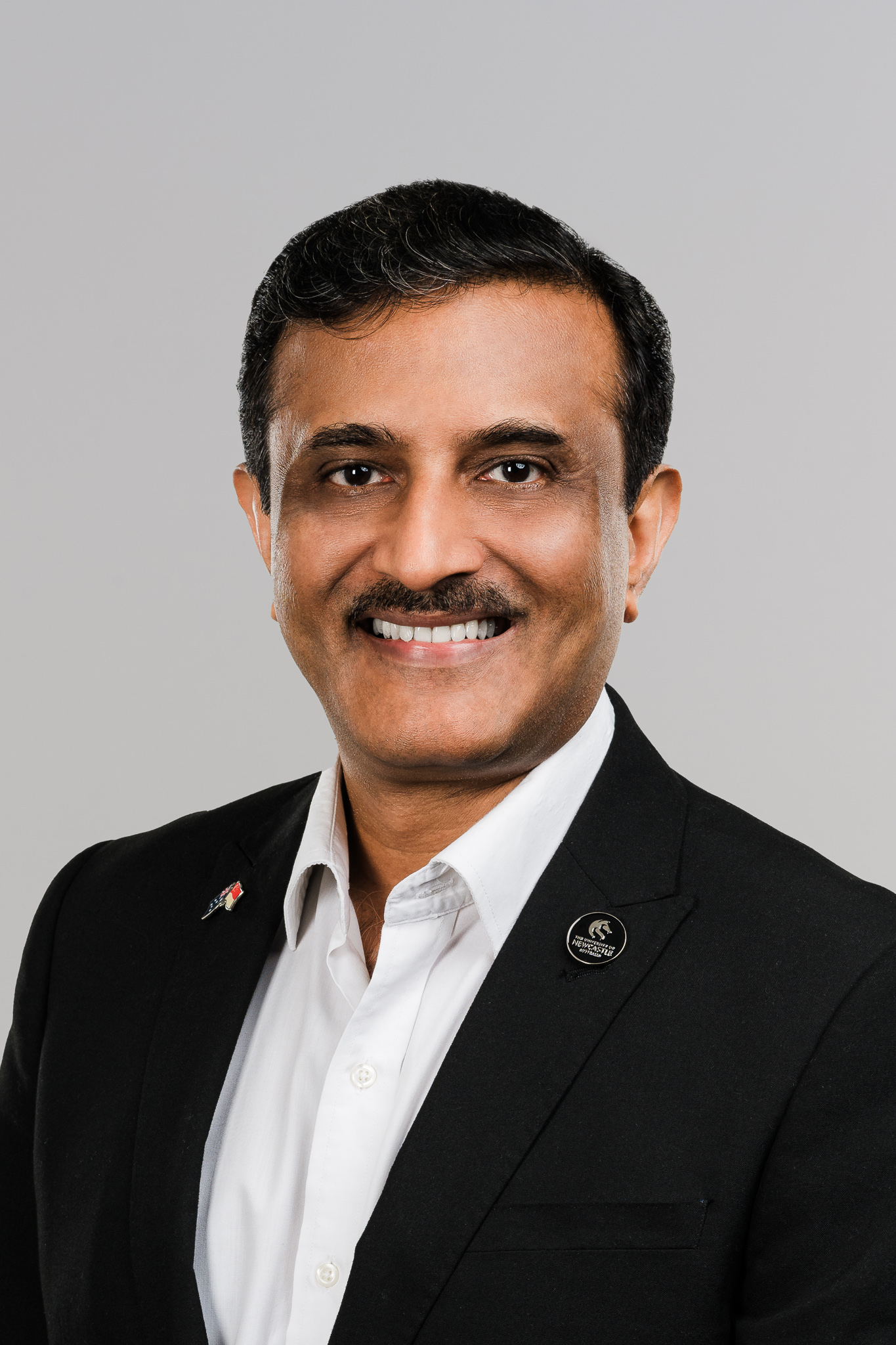
Professor Abhishek Singh Bhati is the Pro Vice-Chancellor and CEO at the Newcastle Australia Institute of Higher Education. He is a distinguished academic and administrator with a focus on tourism management and scholarship of learning and teaching. His research explores technology-driven tourism transformations, low-carbon tourism, and the alignment of tourism with United Nations Sustainable Development Goals (SDGs). Bhati’s work also emphasizes tourist behavior, resilience planning, and vandalism management in tourism settings. PhD (Tourism Management), James Cook University, Australia MBA (Marketing Management), Maastricht School of Management, Netherlands Bachelor of Arts (Economics), Bombay University, India Diploma in Adult and Continuous Education, Institute of Adult Learning, Singapore Graduate Certificate in Education (Tertiary Teaching), James Cook University, Singapore His research spans technology’s role in tourism, sustainable development, and educational innovation. Recent publications address energy-economic synergies, AI in tourism, and post-pandemic travel behavior. Bhati has secured grants from organizations like the World Wide Fund for Nature (WWF) and the Australian Government’s Office of Learning and Teaching (OLT). Scientific Honors: Fellow of the Higher Education Academy (FHEA)