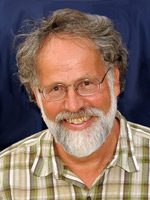
Dr David McGonigle is a Lecturer at the School of Psychology , Cardiff University , specializing in sensory processing and neuroimaging. His research explores how the brain interprets tactile stimuli, focusing on dynamic changes in neuronal communication and their implications for conditions like Autism Spectrum Disorder (ASD). Using functional neuroimaging (fMRI, MEG, EEG) and behavioral techniques, he investigates tactile perception, adaptation, learning mechanisms, and brain stimulation applications via transcranial Direct Current Stimulation (tDCS). He also emphasizes methodological reliability in non-invasive neuroimaging. Teaching roles include Level 1 Psychology ( Introduction to cognitive and biological psychology ), Level 3 Psychology ( Structural and functional neuroimaging ), and MSc Neuroimaging. Research trends in his publications highlight sensory neuroscience, neuroimaging methodology, GABA neurotransmitter analysis, and clinical applications in ASD and chronic pain. Key techniques include tDCS, MEG, and J-difference GABA editing, with a focus on cortical plasticity and intersession variability. Research funding includes grants from Autism Speaks , NIHR Fellowship , Royal Society , and The Waterloo Foundation for projects spanning neuroimaging reliability, tDCS mechanisms, and ASD sensory symptom neurobiology.
Amanda Carey is an Associate Professor and Chair of Psychology at Simmons University, where she co-coordinates the Neuroscience Program. She received her PhD in Psychology-Behavioral Neuroscience from Northeastern University and completed postdoctoral research at Tufts Human Nutrition Research Center on Aging. PhD, Psychology-Behavioral Neuroscience, Northeastern University MA, Psychology, Northeastern University BS, Psychobiology, Simmons College Her research focuses on nutritional neuroscience, investigating how aging and disease-related proteins induce neurodegeneration and how dietary interventions like berries and nuts can modulate brain inflammation and oxidative stress. She has published over 25 studies on these topics. Recent research trends highlight her work on: Mechanisms of neuroinflammation in aging and disease Effects of polyphenol-rich diets on neuroplasticity Differential impacts of 'good' vs. 'bad' fats on brain function Interactions between genetic factors (e.g., Cfh genotype) and dietary interventions Role of microglia activation in cognitive decline Professor Carey mentors students through Simmons' SURPASs program, emphasizing hands-on laboratory experience and one-on-one advising. She teaches courses in biological psychology, drugs and behavior, sensation and perception, and neuroscience seminars. In her free time, she enjoys Irish step dancing and video games, reflecting her commitment to balancing rigorous academic work with creative hobbies.
Dr. Quanying Liu serves as Associate Professor in the Department of Biomedical Engineering at Southern University of Science and Technology (SUSTech), where she leads the Neural Computing and Control Laboratory (NCC lab) as Principal Investigator and Doctoral Supervisor. Her academic journey includes a PhD from ETH Zurich in Biomedical Engineering, postdoctoral training at Caltech, and research positions at Huntington Medical Research Institute, KU Leuven, and Oxford University. PhD in Biomedical Engineering, ETH Zurich (2013-2017) Master in Computer Science, Lanzhou University (2010-2013) Bachelor in Electrical Engineering, Lanzhou University (2006-2010) Dr. Liu's research bridges neuroscience, machine learning, and control theory with focus on multi-modal neural signal processing (EEG, sEEG, fMRI, DTI), explainable AI for brain interpretation, and optimization frameworks for neuromodulation (tES, TMS). Her work develops high-density EEG source imaging algorithms, data-driven brain network modeling, and control-theoretic approaches for neural stimulation. The NCC lab specializes in machine learning algorithms, neural computation, multimodal data fusion, network control theory, and bidirectional brain-computer interfaces. Analysis of her recent publications reveals strong trends in EEG-based visual decoding, multimodal neural embeddings, and AI-driven brain network modeling. Her work increasingly integrates generative models for neural data synthesis, control theory for precise neuromodulation, and cross-modal approaches connecting neural signals with cognitive functions. The New Brain 30 (2023) AAIC travel award (2019) Estes Stars Award (2018) Shenzhen Peacock Talent Plan C Dr. Liu actively mentors students through SUSTech's doctoral program and leads multiple significant research initiatives including a National Natural Science Foundation Youth Project, a National Key R&D Program in Bio-Information Fusion, and several Shenzhen municipal projects. Her lab receives funding from Guangdong Provincial Basic Research Fund, Shenzhen Science and Technology Innovation Commission, and international fellowships including Boswell Postdoctoral Fellowship and Swiss National Science Foundation grants. The NCC lab maintains strong international collaborations with Caltech, ETH Zurich, and Oxford University while developing novel platforms like WheelCon for sensorimotor control studies. The Neural Computing and Control Laboratory operates as an interdisciplinary hub integrating computational neuroscience, machine learning, and control engineering. The lab develops specialized hardware-software systems for closed-loop neurostimulation, maintains the EEGdenoiseNET benchmark dataset, and pioneers methods like MOVEA for transcranial electrical stimulation optimization. Current research directions include generative models for neural decoding, network control theory applications, and AI-human cognitive interaction frameworks.
Dr. Rob Mestrom is an Assistant Professor at the Electromagnetics Research Group, Department of Electrical Engineering, Eindhoven University of Technology (TU/e). With over 15 years of experience in multiphysics modeling and electromagnetic applications, he focuses on medical neuromodulation using transcranial magnetic stimulation (TMS) and transcranial direct current stimulation (tDCS) , alongside deep hyperthermia optimization for oncology treatments. 2005 MSc in Mechanical Engineering (cum laude), TU/e 2009 PhD in Dynamics & Control, TU/e His research combines electromagnetic field modeling with thermal and acoustic properties to develop personalized medical treatments , particularly for neurological disorders. Key projects include: Polynomial Chaos Expansion methodologies for uncertainty quantification in LIFUS applications Development of quantitative multinuclear MRI techniques for dielectric tissue characterization Investigations into peripheral nerve contributions in tDCS mechanisms He contributes to public-private partnerships through Health Holland collaborations and serves on the Dutch Health Council's Electromagnetic Fields Committee since 2017.
Hua-Liang Wei is a Senior Lecturer at the University of Sheffield 's School of Electrical and Electronic Engineering. He leads two innovative research labs: the Dynamical Modelling, Data Mining and Decision Making (3DM) and the Digital Medicine & Computational Neuroscience (DMCN) Research Groups. Specializes in system identification for nonlinear dynamics Develops interpretable AI for healthcare applications Active in space weather and environmental forecasting His methodological expertise spans NARMAX modeling, wavelet neural networks, and multiresolution analysis. Collaborations include Sheffield Teaching Hospitals NHS Trust, multiple University of Sheffield departments (Chemistry, Oncology, Psychology), and international institutions like Beihang University. Scientific Awards include STFC and NERC grants for radiation belt modeling and environmental systems research, EU Horizon 2020 funding, EPSRC Platform grants, Royal Society support, and medical charity partnerships. Recent publications focus on hybrid wavelet-LSTM for wind power forecasting EEG analysis in epilepsy and Alzheimer's domain adaptation for fault diagnosis interpretable models for medical data covering applications from renewable energy to clinical diagnostics.
Prof. Matteo Carandini is the GlaxoSmithKline/Fight for Sight Professor of Visual Neuroscience at University College London's Institute of Ophthalmology. He leads the Cortexlab, a collaborative research group jointly with Prof. Kenneth Harris, focusing on understanding how populations of neurons combine sensory and internal signals to guide action. His laboratory employs advanced techniques including neuromics, Neuropixels high-count electrodes, optogenetics, multiphoton imaging, behavioral conditioning, and virtual reality simulation, primarily working with the mouse brain. Carandini received his Laurea in Mathematics from Universita di Roma (1990) and a PhD in Neural Science from New York University (1996). He completed postdoctoral fellowships at Northwestern University and New York University before establishing his laboratory at the Swiss Federal Institute of Technology in Zurich (1998), then moving to the Smith-Kettlewell Eye Research Institute in San Francisco (2002), and finally to UCL (2007). His academic positions include Assistant Professor at University of Zurich and ETH Zurich (2000-2002), Senior Scientist at Smith-Kettlewell Eye Research Institute (2005-2008), and Professor at UCL Institute of Ophthalmology (2007-present). His research spans multiple areas of neuroscience with a particular focus on visual processing, neural population coding, and the computational principles underlying sensory-motor transformations. Carandini's work integrates experimental approaches with computational analysis to decode how large populations of neurons represent information. Recent publications demonstrate his lab's leadership in developing and applying cutting-edge neurotechnologies like Neuropixels probes for high-density neural recordings across the brain. His laboratory is funded by prestigious organizations including the Wellcome Trust, Simons Foundation, European Research Council, and UK's Biotechnology and Biological Sciences Research Council. The Cortexlab maintains a collaborative, multidisciplinary environment with expertise spanning biology, psychology, mathematics, and physics. The team includes research fellows, PhD students, technicians, and software developers working together on diverse projects in systems, computational, cognitive, behavioral, and circuits neuroscience.
Angel V Peterchev is a Professor in Psychiatry and Behavioral Sciences, Neurosurgery, Biomedical Engineering, and Electrical and Computer Engineering at Duke University. He directs the Brain Stimulation Engineering Lab (BSEL) and holds affiliations with the Duke Institute for Brain Sciences and MEDx. Harvard University: B.A. (1999) University of California, Berkeley: M.S. (2002), Ph.D. (2005) His research focuses on transcranial brain stimulation (TMS, tACS) device development, computational modeling of neural activation, and integration with robotics, imaging, and machine learning. He has pioneered technologies like ElevateTMS, SAMT software, and noise-reduction TMS coils. Recent publications emphasize multi-scale modeling , motor threshold algorithms , magneto-genetic interfaces , and neuroimaging-guided stimulation . His work bridges power electronics and clinical neuroscience , aiming to enhance TMS precision and therapeutic applications. Scientific accolades include the 2024 Brainbox Initiative John Rothwell Award . He has secured continuous NIH funding since 2008 and collaborated with institutions globally to translate lab developments into clinical practice. His lab, BSEL, develops quiet TMS devices , individualized dose tools , and multi-modal stimulation systems , while maintaining open-source platforms like SimNIBS.
Elisa Rigosi is a Researcher in the Department of Biology at Lund University, Faculty of Science, specializing in sensory biology and neuroethology. She investigates how insect sensory systems function, with a strong focus on visual processing and the neurotoxic effects of pesticides on non-model pollinators such as hoverflies. She joined David O’Carroll’s lab in 2016 and has since led interdisciplinary research projects on sublethal pesticide impacts on insect brains and behavior. Master’s in Neurobiology, University of Pisa, Italy PhD in Neurophysics, Chemical Ecology, and Cognitive Science, University of Trento, Italy Postdoctoral Fellowship, Visual Physiology & Neurobotics Laboratory, University of Adelaide, Australia Her research centers on insect vision, neural asymmetries, photoreceptor physiology, and ecotoxicology. She employs techniques such as in vivo calcium imaging, intracellular recording, and behavioral assays to study sensory transduction and neural processing in insects. Her work contributes to understanding pollinator decline and pesticide risk assessment. Recent publications highlight trends in neurotoxicology, particularly the effects of neonicotinoids like imidacloprid on pollinators. Her studies integrate electrophysiology, optical mapping, and machine learning to assess visual acuity, contrast sensitivity, and neural circuit modulation. She also explores structural and temporal neural asymmetries in insects, linking sensory processing to behavior. Scientific contributions include: Coordinating interdisciplinary projects on pesticide neurotoxicity Developing novel oral bioassays for toxicity testing Advancing understanding of insect visual systems across species Supervising doctoral and master’s research Rigosi actively supervises graduate students and contributes to externally funded research projects, including those supported by FORMAS. She regularly presents her findings at international conferences such as the International Conference on Invertebrate Vision and KIC ERA meetings. Her collaborative network spans institutions in Sweden, Australia, and beyond, focusing on sustainable solutions for pollinator health. She is involved in multiple active research initiatives, including electrophysiological studies of photoreceptors, optical eye mapping, and machine learning–enhanced contaminant detection. Her lab integrates neurobiological techniques with environmental science to address pressing ecological challenges.
Alexander Opitz serves as an Associate Professor in the Department of Biomedical Engineering at the University of Minnesota, where he leads innovative research in non-invasive brain stimulation technologies. His laboratory focuses on developing computational models to estimate electric field distributions during transcranial magnetic stimulation (TMS) and transcranial electric stimulation (TES), integrating these with neuronavigation systems to improve targeting of specific brain circuits. Opitz's research bridges engineering principles with neuroscience to address neurological and psychiatric disorders through personalized neuromodulation approaches. Opitz's primary research interests center on the biophysical and physiological foundations of non-invasive brain stimulation (NIBS). His lab develops advanced computational tools like SimNIBS for electric field simulation and NeMo-TMS for multi-scale neuron modeling, enabling precise prediction of stimulation effects from whole-brain to single-neuron levels. Current projects include closed-loop real-time TMS-EEG systems that align stimulation pulses with ongoing brain activity phases, deep-learning-based modeling for rapid TMS field estimation, and personalized rehabilitation protocols for stroke recovery in children. His work emphasizes translating improved understanding of brain physiology into clinical applications for conditions like depression and stroke. The research trends in Opitz's 15 most recent publications reveal a strong focus on personalization and precision in brain stimulation. Key themes include individual anatomical and functional predictors for NIBS response, real-time brain state-dependent stimulation, cross-species modeling frameworks, and meta-analyses of electric field effects in clinical populations. His work increasingly integrates machine learning with traditional computational methods while expanding applications to psychiatric disorders and pediatric populations, demonstrating a clear trajectory toward clinically viable personalized neuromodulation therapies. Opitz actively contributes to the scientific community through his lab's extensive resource sharing. He maintains the SimNIBS software platform for electric field simulation, develops the NeMo-TMS toolbox for neuron modeling, and hosts annual workshops on non-invasive brain stimulation methods. His lab's GitHub repository provides open access to published code, while their YouTube channel 'Brain Stimulation Science' disseminates educational content and seminar recordings. These resources support global researchers in advancing NIBS technologies and methodologies.
Cynthia Rudin is a Professor at Duke University with joint appointments in the Department of Computer Science, Department of Electrical and Computer Engineering, Department of Statistical Science, and Department of Biostatistics & Bioinformatics. She directs the Interpretable Machine Learning Lab (formerly the Prediction Analysis Lab) and has held prior faculty positions at MIT, Columbia, and NYU. Her work bridges theoretical machine learning with real-world societal impact, particularly in high-stakes healthcare and public policy domains. Her educational credentials include an undergraduate degree from the University at Buffalo and a PhD from Princeton University. Prof. Rudin's research focuses on interpretable machine learning , where she pioneers methods that are inherently transparent rather than relying on post-hoc explanations. She emphasizes causal inference for equitable decision-making in public transit and criminal justice, and healthcare analytics for seizure prediction, surgical risk assessment, and breast cancer diagnosis. Her work consistently addresses the ethical imperative for socially responsible AI in critical applications. Her 2025 publications reveal intense activity in interpretable causal inference (e.g., public transit equity), healthcare risk scoring (mortality prediction, surgical infections), and foundational model transparency challenges. Applications span clinical medicine, urban planning, and materials science, while theoretical work explores the Rashomon effect and predictive equivalence. Key honors include: Squirrel AI Award for AI for the Benefit of Humanity (AAAI, 2021) Three-time INFORMS Innovative Applications in Analytics Award winner Top 40 Under 40 by Poets and Quants (2015) 12 Most Impressive MIT Professors (Businessinsider.com, 2015) Fellow of the American Statistical Association Fellow of the Institute of Mathematical Statistics Prof. Rudin leads the Interpretable Machine Learning Lab, which develops deployable tools like the seizure prediction system highlighted in Duke Today (May 2025). She has held leadership roles as past chair of the INFORMS Data Mining Section and ASA's Statistical Learning Section. Her committee service spans DARPA, National Institute of Justice, AAAI, ACM SIGKDD, and three National Academies committees (Applied Statistics, Law and Justice, Electric Grid Analytics), influencing federal research priorities. The lab specializes in creating machine learning systems that are directly understandable by domain experts, with current projects addressing EEG pattern classification, photoplethysmography signal analysis, and metamaterial design. Recent work has produced clinical tools used in hospitals worldwide, such as the brain-damaging seizure predictor featured in May 2025 news.
Edgar Pena serves as an Assistant Professor in the Department of Biomedical Engineering at the University of Minnesota, specializing in computational neuroengineering and neuromodulation techniques. His work bridges biomedical signal processing with clinical applications for neurological disorders. His primary research focuses on computational modeling of nerve stimulation , energy-efficient neuromodulation , and individualized neural interface design . Key investigations include kilohertz-frequency nerve block mechanisms, deep brain stimulation optimization, and vagus nerve stimulation for cardiovascular applications. His fingerprint analysis reveals strong expertise in Deep Brain Stimulation (100%), Nerve Block (50%), and Computational Modeling (38%), with emerging work in Parkinson's disease biomarkers. Recent publications demonstrate consistent focus on nerve block efficiency and stimulation parameter optimization across 10 research outputs since 2016. His work shows increasing emphasis on clinical translation, particularly in cardiovascular neuromodulation (2023-2024) and Parkinson's disease treatment personalization (2021). As Principal Investigator, Dr. Pena leads an active American Heart Association grant (2025-2028) titled Neural Recordings to Improve Selectivity of Vagus Nerve Stimulation for Cardiovascular Modulation , collaborating with S. Ikramuddin, H.H. Lim, and J. Osborn. His research leverages computational models to enhance therapeutic precision in neural interfaces while minimizing side effects like onset responses.
Laureano Moro-Velazquez is an Assistant Professor at Johns Hopkins University with appointments in the Department of Electrical and Computer Engineering and the Center for Language and Speech Processing (CLSP) . His work bridges signal processing , machine learning , and medical applications , focusing on neurodegenerative disease diagnosis and speech enhancement for under-resourced languages. PhD in Systems and Services Engineering for the Information Society (2018, Universidad Politécnica de Madrid) Master in Telecommunications Engineering (2006, Universidad Politécnica de Madrid) BSc in Sound and Image Engineering (2003, Technical University of Madrid) Research spans Voice pathology detection for Parkinson's and Alzheimer's Speech synthesis and enhancement using AI Cognitive assessment through handwriting and speech Domain adaptation in speaker verification Recent publications focus on multimodal biomarkers , handwriting analysis , and explainable AI for neurological disorders. Notable trends include cross-lingual speech processing and biometric fairness in speech recognition. Scientific contributions include Spanish Ministry of Economy and Competitiveness Mobility Grant (2017) Johns Hopkins University Teaching as Research Fellowship (2020) Teaching roles include Machine Learning for Medical Applications (undergraduate/graduate) and Artificial Intelligence in Medicine Reading Group . Collaborations involve Johns Hopkins School of Medicine (Neurology, Critical Care) and CLSP teams.
Dr. Courtney DeVries is a Professor at West Virginia University School of Medicine with appointments in both the Department of Neuroscience and Department of Medicine. She also serves as Deputy Director of the WVU Cancer Institute Administration. Her research examines how social environments influence health outcomes, particularly focusing on mechanisms linking stress, social isolation, and neuroimmune responses in conditions like stroke and cancer. She earned her PhD from the University of Maryland. Her laboratory investigates: Neuroendocrine pathways underlying social behavior and stress responses Chemotherapy-induced cognitive impairment ('chemo-brain') and sleep disruption Neuroplasticity following cerebral ischemia Behavioral pharmacology approaches to mitigate treatment side effects Dr. DeVries' publications (2012-2017) demonstrate strong interdisciplinary focus, with articles spanning neuroimmunology, chronobiology, psycho-oncology, and stroke pathophysiology. Her work frequently employs preclinical models to explore circadian influences on chemotherapy responses, social modulation of neuroinflammation, and tumor-neuroimmune interactions. Major Scientific Honors: Distinguished Mentor Award, Ohio State University (2017) Established Investigator Award, American Heart Association (2003) Fellow of American Heart Association (2001) and Stroke Council (2000) Curt P. Richter Award, International Society of Psychoneuroendocrinology (2006) She directs multiple NIH and foundation-funded projects examining psychosocial influences on cancer progression and recovery. Her lab team investigates therapeutic strategies targeting neuroimmune pathways to improve quality of life during cancer treatment.
Nichola Lax is a Research Fellow at Newcastle University specializing in the neuropathological mechanisms of mitochondrial disorders. Her work focuses on neurological manifestations including Alpers' syndrome, epilepsy, and Lewy body dementia, with extensive collaboration with leading mitochondrial researchers such as Emeritus Professor Doug Turnbull and Professor Robert Taylor. Her research interests include: Mitochondrial Diseases Neurodegenerative Disorders Neuropathology Epilepsy mechanisms Lewy Body Dementia pathology Mitochondrial DNA mutation effects Analysis of her 2016-2023 publications reveals consistent investigation of mitochondrial dysfunction in neurodegeneration, particularly emphasizing astrocytic pathology, respiratory chain defects in specific neuronal populations (inhibitory interneurons, Purkinje cells), and seizure generation mechanisms. Her work employs advanced techniques including multiplex immunofluorescence, CLARITY tissue clearing, and in vitro seizure modeling to establish pathological correlations between mitochondrial defects and clinical phenotypes. No information was found regarding scientific awards, student advising, research grants, or laboratory infrastructure in the provided text.
Johan Frederik Storm is a Professor in Neurophysiology at the Department of Physiology, Institute of Basal Medicine (IMB), University of Oslo, since 1996. His research spans neuronal signaling, consciousness mechanisms, and brain states, with affiliations at institutions like the Max Planck Institutes. He leads the Forum for Consciousness Research and previously directed the Centre for Molecular Biology and Neuroscience. MD (1980) and PhD (1989) from University of Oslo Postdoctoral work at SUNY and MIT His research interests include: Neuronal computation and dynamics Consciousness theories and neural correlates Ion channel functions and neurodegeneration EEG-based consciousness measures Neuroplasticity and synaptic physiology Effects of anesthesia and psychedelics Recent publications focus on cholinergic modulation, anesthetic effects on cortical dynamics, and EEG complexity during sleep/anaesthesia. Key journals include Neuron , PLOS ONE , and Journal of Physiology . Honors : Elected member of The Norwegian Academy of Science and Letters Elected member of The Royal Norwegian Society of Sciences and Letters Gleditsch Prize 2002 for Medicine and Biology