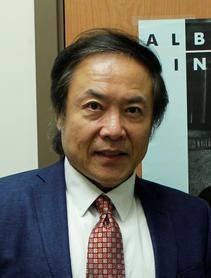
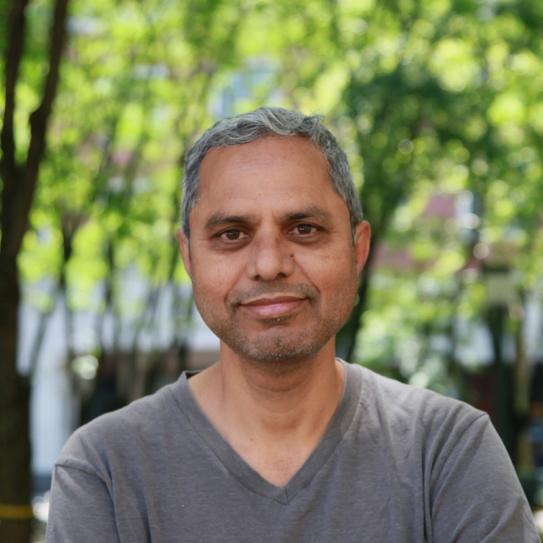
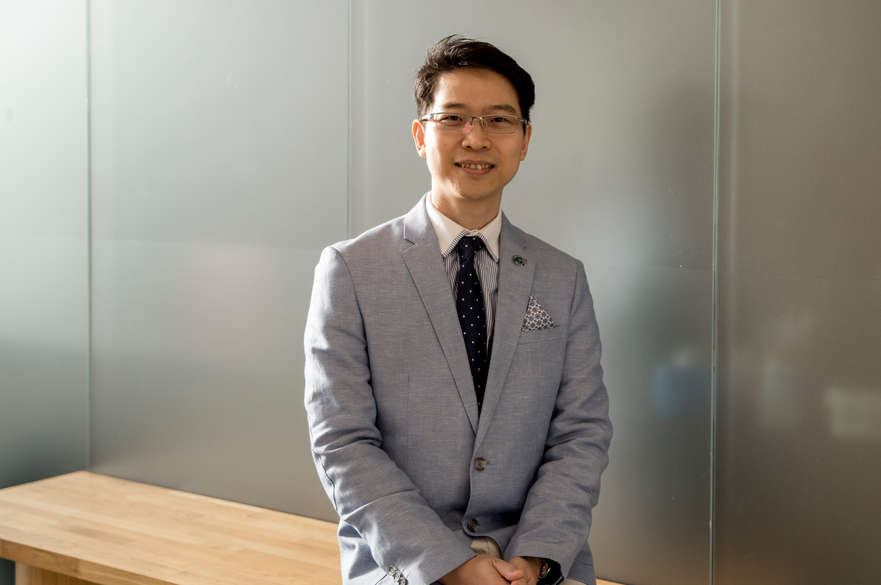
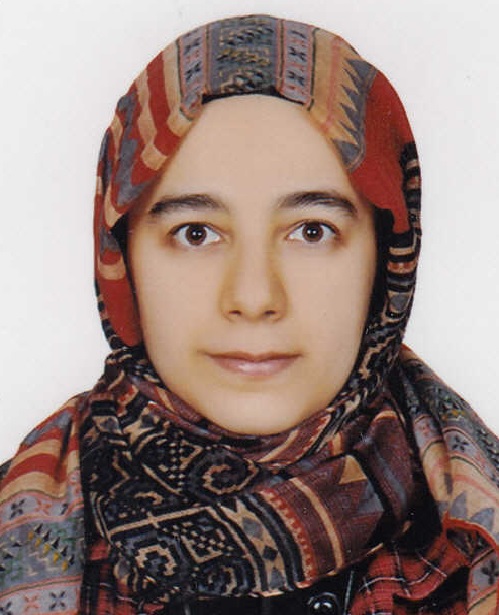
Donglu Shi is Professor of Materials Science and Engineering at the University of Cincinnati, with a joint appointment in Biomedical Engineering. He directs the Energy Materials and Nanomedicine Laboratories and previously served as Department Chair. His research spans nanotechnology, energy materials, biomedical engineering, and nanomedicine. Professor Shi's diverse research includes solar harvesting systems, nanoparticle drug delivery, cancer theranostics, and advanced materials for energy applications. He has developed innovative approaches in photothermal energy conversion, nanomedicine, and plasma disinfection technologies. His work has resulted in novel diagnostic and therapeutic platforms for cancer treatment, spectral-selective solar harvesting systems, and sustainable energy technologies. Professor Shi collaborates internationally and has received numerous awards including the Rieveschl Award for Scientific Research.
Ramesh Karri is a Professor and Chair of the Electrical and Computer Engineering Department at New York University Tandon School of Engineering. He co-founded the NYU Center for Cyber Security (CCS) in 2009 and co-directed it from 2016-2024. He is also a Fellow of the IEEE and has led initiatives such as the Embedded Systems Challenge (ESC), a red-blue team cybersecurity competition. Education: Ph.D. in Computer Science and Engineering, University of California, San Diego (1993) B.E. in Electrical and Computer Engineering, Andhra University (1985) Research Focus: His work centers on hardware cybersecurity, including trustworthy integrated circuits, cyber-physical systems, nano-enabled security, and biochip security. He pioneered security-aware CAD tools and has developed metrics for hardware trojan detection through initiatives like the Trust-Hub. Awards & Leadership: Recipient of the Humboldt Fellowship and NSF CAREER Award Editor-in-Chief of ACM Journal of Emerging Computing Technologies Leadership roles at IEEE conferences (ICCD, HOST, DFTS) Grants & Labs: Directs the Center for Advanced Technology in Telecommunications (CATT) and NYU CCS. His labs focus on additive manufacturing security, digital microfluidic systems, and AI-driven hardware design.
Paulo Alexandre Crisóstomo Lopes is an Assistant Professor at the Department of Electrical and Computer Engineering, Instituto Superior Técnico (IST), where he teaches Computer Architecture and Digital Systems. He is also a researcher at the Signal Processing Systems Group (SIPS) within INESC-ID, focusing on Active Noise Control (ANC), Power Line Communications (PLC) using adaptive OFDM, and medical applications involving protein folding and gene regulatory pathways. His work bridges electrical engineering with biomedical systems, emphasizing practical implementations in embedded and FPGA-based solutions. Research Interests: Active Noise Control (ANC) and vibration suppression Power Line Communications (PLC) with adaptive modulation techniques Medical applications of signal processing, including protein structure analysis Embedded systems and FPGA implementations Publications Trends: His recent work emphasizes robust algorithms for noise control, optimization in OFDMA systems, and biomedical signal processing. Key techniques include adaptive filtering (LMS/NLMS), Bayesian methods, and parallel computing (CUDA/GPU). Labs/Teams: Member of the Signal Processing Systems Group (SIPS) at INESC-ID, collaborating on interdisciplinary projects combining hardware and software innovations.
Dr James Bennett serves as a Principal Statistician at the School of Public Health within Imperial College London's Faculty of Medicine, specializing in advanced statistical methodologies for public health research. His work bridges epidemiology, environmental health, and geospatial analysis with a focus on global health disparities. His academic foundation includes a BSc in Applied Mathematics from the University of Warwick followed by a PhD in Statistics at Imperial College London under Professor Jon Wakefield. His doctoral research, sponsored by Glaxo Plc, investigated 'Bayesian Analysis of Population Pharmacokinetic Models,' establishing his expertise in Bayesian statistical frameworks. Dr Bennett's research concentrates on environmental epidemiology, small area health statistics, Bayesian hierarchical modeling, and exposure assessment. He employs sophisticated spatial and temporal analytical techniques to examine health-environment interactions, particularly in urban settings across diverse global contexts. His methodological innovations enable precise mapping of health risks at granular geographic scales. Analysis of his recent publications (2023-2025) reveals a dominant focus on geospatial modeling of environmental stressors in sub-Saharan African cities, especially Accra, Ghana. His work integrates street-view imagery, deep learning, and sensor data to quantify air/noise pollution and urban vitality. Concurrently, he contributes to large-scale pooled analyses tracking global trends in diabetes, obesity, and hypertension across hundreds of population studies. No specific scientific awards are documented in available sources. While formal student advising isn't explicitly referenced, Dr Bennett's research involves extensive collaboration with international teams through Imperial College's public health initiatives. His current projects appear funded by urban health and environmental monitoring grants, continuing his long-standing engagement with population-level health data systems. His work with the GARFIELD-AF registry indicates ongoing involvement in cardiovascular outcomes research. His research operates within Imperial College's School of Public Health infrastructure, leveraging partnerships with global health consortia and environmental monitoring networks. Recent work emphasizes interdisciplinary collaboration between statisticians, epidemiologists, urban planners, and environmental scientists to address health inequities in rapidly urbanizing regions.
Cheuk-Wing Li is a Senior Lecturer in Analytical Chemistry at Nottingham Trent University's School of Science & Technology . He leads modules such as Advanced Chemistry and Advanced Chemical Analysis, teaching across undergraduate courses including Intro to Analytical Chemistry and Chemistry Tutorials. His 18+ years of research focus on low-cost biochip fabrication and applications in cell-based assays and zebrafish drug screening. Research Areas: Biochip technology, microfluidics, zebrafish models for drug discovery, nanoparticle synthesis, and lab-on-a-chip systems for biomedical diagnostics. His work bridges analytical chemistry, nanotechnology, and high-throughput screening. Scientific Awards: Diplôme pour l'invention (2019) for zebrafish screening device Cross Straits Merit Award (2017) State Natural Science Award, Second Class (2016) Collaborations: Funded by Macau government and University of Macau for projects on microfluidic platforms in traditional medicine, zebrafish screening, and automated biochip systems. Holds multiple patents in microfluidics and biochip design.
Krishnendu Chakrabarty is currently a Professor of Engineering at Duke University. He serves as the Editor-in-Chief of the ACM Journal on Emerging Technologies in Computing Systems and IEEE Transactions on VLSI Systems. His work spans multiple domains, combining engineering principles with computational technologies. Integrated Circuit Testing Digital Microfluidics Biochips Cyberphysical Systems Digital Print Systems Optimization He has received numerous accolades, including the prestigious Humboldt Research Award, and holds distinguished roles as an ACM Distinguished Speaker and former IEEE Computer Society Distinguished Visitor.
Prof. Dr. Aksem AKSOY serves as an Associate Professor at Kafkas University , College of Engineering and Architecture , Department of Food Engineering , Turkey. His career spans over two decades, focusing on food hygiene, safety, and preservation technologies. PhD in Food Hygiene and Technology (2005-2010, Kafkas University & Atatürk University) BS in Veterinary Medicine (1993-1998, Kafkas University) Research emphasizes microbial quality of food products, natural antimicrobial agents, and shelf-life extension techniques. Key areas include Listeria monocytogenes detection, antibiotic residues in honey, and traditional dairy/cheese microbiology . Collaborated extensively with Çiğdem Sezer (17 joint publications), Leyla Vatansever , and Güven Gülbaz . Scientific impact includes 103 citations and h-index 6 . Currently leads Kars Cheese Festival under TÜBA/TÜBİTAK programs (2024).
Tayyibe Gerçek serves as a Lecturer at Gaziantep University's Vocational School of Health Services within the Medical Services and Techniques Department, where she teaches Anatomy and holds administrative leadership roles including Head of Department and Deputy Head of Department since 2018. Her academic foundation spans molecular biology, bioengineering, and electrical engineering disciplines across multiple Turkish institutions. Her research integrates bioengineering principles with clinical diagnostics, focusing on paper-based biosensors for blood coagulation monitoring, immunomagnetic separation techniques for leukemia cell detection, and medical education models for laboratory technicians. This work bridges engineering innovation with hematological and oncological applications, particularly in minimal residual disease monitoring and point-of-care diagnostics. Analysis of her publication record reveals a consistent trajectory in translational biomedical research, with emphasis on practical diagnostic tools for resource-limited settings. Her 2019-2018 work demonstrates expertise in antibody-based cell capture systems, coagulation biosensors, and educational frameworks for medical laboratory professionals, reflecting interdisciplinary collaboration between bioengineering, hematology, and medical education fields. Dr. Gerçek has contributed to immigrant integration research through a book chapter on legal and economic aspects of Syrian migration in Gaziantep, while her administrative leadership in departmental governance complements her scholarly activities in biomedical diagnostics and medical education development.
Dr. Liju Yang is a Professor in the Department of Pharmaceutical Sciences at North Carolina Central University (NCCU) and a principal investigator at the Biomanufacturing Research Institute and Technology Enterprise (BRITE). She joined NCCU in February 2006, establishing herself as a productive researcher and dedicated educator in interdisciplinary sciences. Dr. Yang's educational background includes: Postdoctoral, Electrical Engineering (BioMEMs), Purdue University, 2004–2006 Postdoctoral, Biological and Agricultural Engineering, University of Arkansas, 2003–2004 Ph.D., Biological and Agricultural Engineering, University of Arkansas, 2003 M.S., Chemistry, Hangzhou University, 1996 B.S., Chemistry, Hangzhou Normal University, 1991 Her research spans interdisciplinary fields with a current focus on nanomaterials for pharmaceutical and biomedical applications. Key areas include biosensors and biochips for foodborne pathogen detection, nanomaterial-based inactivation of bacterial pathogens/viruses, and 3D cancer cell culture systems. Her work integrates engineering principles with pharmaceutical sciences to address critical health challenges. Dr. Yang has secured approximately $3.45 million in research funding from federal agencies including NSF, NIH, ARO, and USDA. Her active projects demonstrate sustained research momentum: RUI: Rational Design of Carbon-Based Hybrid Nanostructures for Microbicidal Function (NSF #2102056; 2021-2024; PI) Photo-Activated Antiviral Functions of Carbon Dots (NSF #1855905; 2019-2022; PI) Visible Light-Activated Antimicrobial Nanomaterials (USDA #2019-67018-29689; 2019-2022; PI) Microbicidal Carbon Dots for Antibiotic Resistance (NSF #1701399; 2017-2022; PI) As a BRITE principal investigator, she maintains active collaborations with NCCU Physics/Chemistry departments, Clemson University, and North Carolina State University, fostering cross-institutional research in biomanufacturing and nanotechnology.
Shangping Wang serves as an Assistant Professor in the Department of Bioengineering at Clemson University, leading the Biotransport and Biopreservation Laboratory within the Clemson-Medical University of South Carolina (MUSC) Bioengineering Program in Charleston. Her research program bridges engineering and regenerative medicine through advanced tissue preservation technologies. Dr. Wang's primary research focuses on developing viable biobanking strategies for living biological materials. Her work centers on three interconnected domains: Musculoskeletal Tissue Preservation (optimizing storage for cartilage, meniscus, and tendons), Mass and Heat Transport in Ice-free Cryopreservation (enhancing nanowarming techniques for uniform thermal delivery), and Tissue Engineering (designing non-toxic protectants for cell-seeded scaffolds). She employs a multi-disciplinary methodology integrating theoretical modeling, in vitro cell/tissue studies, and in vivo animal models to investigate biotransport phenomena and their impact on tissue functionality. Analysis of her 15 most recent publications (2012-2024) reveals a strategic evolution toward solving cryopreservation's core challenge: scaling vitrification to clinically relevant tissue volumes. Her nanowarming breakthroughs for porcine articular cartilage and meniscus represent significant translational advances, while her work on supra-zero oocyte preservation and microwave-assisted drying demonstrates innovative approaches beyond conventional ultra-low-temperature methods. Key thematic threads include cryoprotectant toxicity reduction, moisture control in anhydrous systems, and biomechanical integrity assessment post-preservation. Dr. Wang actively mentors graduate researchers, currently recruiting PhD candidates for Fall 2024 with expertise in biomedical engineering, biological experimentation, and computational modeling. Her laboratory serves as a nexus for developing preservation protocols applicable to clinical transplantation, regenerative medicine, and personalized therapeutics. The Biotransport and Biopreservation Laboratory operates at the forefront of biopreservation science, utilizing a comprehensive approach that connects molecular mechanisms (e.g., DNA integrity in trehalose glass) with macroscopic tissue functionality. Current projects emphasize translating nanowarming technology to human-scale tissues while maintaining biomechanical and biological viability for orthopedic and reproductive applications.
Prof. Dr. Sophia Rudorf is a Professor in the Department of Computational Biology at the Institute of Cell Biology and Biophysics, Faculty of Natural Sciences, Leibniz University Hannover. Her research focuses on the intersection of computational methods and molecular biology, particularly in understanding protein synthesis mechanisms and gene expression regulation. Her research interests center on computational modeling of biological processes, with particular emphasis on mRNA translation, codon usage optimization, and ribosome profiling. Dr. Rudorf employs advanced computational techniques to analyze protein synthesis dynamics, gene expression patterns, and the relationship between codon usage and translational efficiency. Her work bridges theoretical modeling with experimental validation to uncover fundamental principles of cellular processes. Analysis of her publication record reveals a consistent focus on protein synthesis mechanisms, with evolving methodologies from basic kinetic modeling to advanced computational approaches incorporating machine learning and high-resolution profiling techniques. Her research spans from fundamental studies of translation kinetics to applied work in protein expression optimization. Dr. Rudorf currently leads the "Matrix Evolution" project (2024-2027), a collaborative effort focused on hierarchically structured bio-inspired matrices. She has also completed significant projects including research on chloroplast translation apparatus dynamics in plants and algae (2021-2025), a programming language education initiative (2022-2023), and a BEREIT funding project (2024).
Prof. Colette McDonagh is a Full Professor at the School of Physical Sciences, Dublin City University (DCU), where she leads the Optical Sensors Laboratory (OSL). She is also affiliated with the National Centre for Sensor Research (NCSR) and the Biomedical Diagnostics Institute (BDI). Her research focuses on optical sensor technologies, particularly sol-gel materials for environmental and biomedical applications, plasmonic enhancement strategies, and nanoparticle-based bioassays. Funding sources include industry, EU grants, and national agencies. Dr. McDonagh holds a Ph.D. in Physics from Trinity College Dublin and has contributed over 120 publications with 3,500+ citations. Her work spans sensor development for dissolved CO₂ monitoring, bioprocess tracking, and in vivo diagnostics. She pioneered innovations in fluorophore-doped silica nanoparticles and surface plasmon-enhanced fluorescence for high-sensitivity detection. Her labs emphasize interdisciplinary collaboration, integrating photonics, material science, and biomedical engineering. Recent projects include microfluidic automation, ultra-bright nanoparticle labels for cancer imaging, and plasmonic biochip platforms for point-of-care diagnostics.
Tamal Mukherjee is an Associate Department Head for Students and Professor in the Department of Electrical and Computer Engineering at Carnegie Mellon University. He holds leadership roles including Faculty Director of the Intelligent Transportation Systems (ITS) program and Associate Director of the MEMS Laboratory. His research focuses on design automation for MEMS, microfluidics-based biochips, and RF circuits with applications in sensor fusion and navigation systems. Education: B.S., M.S., and Ph.D. in Electrical and Computer Engineering from Carnegie Mellon University (1987–1995). Research interests include developing design methodologies for integrated MEMS systems, enhancing RF circuit performance through micromachining, and high dynamic range sensing via multi-sensor fusion. His work bridges analog, RF, MEMS, and microfluidic technologies to address challenges in GPS-challenged navigation, biochip systems, and low-power communication. Labs/Teams: Associate Director of the MEMS Laboratory. Active in interdisciplinary collaborations involving sensor system integration and biochip design.
John T. McDevitt is a Professor and Chair of the Department of Biomaterials and Biomimetics at New York University College of Dentistry. He is a pioneer in programmable bio-nano-chip technologies for point-of-care diagnostics, focusing on oral cancer, cardiovascular disease, and infectious diseases. His work integrates microfluidics, AI, and biomarker discovery to create scalable diagnostic platforms. Education: Bachelor of Science in Analytical and Physical Chemistry, California Polytechnic State University (1982) Ph.D. in Physical Chemistry, Stanford University (1987) Research Interests: Bioengineering, biomaterials, diagnostics, bio-MEMS, and programmable bio-nano-chip systems. His lab develops sensors that learn, enabling rapid, cost-effective diagnostics for oral lesions, cardiovascular conditions, and infectious diseases. Key innovations include cytomics-on-a-chip platforms for risk stratification and AI-driven predictive models. Awards: Wallace H. Coulter Lecturership Award (2016) Nokia Sensing X Prize Finalist (Rounds 1 & 2) Popular Science Best of What's New Award Gates Foundation Grant for HIV Monitoring in Africa Grants & Advising: McDevitt has led NIH-funded projects and founded SensoDx, LLC, and LabNow, Inc. for commercializing diagnostics. He advises on global health initiatives and has collaborated across academia and industry to translate bio-nano-chip technology into clinical practice. Labs & Teams: Directs the Biomaterials & Biomimetics Department at NYU, fostering interdisciplinary teams in bioengineering and clinical diagnostics. Active in the NYU Tandon School of Engineering ecosystem for translational research.
Shan Wang is a Professor of Materials Science & Engineering and (jointly) Electrical Engineering at Stanford University, and by courtesy, a Professor of Radiology at Stanford School of Medicine. He serves as Director of the Stanford Center for Magnetic Nanotechnology and Co-Principal Investigator of the Stanford-led Center for Cancer Nanotechnology Excellence and Translation (CCNE-T). Education: Ph.D. in Electrical and Computer Engineering, Carnegie Mellon University, 1993 His research spans Magnetic Nanotechnology, Biosensing, Spintronics, Magnetic Inductors, and Information Storage, with significant applications in medical diagnostics. He has pioneered magnetic biosensor technologies for early disease detection and cancer diagnostics, resulting in over 200 publications and 30 patents. His work bridges nanotechnology, biomedical engineering, and clinical medicine through biochip development and medical imaging innovations. Analysis of his 2008-2011 publications reveals a dominant focus on magnetic biosensors for cancer diagnostics, with high-impact work in Nature Medicine and Nature Nanotechnology demonstrating translational applications. The research consistently integrates nanomaterials, microfluidics, and spintronics for point-of-care diagnostic platforms. Scientific recognition includes: Inaugural Frederick Terman Faculty Fellow (Stanford, 1994-1997) IEEE Magnetics Society Distinguished Lecturer (2001-2002) IEEE Fellow (2009) Dr. Wang actively mentors students through 16 independent study courses spanning BIOE, EE, and MATSCI departments, supervising thesis research from undergraduate to Ph.D. levels. As CCNE-T Co-PI, he leads NIH-funded cancer nanotechnology research with significant grant support for translational projects. He directs the Stanford Center for Magnetic Nanotechnology, which develops magnetic-based technologies for biomedical applications, and co-leads the CCNE-T team focused on cancer nanodiagnostics and therapeutic translation.