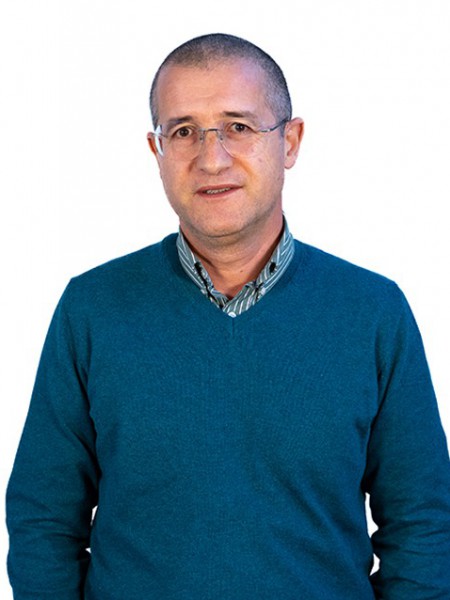
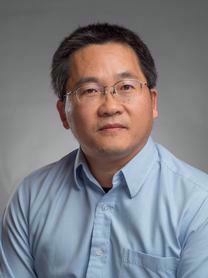
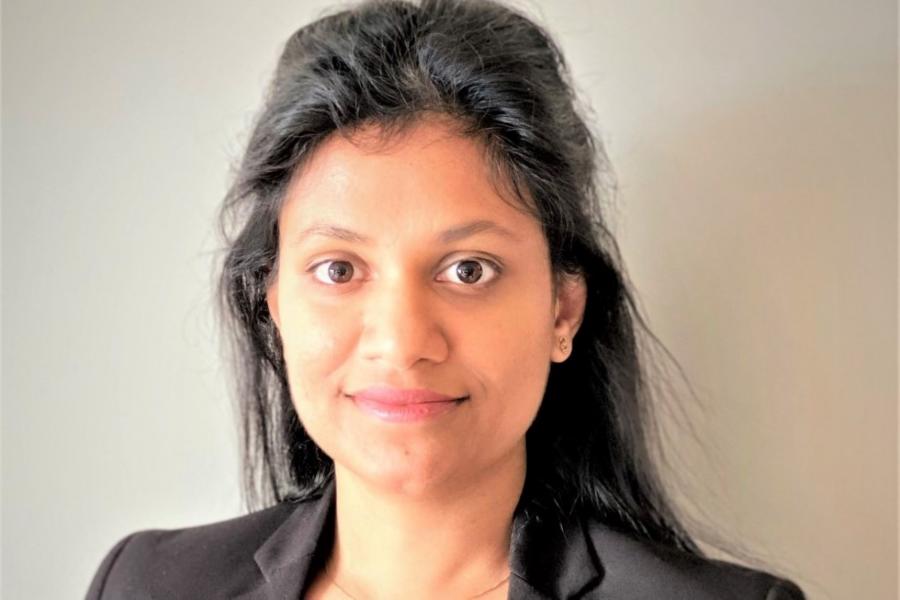
Colm O'Donnell is a Full Professor at the School of Biosystems and Food Engineering, University College Dublin (UCD). He leads the Food Quality and Processing Pillar at UCD's Institute of Food & Health and has held roles including Head of the School and Vice-Principal for Teaching & Learning in the College of Engineering & Architecture. His research focuses on Process Analytical Technology (PAT), bioprocessing, and dairy technology, with emphasis on spectroscopy, bioactive compound extraction, and food safety. He coordinates EU-funded projects like DiTECT and FreshProof, and leads the UCD team in the Dairy Processing Technology Centre (DPTC). O'Donnell is a Fellow of the Irish Academy of Engineering and has been recognized as a Thomson Reuters Highly Cited Researcher. Education: BE and PhD from University College Dublin, Chartered Engineer (CEng). Research Interests: PAT for food/bioproducts, dairy processing innovations, and bioactive extraction from seaweeds. His group develops non-destructive technologies like NIR-HSI and acoustic sensors for real-time quality monitoring in food production. Grants: Over 40 grants including EU Horizon 2020, Marie Sklodowska-Curie, and industry partnerships. Recent projects include acoustic sensor development for milk protein concentrate (2020-2022) and seaweed biorefinery processes (2018-2023). Awards: Irish Academy of Engineering Fellowship (2022), EU Comett Fellowship, and editorial roles at International Journal of Food Properties and Food Engineering Reviews . Labs/Teams: Leads the PAT-focused research group at UCD's Institute of Food & Health, collaborating with industry partners like DPTC and global academic networks.
Armando J. D. Silvestre is a Full Professor at the Department of Chemistry, University of Aveiro. He holds academic degrees including a Licenciatura in Chemistry (1990), PhD in Chemistry (1994), and Agregação in Chemistry (2008) from the University of Aveiro. His research focuses on renewable materials, circular economy, and functional biomaterials. Research interests include: Development of biopolymer-based functional materials Valorization of biological residues for value-added chemicals Novel polymeric materials from renewable resources Sustainable nanocomposites and coatings Professor Silvestre has supervised 18 MSc and 11 PhD students to completion and currently mentors 3 PhD and 3 MSc candidates. Research projects include EU-funded initiatives like AFORE (Forest Biorefineries) and national projects on membrane technology and biomass valorization. Scientific contributions include over 180 SCI journal publications and patents on extraction methods. He serves on editorial boards for Industrial Crops and Products and actively participates in academic activities including Erasmus coordination and Bologna process implementation.
Federico Casanova is an Associate Professor at the National Food Institute of the Technical University of Denmark (DTU), specializing in sustainable food processing and biotechnological valorization of food waste. His work focuses on extracting high-value molecules (proteins, chitins, fatty acids) using green technologies like ultrasound, ohmic heating, and pulsed electric fields to enhance functional properties. Education : PhD (2015–2017, Federal University of Vicosa, Brazil), MSc (Agrocampus Ouest, France, 2009–2010; Universitat Jaume I, Spain, 2006–2007), BSc (Università Cattolica, Italy, 2003–2006). Research Trends : Recent publications highlight applications of green technologies to modify protein-polyphenol interactions, characterize gelatin from jellyfish by-products, and optimize plant protein emulsifying properties. Keywords include Food Science, Food Chemistry , and Biotechnology , with subfields spanning bioactive peptides, rheological properties, and sustainable processing . Projects : Casanova contributes to active initiatives like seaweed-derived bioactives (2025–2027) and SUSTAIN-A-BITE (2025–2028), alongside supervising PhD students investigating dairy proteins and insect-based ingredients. He also serves as an editor for International Journal of Biological Macromolecules (2025–2027). External Roles : Junior Project Leader at Nestlé Purina (2017–2018), Engineer at CNRS's Soft Matter Group (2010–2014). Teaching : Delivered guest lectures on food proteins and sustainable food systems at universities globally.
Maobing Tu is a Professor at the University of Cincinnati, specializing in biomass processing chemistry and biofuel production. His research focuses on biochemical engineering, lignocellulosic biomass conversion, and environmental biotechnology. He holds a PhD from the University of British Columbia (2007) and East China University of Science and Technology (2001). Key research areas include developing sustainable biorefinery processes, mitigating biomass recalcitrance, and enhancing microbial fermentation efficiency. He has secured multiple grants, including an NSF CAREER Award and NSERC Fellowships, supporting projects on lignin valorization, PFAS treatment, and bioprocess engineering. Education: PhD, University of British Columbia, Vancouver, 2007 PhD, East China University of Science and Technology, Shanghai, 2001 Awards: NSF Career Award (2013–2018) NSERC Industry R&D Fellowship (2007–2008) His work spans collaborations on nanocellulose-based materials, microbial fuel cells, and lignin-based piezoelectric materials. Recent grants include federal funding for decarbonizing chemical recovery processes and novel membrane electrolysis systems. Publications highlight advancements in biomass pretreatment, enzyme recycling, and detoxification strategies for biofuel production. Current projects address environmental challenges like PFAS remediation and microbial community dynamics in water systems.
Samo Smrke is a Researcher at the ZHAW School of Life Sciences and Facility Management, specializing in the Coffee Competence Centre and Analytical Technologies. His work focuses on advancing coffee science through projects like the SCA Coffee Expertise Program and collaborations with industry leaders such as Nespresso and Julius Meinl. He has led multiple research initiatives including studies on coffee freshness, roasting effects, aroma release mechanisms, and packaging technologies. Smrke's research interests span coffee chemistry, analytical techniques, and sensory analysis. He has published extensively on topics such as degassing kinetics of roasted coffee, antioxidant generation during roasting, and aroma modulation in instant coffee products. His work often employs advanced methods like proton transfer reaction mass spectrometry (PTR-MS) and gravimetric analysis. He is a co-author of influential books including The Coffee Freshness Handbook and The SCA Water Quality Handbook , which provide foundational knowledge for industry professionals. Smrke’s projects frequently bridge academic research with practical applications, addressing challenges in coffee production, storage, and quality assurance.
Rainer Schuhmacher is a Full Professor for Plant and Microbe Metabolomics at the University of Natural Resources and Life Sciences, Vienna (BOKU), affiliated with the Department of Agricultural Sciences and the Institute of Bioanalytics and Agro-Metabolomics in Tulln an der Donau. His research focuses on metabolomics, analytical chemistry, and plant-microbe interactions, with emphasis on fungal secondary metabolites, mycotoxin resistance, and environmental stress responses in crops. He leads projects funded by the Austrian Science Fund (FWF), European Commission, and national agencies. Research interests span: Metabolomic profiling of plant-pathogen interactions (e.g., Fusarium -wheat systems) Stable isotope-assisted techniques for metabolic pathway analysis Cold stress mitigation in plants using Antarctic bacteria Development of computational tools for untargeted metabolomics data processing His work integrates analytical chemistry, bioinformatics, and molecular biology to study metabolic crosstalk in agricultural systems. Awards include the Fritz-Feigl-Preis (2012) and Dr.-Wolfgang-Houska-Preis (2005). He has supervised multiple PhD projects and leads the Plant-Microbe Metabolomics group, managing core metabolomics platforms and international collaborations. Key projects: Chemical crosstalk in mycoparasitic interactions (FWF) Metabolomics of cold stress tolerance mediated by psychrotolerant bacteria Extension of metabolomics platforms for plant-pathogen studies
Kequan Zhou is a Professor in the Department of Nutrition and Food Science at Wayne State University's College of Liberal Arts and Sciences. His research focuses on value-added nutraceuticals and functional foods for chronic disease prevention, particularly targeting Type 2 diabetes and obesity through bioactive food components. Supported by NIH, USDA, and NSF grants, Zhou leads studies on gut microbiota interactions, enzyme inhibition, and antioxidant mechanisms. Ph.D. in Food Science, University of Maryland-College Park (2005) M.S. in Public Health, China CDC (2001) M.D. in Clinical Medicine, Shandong University (1998) Zhou's recent work explores probiotic bacteria like Akkermansia muciniphila, marine-derived antimicrobials, and grape pomace compounds. His publications span food chemistry, diabetes research, and microbiome science, with methodological innovations in enzyme immobilization and metabolite characterization. Scientific Awards 2016 - Career Development Chair Award, Wayne State University 2012 - Finalist, ACS Young Scientist Award 2010 - University Research Grant Award As a Scientific Editor for the Journal of Food Science, Zhou contributes to academic leadership while teaching graduate courses in nutrition, food safety, and functional foods. His interdisciplinary approach bridges food science, pharmacology, and public health.
Alejandro Cifuentes serves as a Full Research Professor at the Spanish National Research Council (CSIC) in Madrid, where he leads the Laboratory of Foodomics and directs the Metabolomics Platform under the International Excellence Campus CSIC + University Autonoma of Madrid. His prior roles include Founding Director of the Institute of Food Science Research and Deputy Director of the Institute. His research centers on foodomics and metabolomics, with emphasis on advanced extraction technologies for bioactive compounds from diverse sources including plants, dairy, and microalgae. Key interests encompass sustainable processing methods, neuroprotective agents, antioxidant properties, and the valorization of agricultural by-products for health applications. Analysis of his recent publications reveals a dominant focus on green extraction techniques—particularly supercritical CO₂ and pressurized systems—combined with mass spectrometry for bioactive compound analysis. His work bridges food science, analytical chemistry, and biotechnology to address challenges in food safety, nutrition, and sustainable resource utilization. Dr. Cifuentes directs the Laboratory of Foodomics and Metabolomics Platform, leading interdisciplinary teams in projects spanning microalgal protein characterization, dairy microbiota studies, and neuroprotective compound transport mechanisms, with strong industry and academic collaborations across Europe.
Luisa Mannina is a Full Professor of Food Chemistry at Sapienza University of Rome, Department of Chemistry and Technology of Drugs, Faculty of Pharmacy and Medicine. She leads the Food Chemistry Laboratory (FOODCHEMLAB) and serves as Director of the Metabolomics Unit focusing on Foods, Nutraceuticals and Biological Fluids Research. Her academic career spans over 25 years with progressive appointments from Assistant Professor to her current Full Professor position since January 2019. Full Professor of Food Chemistry (2019-present) Associate Professor of Food Chemistry (2009-2019) Director of multiple Master's programs in Nutraceuticals and Cosmeceutics Coordinator of PhD program in Molecular design and characterization for health promotion Member of numerous institutional committees at Sapienza University Professor Mannina's research centers on Nuclear Magnetic Resonance (NMR) methodologies for food analysis and metabolomics. She has developed innovative analytical protocols for determining metabolic profiles of food matrices and biological fluids, enabling authentication of geographical origin, variety, and cultivation methods for diverse food products. Her work spans olive oils, fruits, industrial hemp, and various agricultural products, with particular emphasis on NMR-based metabolomics for food authentication and quality assessment. She has established herself as a leading expert in industrial hemp analysis, publishing extensively on cannabis inflorescences, seed oils, and related products. Analysis of her recent publications reveals a strong focus on sustainable food systems, with particular attention to agri-food waste valorization, novel food development from unconventional sources like medicinal mushrooms, and advanced analytical techniques for food authentication. Her work increasingly integrates NMR with other analytical methods to address complex food science challenges, including food fraud detection, nutritional enhancement through processing techniques, and chemopreventive properties of plant-based products. The research demonstrates consistent evolution from fundamental food characterization toward applied solutions addressing contemporary food system challenges. Her scientific recognition includes: GIDRM/GIRM 2018 Gold Medal ANVUR Research Funding (2017) Associate Editor of Journal of Integrated Omics Member of Scientific Committee of La Rivista Italiana delle Sostanze Grasse Professor Mannina has successfully supervised numerous PhD students and directed multiple Master's programs. Her research is supported by substantial funding from regional, national, and European sources, including projects on industrial hemp valorization (€150,000), innovative bio-packaging (€50,000), and metabolomic studies of Mediterranean diet adherence (€14,500). She maintains active collaborations with European research institutions and industry partners through various research contracts. Her Food Chemistry Laboratory (FOODCHEMLAB) is equipped with state-of-the-art analytical instrumentation including NMR, HPLC-PDA, GC-MS, and other advanced equipment for comprehensive food analysis. The laboratory serves as a hub for metabolomic research, food authentication studies, and valorization of agricultural by-products, contributing significantly to Sapienza University's research profile in food science and technology.
Dr. Maneka Malalgoda is an Assistant Professor in the Department of Food and Human Nutritional Sciences at the University of Manitoba's Faculty of Agricultural and Food Sciences. Her research focuses on grain chemistry, processing quality, and the development of healthy grain-based food systems. PhD in Cereal Science, North Dakota State University MSc in Cereal Science, North Dakota State University BSc in Medical & Pharmaceutical Biotechnology, University of Applied Sciences, Austria Dr. Malalgoda's research investigates the physicochemical properties of grain proteins and starches, their functionality in food processing, and the biological activity of grain biomacromolecules. She explores how these components contribute to nutritional value, safety, and structural integrity in bakery applications. Her recent publications highlight advancements in protein-enriched wholegrain bread, ancient grain processing optimization, oat protein health benefits, and pesticide residue impacts on cereal chemistry. Key trends include the use of analytical techniques (HPLC, LC-MS) and the intersection of traditional grains with modern nutritional needs. Dr. Malalgoda teaches courses in food science, including FOOD 4100: Current Issues in Food and Human Nutrition , FOOD 3220: Grains for Food and Beverage , and FOOD 3200: Bakery Science and Technology . She supervises graduate research at the University of Manitoba's Ellis Building facility.
Prof. Mariusz Jerzy Stolarski is a full-time faculty member at the University of Warmia and Mazury in Olsztyn, affiliated with the Department of Genetics, Plant Breeding and Biomaterial Engineering within the Faculty of Agriculture and Forestry. His research focuses on bioeconomy, renewable energy systems, and sustainable biomass production. Scientific discipline: Agriculture and horticulture ORCID: 0000-0003-0712-9678 Email: mariusz.stolarski@uwm.edu.pl Phone: +48 89 523 48 38 His research explores biomass valorization, biofuel processing, and environmental efficiency assessments across agricultural and forestry systems. Recent work examines supercritical CO2 extraction effects on biomass stability, intercropping systems in organic farming, and economic viability of multi-purpose energy crops like industrial hemp and Virginia fanpetals. Scientific indicators highlight significant contributions: 79/96 publications (WoS/Scopus), 878/1141 citations (WoS/Scopus), H-index 21/24, and Google Scholar H-index 29 with 3089 citations. He has promoted 4 doctors and currently supervises 2 doctoral students.
Wilfried Andlauer is a Professor at the Institute of Life Sciences within HES-SO Valais-Wallis School of Engineering. His research focuses on bioactive compounds , non-thermal food processing , and bioavailability studies , particularly in agricultural by-products like grape cane, walnut press cake, and Spirulina algae. He has developed advanced methods for solid-state fermentation , cold plasma decontamination , and bioactives fingerprinting . Key projects include optimizing microwave-assisted extraction for stilbenoids, analyzing iron absorption from insect flour , and developing microfluidic antioxidant assays . His work integrates nutraceutical research with practical applications in food safety and sustainable processing . Collaborations span Switzerland and Asia , with expertise in analytical chemistry and bioprocessing .
Maja M. Natić is a Full Professor in the Department of Analytical Chemistry at the Faculty of Chemistry, University of Belgrade . She has held various academic roles since her professional associate appointment in 1999, including Researcher-intern, Assistant Trainee, Assistant, and eventually achieving the title of Full Professor in 2022. She actively participates in teaching courses like Analytical Chemistry 1 , Separation Methods , and Classical Analytical Chemistry for pharmaceutical chemistry students. Undergraduate: Chemical Sciences (University of Belgrade, 1998) Master's: Chemical Sciences (University of Belgrade, 2003) Doctorate: Chemical Sciences (University of Belgrade, 2008) Her research focuses on analytical chemistry of phenolic compounds , chromatographic methods for food authentication , and environmental pollutant analysis . She has led projects on Serbian wine authentication, soil contamination assessment between Serbia and Slovakia, and bioactive compound extraction from raspberry waste. Her work frequently employs TLC, HPLC, and LC-MS techniques. Key research trends include phenolic fingerprinting of honey, berries, and plant extracts; antioxidant capacity evaluation ; and structure-retention relationships in chromatography. She has published extensively on these topics in journals like Food Chemistry , Journal of Agricultural and Food Chemistry , and Journal of the Serbian Chemical Society .
CARMEN PADILLA RASCÓN is a Researcher at the Department of Chemical, Environmental and Materials Engineering at the University of Jaén. She obtained her Doctorate in 2022 with the thesis "Production of furfural and bioethanol from olive stones." Education: PhD in Chemical Engineering, University of Jaén (2022) Her research focuses on lignocellulosic biomass valorization through biorefinery systems, particularly using agricultural residues like olive stones and vine shoots for producing biofuels and high-value chemicals. Key techniques include steam explosion, acid/alkaline pretreatments, and microwave-assisted processing. Recent publications highlight integrated biorefinery strategies, furfural production optimization, and recovery of bioactive phenolic compounds. The work often involves process engineering, catalytic transformations, and circular economy principles.
Prof. Wei Zhang is a Matthew Flinders Distinguished Professor in Industry and Marine Biotechnology at Flinders University's College of Medicine and Public Health. As a globally recognized leader in biochemical engineering since 1989, he pioneered the establishment of Australia's third-generation marine bioproducts industry and founded the Centre for Marine Bioproducts Development (2009). Director, Advanced Marine Biomanufacturing and Bioproducts Technology Inaugural Research Director, Marine Bioproducts Cooperative Research Centre (MBCRC) Series Editor, Springer-Nature's Advances in Marine Bioprocesses and Bioproducts Specialty-Chief Editor, Frontiers in Marine Science His research focuses on marine biotechnology , bioprocess engineering , and bioenergy , with particular emphasis on value-added utilization of marine resources, microalgal biofuels, and integrated bioprocessing systems. Over his career, he has secured over A$50 million in research funding, including the A$270 million MBCRC grant. Recent publications highlight innovations in: Subcritical water extraction of bioactives from marine algae Supercritical CO2 lipid extraction from tuna byproducts Functional food development using marine-derived compounds Bioprocessing optimization for marine bioproducts Award highlights include: South Australia Science Excellence Award (2022) Australian Eureka Prizes finalist (2022) Young Tall Poppy Science Award (2008) He has chaired 30+ international conferences and serves as President of the Asia-Pacific Marine Biotechnology Society, while maintaining editorial leadership in five international journals.