Jennifer Beavers, Ph.D. , is an Associate Professor of Music Theory at the University of Texas at San Antonio (UTSA) in the College of Liberal and Fine Arts. Her research intersects early twentieth-century music analysis, timbre/orchestration studies, and music theory pedagogy, with a focus on Maurice Ravel’s compositions and curriculum innovation. Awarded Faculty Mentor Award for Undergraduate Research (2019) Co-founder of UTSA Music Theory Club initiatives Active presenter at Society for Music Theory , American Musicological Society , and College Music Society conferences Research Themes : Analytical approaches to Ravel’s neurological decline, timbre as structural marker, flipped pedagogy, and interdisciplinary collaborations. Her publications span journals like Music Theory Online and Indiana Theory Review , emphasizing timbral transformations and pedagogical innovation. Scientific Awards : Faculty Mentor Award for Undergraduate Research (2019) Teaching Contributions : Courses include Aural Skills , Basic Skills , 20th-Century Analysis , and graduate Research Methods . Her pedagogical research addresses improvisation, pitch-matching, and AP curriculum alignment.
Sigrid Røyseng is a Professor of Cultural Sociology at the Norwegian Academy of Music (Department of Music Education) and holds an additional role as Professor II at BI Business School. She leads the government's newly formed Music Committee tasked with conducting a comprehensive public inquiry (NOU) into Norway's music sector, emphasizing institutional structures, cultural policy, and societal roles of music. Her research spans cultural policy analysis, arts management, and the intersection of artistic quality with administrative frameworks. Her work addresses topics like institutional change in higher music education, moral economies in cultural practices, and sustainability challenges in live music. She has published extensively on cultural policy decision-making processes, leadership in high-performance cultural environments, and the political dimensions of cultural institutions. The committee’s findings (due 2025) aim to inform future cultural policies by examining both professional and voluntary music sectors. Røyseng’s academic contributions include analyses of artistic quality assessment in audit societies, the paradoxes of Norwegian cultural policy frameworks, and the ethical dimensions of cultural work. She collaborates with interdisciplinary teams and maintains active engagement in music education reforms.
Professor Dian Tjondronegoro is a leading academic at Griffith University's Department of Management within the Griffith Business School. He holds roles such as Acting Head of Department and Deputy Head (Research), and is affiliated with the Centre for Work, Organisation and Wellbeing, Griffith Asia Institute, and the Griffith Inclusive Future Beacon. His research focuses on AI ethics, eHealth systems, and digital governance, with over $9M in grants from bodies like the ARC and NHMRC. He has published 145+ peer-reviewed papers and leads initiatives like the 'Governing in the Digital Age' program. A Fellow of the Australian Computer Society and Senior Member of IEEE/ACM, he has won the Gold Disrupters Award (2019) and multiple teaching accolades. Education: PhD in Information Systems (Deakin University, 2005), BIS (QUT, 2001). Research Interests: AI, machine learning, healthcare innovation, responsible AI, workplace design, and digital economy strategies. His articles emphasize AI applications in healthcare monitoring, workplace productivity, and ethical surveillance. Recent work explores post-COVID workplace trends and AI-driven public health solutions. He advises on government policy and innovation through roles like Gold Coast Health's Digital Innovation Advisory Committee. His teaching includes courses on digital strategy and innovation management.
Carlos Velasco is an Associate Professor in the Department of Marketing at BI Norwegian Business School, where he co-founded the Center for Multisensory Marketing. He holds a D.Phil. in Experimental Psychology from the University of Oxford and has established himself as a leading researcher at the intersection of psychology, marketing, and human-computer interaction. His research focuses on multisensory experiences and their underlying principles, with particular attention to crossmodal correspondences between sensory modalities. His work spans diverse areas including digital dining, food technology, customer experience management, and the application of emerging technologies like AI, VR, and the Metaverse in sensory marketing. Velasco has published extensively in top journals across multiple disciplines including Food Quality and Preference, Journal of Retailing, Journal of Business Research, Psychology and Marketing, and International Journal of Human-Computer Studies. His research reveals consistent patterns in how sensory inputs influence consumer behavior and product perception, particularly examining how visual elements, sounds, and shapes correspond with taste experiences. Velasco's work also explores the ethical dimensions of customer experience design in digital environments and investigates how cultural contexts shape multisensory food experiences globally. Velasco has authored several influential books including Multisensory experiences: Where the senses meet technology (2020 and 2025, Oxford University Press), Digital dining: New innovations in food and technology (2025, Springer Nature), and the edited collection Multisensory packaging: Designing new product experiences (2019, Palgrave Macmillan). Serves on editorial boards of Food Quality and Preference Journal of Business Research Psychology and Marketing International Journal of Gastronomy and Food Science International Journal of Food Design Currently, Velasco co-hosts the customer experience management podcast and collaborates with companies worldwide on topics including multisensory experiences, immersive technologies, Web3, food and drink, branding, and consumer research. His work bridges academic research with practical applications in marketing and product design.
Alessandro Arsie is a Professor and Graduate Program Director in the Department of Mathematics and Statistics at the University of Toledo's College of Natural Sciences and Mathematics. His research focuses on mathematical physics, differential geometry, dynamical systems, and control theory, with notable contributions to F-manifolds, integrable systems, and geometric mechanics. He has authored over 50 publications in prestigious journals like Communications in Mathematical Physics and Nonlinearity . His work often bridges pure mathematics and applied fields, such as robotics and ecology. Key research interests include the geometry of Hamiltonian systems, bifurcation analysis in predator-prey models, and the interplay between algebraic structures (e.g., F-manifolds) and integrable hierarchies. He has explored topics like collision dynamics in celestial mechanics and optimization in multi-agent robotic networks. Dr. Arsie’s recent articles emphasize geometric approaches to differential equations and the application of advanced mathematical techniques to real-world systems. He collaborates with researchers in robotics and theoretical physics, reflecting his interdisciplinary expertise.
Dr. Bradley Elphinstone is a Senior Lecturer in the School of Health Sciences at Swinburne University of Technology, where he conducts research and teaching in clinical and health psychology, with a focus on mindfulness, nonattachment, self-compassion, and gender-affirming mental health. He is actively involved in PhD supervision and has led research on public trust in genomic data, emotional well-being, and digital mental health interventions. His research interests include: Clinical and Health Psychology Social and Personality Psychology Mindfulness-Based Interventions Nonattachment and Self-Compassion Gender Euphoria and Transgender Mental Health Public Trust in Health Data Systems His recent publications (2020–2025) reflect a strong trend in psychometric scale development (e.g., Gender Euphoria Scale, Equanimity Scale), emotional regulation, and public health psychology, particularly during the pandemic. His work bridges clinical psychology with public engagement and policy, especially in genomic governance and mental well-being. Scientific contributions include: Development and validation of psychological scales Studies on trust and compliance during public health crises Exploration of non-dualistic approaches to mental health (e.g., A Course in Miracles) Telehealth and dignity therapy for older adults Dr. Elphinstone supervises multiple PhD students on topics ranging from financial well-being to gender identity and digital interventions. He has secured external funding, including a grant from the Department of Health and Aged Care on genomic data trust. He is also involved in collaborative research networks and public engagement through platforms like The Conversation. He is affiliated with research teams focused on: Mindfulness and psychological development Trans and gender diverse mental health Digital and telehealth interventions Public attitudes toward biobanks and genomics
Alice Haynes is a Digital Futures Postdoctoral Fellow at KTH Royal Institute of Technology, working on the Felt Connections project under the Division of Media Technology and Interaction Design . She collaborates with Prof. Kristina Höök and Associate Prof. Iolanda Leite to create shape-changing textile interfaces that foster meaningful bodily interactions for children and adults. Education PhD in Engineering Mathematics, University of Bristol (2022) Specialization in Soft Robotics and Haptic Interfaces Her research blends soft robotics, e-textiles, and soma design to develop tactile technologies that prioritize bodily engagement over traditional visual/auditory interfaces. Current work explores: first-person design for scoliosis, symmetry-asymmetry dynamics in bodily interactions, and soma-driven methods that emphasize felt experiences. Key article trends include shape-changing textiles (SMA-actuated smocking, machine embroidery), emotional/therapeutic applications (anxiety relief, social touch), and multisensory integration (audio-tactile mappings, biosignal interaction). Scientific Contributions Recipient of Digital Futures Postdoctoral Fellowship Co-design methodologies for child-centered technology Material-driven evaluation frameworks for e-textiles Embodied interaction paradigms through haptic cushions Alice teaches Human-Computer Interaction Research Seminars (DH2632) and Media Technology and Interaction Design (DM2601) , while actively seeking Master's students for collaborative thesis work.
Anna Paradiso Laurin is a Researcher and PhD candidate at the Department of Classical Music, Royal Swedish Academy of Music. Her research focuses on historical keyboard instruments and the marginalized Swedish musical repertoire from 1780 to 1860, challenging gender-based biases in music history. She leads the project "Feminine Repertoire and Home Music Making in Sweden 1780–1860" , using artistic methods to explore instrument choice's impact on interpretation. Education & Teaching: Holds a PhD in Latin and Ancient Greek Philology. Taught at Oxford University, KTH Royal Institute of Technology, and Stockholm University. Currently teaches "Music History & Performance Practice" at KMH and previously served as a lecturer in harpsichord studies (2021–2025). Research Methods: Employs historical instruments (e.g., a 1797 Petter Kraft clavichord, 1802 Broadwood piano) to analyze tonal characteristics and their influence on interpretation. Developed an interpretation laboratory comparing playing styles via video documentation. Performance & Recognition: A renowned harpsichordist with 18 BIS Records albums, praised by Gramophone and American Record Guide . Collaborates with composers like Daniel Börtz and Helena Tulve. Awards include the Swedish Grammis and Bernadotte Scholarship. Public Engagement: Organizes salons to revive overlooked 18th/19th-century Swedish compositions. Her work bridges historical performance, gender studies, and instrumentology.
Gao Min is a Professor and Doctoral Supervisor at the School of Big Data and Software, Chongqing University. He is a member of IEEE, CCF, and CAAI, and has held visiting scholar positions at Arizona State University and Reading University. His research focuses on personalized recommendation systems, anomaly detection, and social media mining, with strong emphasis on security aspects such as shilling attacks and fake news detection. His research interests include: Personalized Recommendation Systems Anomaly and Attack Detection in Recommender Systems Social Media Mining and Fake News Detection Graph-based and Contrastive Learning for Recommendations Domain Adaptation and Meta-Learning Time Series and Behavioral Forecasting The recent articles highlight a consistent trend in adversarial and robust learning for recommender systems and misinformation detection. His team leverages contrastive learning, graph neural networks, and meta-learning to enhance model robustness against poisoning and shilling attacks. There is a growing focus on simulating user behaviors, modeling fine-grained discrepancies, and applying domain adaptation techniques, particularly in detecting fake news and securing recommendation platforms. His scientific awards are primarily reflected through the recognition of his students, including multiple recipients of the National Graduate Scholarship, Huawei Scholarship, and Chongqing Outstanding Master’s Thesis Award. National Graduate Scholarship (awarded to students: Tian Renli, Yu Junliang, Song Yuqi, Zhao Zehua, Zhang Junwei, Wang Jia, Peng Lin, Ma Hao) Huawei Scholarship (awarded to students: Tan Kan, Wang Jia, Huang Yinqiu) Chongqing Outstanding Master's Thesis Award (awarded to students: Yu Junliang, Zhao Zehua, Zhang Junwei) Aerospace Scholarship (awarded to student: Zhang Junwei) Gao Min has secured significant research funding as principal investigator, including two National Natural Science Foundation projects, a sub-project of the National Key R&D Project, two Chongqing Natural Science Foundation projects, and one China Postdoctoral Fund project. He has also contributed as a main researcher in major national programs such as the 973 Program, National Key R&D Program, and National Science and Technology Support Program. He advises a vibrant research group that values autonomy, academic freedom, and practical research, with students regularly publishing in top venues and securing top-tier industry and academic positions. His team has developed key research platforms including QRec (Recommendation Algorithm Experiment Platform), Yue (Music Recommendation), ARLib (Data Pollution Attack Platform), and SDLib (Shill Attack Detection Platform). He serves as a reviewer for major journals and is a PC member of top conferences including CIKM, IJCAI, and AAAI.
Lidia Julianna Guzy is Senior Lecturer/Associate Professor in South Asian and Indigenous Religions at University College Cork, National University of Ireland. She concurrently serves as Programme Director of the MA Anthropology, Director of the Marginalised and Endangered Worldviews Study Centre (MEWSC), and board member of the India Study Centre Cork (ISCC). She is also Privatdozent (honorary professor) at Freie Universität Berlin and Visiting Research Fellow at Indira Gandhi National Tribal University, India. Education & International Training Ph.D. (Bi-national) – Freie Universität Berlin & EHESS Paris, awarded 2002 Post-doctoral research – Freie Universität Berlin, 2002–2006 Erasmus Plus trainings and exchanges in India, Bolivia, Colombia, Portugal, Greece, Estonia, Italy Research Interests Dr Guzy’s work centres on marginalised and endangered worldviews , integrating indigenous knowledge systems, eco-cosmologies and sustainability . She investigates ritual, music and performance as vehicles for indigenous epistemologies, focusing on Adivasi religions in India, shamanic traditions, and comparative studies across Brazil, South Asia and Latin America. Her interdisciplinary approach links anthropology, ethnomusicology, museum studies and environmental humanities. Current projects include the EU-funded CLIMAR project on climate change and tourism in Latin America, and ongoing collaborations with tribal universities in India aimed at revaluing indigenous art and pedagogy within higher education. Scientific Awards & Grants Multiple Erasmus Plus awards for staff exchange and training (2015–2023) AMIDILA Erasmus Mundus research fellowship, Brazil (2015) UCC Leadership Award (2018) Irish Research Council grants: €45,923 (2018–2019) & €46,600 (2013–2016) Volkswagen Foundation & German Research Foundation (DFG) project funding National University of Ireland Publication Award (2012) Research Supervision & Grants Dr Guzy has supervised: IRC Postgraduate Scholar Claire Scheid (PhD) EU Post-doctoral researcher Dr. Cecile Guillaume-Pey Doctoral exchange scholars from Estonia and the USA Laboratories & Teams She directs the Marginalised and Endangered Worldviews Study Centre (MEWSC) , hosts the Adivasi Research Network , and coordinates the India Study Centre Cork (ISCC) . MEWSC links scholars and NGOs worldwide, collaborating with UNESCO, the Council of Europe and the United Nations to support emancipatory research for threatened communities.
Rachel Chickerella, PhD, is a Core Faculty member in Clinical Psychology at Antioch University. Holding a PhD and MS from the University of Massachusetts Boston and an undergraduate degree from Xavier University, she specializes in LGBTQ+ mental health, particularly focusing on Bi+ communities during the COVID-19 pandemic, identity representation in media, and sexual health disparities. Research Trends: Her work centers on stressors affecting Bi+ populations, cultural depictions of bisexuality, and gender-specific health challenges. Professional Activities: She serves as Commissioner for the APA's Commission on Accreditation, Program Coordinator for the Bisexual Issues Committee, and Supervisor at Antioch Psychological Services Center. Courses Taught: Quantitative Research Methods and Statistics, Cognitive Behavioral Therapy, Advanced Seminar, and Doctoral Seminar.
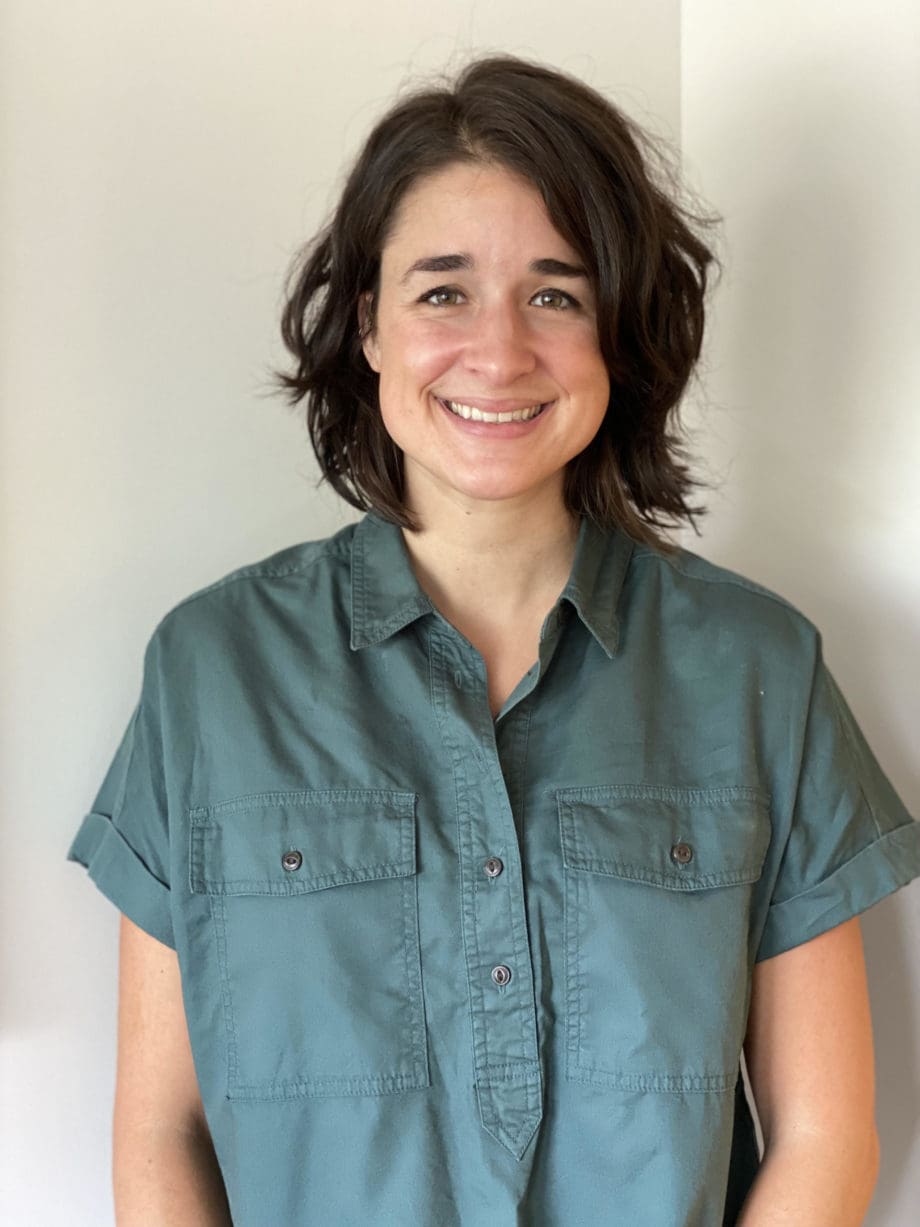
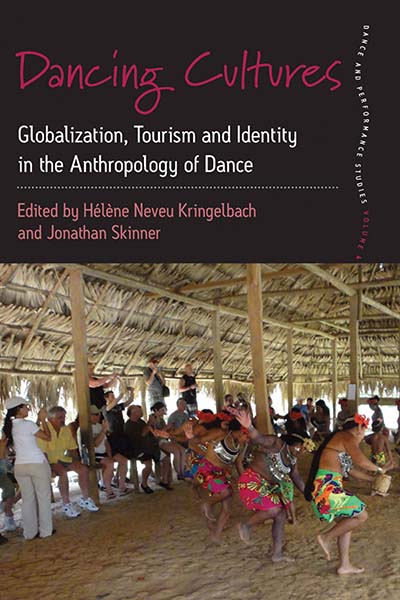
Helene Neveu Kringelbach is an Associate Professor of African Anthropology at the Department of Anthropology, University College London (UCL). She holds a joint appointment in the School of European Languages, Culture and Society (SELCS) and serves as Vice-Dean for Equality, Diversity and Inclusion in UCL's Faculty of Arts and Humanities. PhD in Anthropology (University of Oxford, 2005) MSc in Anthropology (University of Oxford, 2000) BA in Business Studies (Nancy Business School, France) Her research focuses on two primary strands: performance in Francophone West Africa and migration contexts (2002–ongoing) and transnational families between Senegal and Europe (2011–ongoing). She has extensively studied dance in urban Senegal, examining its relationship to morality, gender, and transnational policy, while her migration research investigates bi-national marriages and European immigration regulations. Recent publications analyze globalization’s impact on African dance forms, postcolonial choreographic politics, and transnational family dynamics. Awards include the 2013 Amaury Talbot Prize and a Special Citation from the Society of Dance History Scholars . Teaching covers core and optional modules in African Studies, anthropology of music/performance, gender/migration, and transnational families at both undergraduate and postgraduate levels.
Kera Washington (BA, Wellesley College; MA, Wesleyan University) is a Senior Lecturer in the Music Department at Wellesley College, specializing in African diasporic percussion and applied ethnomusicology. She co-founded and directs the Yanvalou Drumming and Dance Ensemble, and leads the all-female ensemble Zili Misik. Educational Background B.A., Wellesley College M.A., Wesleyan University Research Interests : Washington’s work explores bi-musicality in Caribbean and African Diasporic arts, focusing on Haiti, identity formation through tourism, and urban education. She bridges academic resources with inner-city communities via performance-based pedagogy. Artistic Contributions : Her publications include recordings like Cross Roads (2012) and Zee'lee Mee'seek (2010), emphasizing African diasporic percussion, cultural preservation, and intercultural dialogue. Her musical output spans educational soundtracks and interdisciplinary collaborations. Scientific Awards Boston Music Award for Outstanding International Music Boston Harbor [RE]creation Artist In Residency Fellowship (2018) Boston Foundation's Live Arts Boston Grant (2019) META Fellow (2018-2020) Teaching & Community Impact : Washington teaches full-time at Mather Elementary School (Dorchester) and has developed university courses at Northeastern, MIT, Pine Manor, and Brown. She co-led Wellesley’s Experiencing Music and Dance of Haiti course and produced the 2019 recording From the Harbor, Freedom Sings during her residency.
Chiara Pierobon is a DAAD Visiting Assistant Professor at the Henry M. Jackson School of International Studies , University of Washington. She is also a Co-Editor of the Springer Open Access Publication Series 'Transformation and Development in the OSCE Region' at the OSCE Academy in Bishkek, Kyrgyzstan. Education: Bi-national PhD in Sociology and Social Research (cotutelle de thèse) from the University of Bielefeld (Germany) and the University of Trento (Italy), 2012 Her research focuses on European Union policies in Central Asia , including civil society development, democracy promotion, sustainable development, and prevention of violent extremism. She examines power relations between states and civil society organizations, social capital formation, and the impact of EU-funded programs in post-Soviet contexts. Dr. Pierobon's publications span journals like Central Asian Affairs , Central Asian Survey , and Development Policy Review , as well as edited volumes from Springer, Routledge, and Palgrave Macmillan. Her work combines empirical analysis with policy evaluation frameworks. She has managed education exchange initiatives funded by the European Commission and DAAD , and research projects supported by the Volkswagen Foundation . Her international engagement includes visiting positions at: Asia-Europe Institute (Malaysia) University of Magdeburg (Germany) American University of Central Asia (Kyrgyzstan) German Kazakh University (Kazakhstan) University of California/Berkeley (USA) St. Petersburg State University (Russia) She serves as a consultant and trainer for international organizations such as: DVV International Europe-Central Asia Monitoring (EUCAM) European Neighbourhood Council (ENC) UNESCO Cluster Office for Central Asia
Dr. Alexander Vossen is an Associate Professor at Tilburg University and affiliated with the Jheronimus Academy of Data Science (JADS) at Eindhoven University of Technology (TU/e). His research focuses on entrepreneurial strategy decisions using computational linguistics, examining how new ventures achieve optimal distinctiveness by balancing legitimacy and innovation. Previously, he held positions at the University of Siegen (Germany) and BI Business School (Norway). He specializes in entrepreneurial business models, competitive strategy, and quantitative methods in social sciences. His work appears in journals such as Journal of Business Venturing , International Journal of Innovation Management , and Journal of Retailing . He serves on the editorial review board of Entrepreneurship Theory & Practice . His research interests span organizational identity, consumer behavior, and narrative theory in entrepreneurship. Collaborations include studies on innovation contests, monetary rewards, and the role of narratives in balancing market conformity and differentiation.