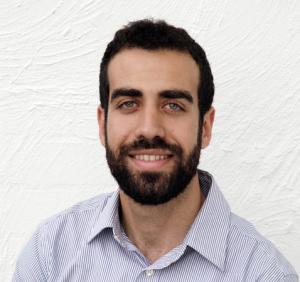
Adam Hollowell is an Adjunct Assistant Professor in the Program in Education at Duke University, where he also serves as Senior Research Associate at the Samuel DuBois Cook Center on Social Equity and Director of the Inequality Studies Minor. His teaching spans ethics, inequality studies, and history across Duke’s Kenan Institute for Ethics, Sanford School of Public Policy, and Department of History. Hollowell holds a Ph.D. from the University of Edinburgh (2009). His research focuses on inequality, higher education, public policy, and ethics, with notable work on pandemic impacts, telemedicine in education, and reproductive health access during crises. In Inequality Studies , Hollowell emphasizes understanding policies to drive social change, as highlighted in recent media coverage. His publications explore topics like student behavior shifts during the pandemic, telemedicine adoption in universities, and James Baldwin’s ethical challenges. He is a finalist for the Judith Deckers Prize (2024). Professionally, Hollowell leads projects such as Bass Connections on college contraception access and Story+ initiatives. His work bridges academia and public engagement, addressing systemic inequities through interdisciplinary approaches.
Janine O'Flynn is the Director of the Crawford School of Public Policy at the Australian National University (ANU) since 2023. Previously, she held the position of Professor of Public Management at the University of Melbourne and served as a visiting professor at institutions like City University Hong Kong and Fudan University. Her research focuses on public management reform, governance relationships, and ethical policy-making. Notable contributions include work on public value creation, performance management systems, and positive public administration. She has authored over 75 publications, including Pathways to Positive Public Administration (2024) and co-edited the Research Handbook on Public Management and COVID-19 (2024). O'Flynn has received prestigious awards such as the National Academy of Public Administration Fellowship (2022) and the Best Book Award at the Academy of Management (2013). She actively advises governments globally and chairs research committees for organizations like the Centre for Public Impact. Education: PhD (Melbourne), Bachelor of Commerce (Hons., Melbourne). Key Roles: Editorial Board Member: Public Administration , Public Management Review , and others Board of Directors, Public Management Research Association Advisory Board, Victorian Public Sector Commission Research Focus: Public sector reform, governance ethics, policy complexity, and agile government frameworks.
Marsha E. Barrett is an Assistant Professor of History at the University of Illinois at Urbana-Champaign, specializing in US political history, policy history, and African American history. She holds a PhD from Rutgers University and a BA from Yale University. Her research focuses on 20th-century American politics, particularly the evolution of Republicanism, the political influence of figures like Nelson Rockefeller, and voter dynamics among Black communities in New York. Education PhD, History, Rutgers University BA, History, Yale University Research Interests United States political history Policy history African American history 20th-century political ideologies and governance Her work examines how political figures and institutions shaped modern US politics, with a focus on New York's political landscape and the Republican Party’s ideological shifts. Recent Scholarship Explores Nelson Rockefeller’s role in moderate Republicanism and its decline Analyzes voter loyalty among Black New Yorkers during the Cold War era Investigates the intersection of wealth and political rhetoric in mid-20th century New York Awards & Honors ACLS Fellowship (2019) Lincoln Excellence for Assistant Professors (LEAP) Scholar (2019) 2014 Dixon Ryan Fox Manuscript Prize Teaching & Grants Teaches courses on American political history, African-American women’s history, and presidential politics Recipient of grants from the Ford Foundation, Rockefeller Archive Center, and New York State Archives
Stanislav Smirnov is a Professor of Mathematics at the University of Geneva, where he has been a faculty member since 2003. He also holds a part-time position at the Chebyshev Laboratory of St. Petersburg State University. As Director of the National Centre of Competence in Research SwissMAP since 2014, he leads a major research initiative funded by the Swiss National Science Foundation. His education includes a mathematics degree from St. Petersburg State University (1992) and a PhD from the California Institute of Technology (1996). Prior to joining Geneva, he held positions at Yale University, the Institute for Advanced Study in Princeton, the Max Planck Institute in Bonn, and the Royal Institute of Technology in Stockholm. Professor Smirnov's research focuses on the mathematical foundations of statistical physics, with particular emphasis on conformal invariance in two-dimensional lattice models. His work has revolutionized our understanding of critical phenomena through rigorous mathematical approaches, establishing deep connections between probability theory, complex analysis, and statistical mechanics. He develops novel discrete complex analysis techniques to prove continuum limits of lattice models at criticality. His publication record shows consistent advancement in understanding random planar geometry, percolation theory, and the Ising model, with increasing attention to Liouville quantum gravity in recent years. His work bridges deep mathematical analysis with physical insights, often providing rigorous proofs for phenomena previously understood only through physical intuition. Fields Medal (2010) for the proof of conformal invariance of percolation and the planar Ising model in statistical physics As an advisor, Professor Smirnov has mentored doctoral students including Ekin Arikök and Nikolai Bobenko. He leads the ANALYSE, PHYSIQUE MATHÉMATIQUE ET PROBABILITÉS research group at the University of Geneva. His research is supported by major grants including the NCCR SwissMAP, European Research Council's AG COMPASP, and Swiss National Science Foundation grants 200020_143434 and 200020_141329. Professor Smirnov has organized numerous influential conferences, including the "Conformal maps from probability to physics" workshop at Monte Verità (2010) and multiple "Random Planar Geometry" meetings in Les Diablerets, fostering collaboration between mathematicians and physicists working on critical phenomena and random geometry.
Alan Ritter is an Associate Professor at the School of Interactive Computing , Georgia Institute of Technology, with additional affiliation to the Machine Learning Center . His research focuses on Natural Language Processing , particularly robust models across domains/languages with fewer labels and efficient resource use, plus data-driven dialogue agents for open-topic conversations. Research Interests : Robust NLP models, cross-lingual transfer, resource-efficient learning, dialogue systems, cultural bias measurement, and privacy-aware language models Students : Mentors Ph.D. students in Georgia Tech's ML and CS programs, including Junmo Kang, Yang Chen, and Duong Minh Le. Alumni include Fan Bai (Ph.D. 2023), Yang Chen (Ph.D. 2024), and Andrew Li (M.S. 2024). Awards : NSF CAREER Award, Amazon Research Award, ACL 2024 Best Social Impact Paper, IUI 2009 Best Student Paper. Recent Work : Studies training budget allocation between supervised and preference-based finetuning, cross-lingual information extraction, cultural bias in LLMs, and privacy risk mitigation in social media disclosures. Service : Served as Program Chair for NAACL 2025, Area Chair for multiple top-tier conferences (COLM, EMNLP, ACL, EACL, AAAI). Email : alan.ritter@cc.gatech.edu
Hanjie Chen is an Assistant Professor in the Department of Computer Science at Rice University, affiliated with the Ken Kennedy Institute. She holds a Ph.D. from the University of Virginia and a Master's from the University of Science and Technology of China. Her research focuses on Natural Language Processing, Interpretable Machine Learning, and Trustworthy AI, emphasizing model explainability, alignment with human needs, and applications in healthcare, sports, and medicine. She has advised numerous students and led initiatives in AI ethics and education. Education: Ph.D. (Computer Science, UVA 2023), M.Sc. (USTC 2018), B.Sc. (Nanjing University of Aeronautics and Astronautics 2015). Awards include the Outstanding Doctoral Student Award (UVA 2023) and John A. Stankovic Research Award (UVA 2023). She has organized workshops like BlackboxNLP and served on program committees for ACL, NAACL, and EMNLP. Her recent work includes developing benchmarks like SPORTU for multimodal LLMs, evaluating medical question-answering systems, and advancing methods for robust rationale evaluation (RORA). She teaches courses on Natural Language Processing and Trustworthy NLP, emphasizing pedagogical innovation recognized by teaching awards at UVA. Research collaborations include internships at Microsoft Research, IBM, and the Allen Institute for AI. She mentors students in SURF programs and advocates for diversity in tech, serving as a mentor in UVA's CSGSG Council.
Paulami Mitra is an Assistant Professor and Academic Director of the Strategy and Sustainability track at IÉSEG School of Management in Lille, France, with prior academic experience as a Visiting Professor at the University of Southern California (2017-2018) and Teaching and Research Assistant at IÉSEG (2012-2019). Her doctoral training in Economics and Management Sciences from Université Catholique de Louvain-Mons underpins her interdisciplinary approach to business education and research. Her educational qualifications include: 2019: Ph.D. in Economics and Management Sciences, Université Catholique de Louvain-Mons, Belgium 2009: Masters in Management, Lancaster University, United Kingdom 2008: B.Tech in Information Technology (Engineering), Institute of Technology and Marine Engineering, India Dr. Mitra's research centers on entrepreneurship-sustainability intersections, with particular expertise in eco-entrepreneurship, crowdfunding dynamics for social ventures, and hybrid organizational models. Her work examines how prosocial motivations drive crowdfunding participation, the strategic advantages of hybrid structures in social enterprises, and pedagogical innovations for sustainability-focused business education. She investigates critical gaps in climate-responsive entrepreneurial frameworks and sustainable financing mechanisms. Analysis of her publication trajectory reveals a concentrated focus on social entrepreneurship evolution since 2017, with increasing emphasis on sustainability-crowdfunding synergies and educational applications. Her 2022-2024 output demonstrates methodological diversity across case studies, survey research, and conceptual frameworks, consistently targeting high-impact journals in entrepreneurship and sustainability fields. No scientific awards are documented in the provided materials. Professional activities indicate active curriculum development and executive education leadership, though specific student advisement or grant-funded research projects are not referenced in the source text. The available information does not specify laboratory affiliations, research teams, or collaborative infrastructure supporting her scholarly work.
Romain Lopez is an Assistant Professor of Computer Science and Biology at New York University, with a joint appointment in the Courant Institute of Mathematical Sciences and the Department of Biology. He will be joining NYU in September 2025, bringing expertise at the intersection of machine learning and computational biology. Prior to joining NYU, he was a Postdoctoral Fellow at Genentech and Stanford Medicine from 2021 to 2025, working with Jonathan Pritchard and Aviv Regev. Dr. Lopez received his educational training at prestigious institutions: PhD in Computer Science (2021) from the University of California, Berkeley, advised by Mike Jordan and Nir Yosef M.S. in Applied Mathematics (2016) from École polytechnique, Palaiseau, France Dr. Lopez's research focuses on developing machine learning methods to understand biological systems at the cellular level. His work bridges computational techniques with biological applications, particularly in single-cell and spatial omics analysis. He pioneered probabilistic approaches for single-cell analysis with scVI and co-developed scvi-tools, now widely adopted tools in the field. His research spans deep generative models, causal inference, perturbation modeling, and representation learning for biological data. His publication record demonstrates a consistent trajectory of innovation in computational biology, with recent work focusing on spatial biology, disentangled representations of cellular perturbations, and causal modeling of cellular responses. He has made significant contributions to the field of single-cell analysis, developing methods that help scientists interpret complex cellular data and predict how cells respond to various perturbations. Dr. Lopez has received numerous honors and awards for his research: Best Paper Award from the ICML Workshop on AI for Science (2024) Best Paper Award Honorable Mention from the AAAI Conference on Artificial Intelligence (2021) Best Student Poster Award from the ICML Workshop on Computational Biology (2019) UC Berkeley EECS Departmental Graduate Fellowship (2016) Carnot Foundation Fellowship (2016) Monahan Foundation Fellowship (2016) French National Defence Medal, Bronze Echelon (2014) At NYU, Dr. Lopez will lead the Biological Machine Learning group, which develops probabilistic machine learning methods to uncover biological mechanisms governing cellular behavior and disease. His lab focuses on creating tools that transform complex cellular data into biological insights, with applications in understanding cancer, immune responses, and fundamental cellular processes. His work has significant implications for precision medicine and drug discovery.
Anette Mikes is an Associate Professor of Accounting at the University of Oxford’s Saïd Business School and a Hertford College Fellow. She specializes in risk management, corporate governance, and sustainability, with a focus on the intersection of ethics and organizational control systems. Her research explores how risk frameworks shape corporate decision-making, particularly in climate change and decarbonization contexts. Education: PhD in Accounting from the London School of Economics (2005) Pre-doctoral work in the City of London (2006–2007) studying Chief Risk Officer roles Research Interests: Behavioral approaches to risk management Management control systems for sustainability Ethics in corporate governance Decarbonization strategies in heavy industries Her 2012 Harvard Business Review article (with Robert Kaplan) on risk frameworks remains influential, while her documentary on the Kursk submarine disaster highlights crisis management failures. Awards: 2025 Honorary Doctorate from Uppsala University 2017 ACA Prize for Risk Management Contributions 2014 Global Risk Forum Film Award Key Contributions: Co-developed Harvard’s Risk Management executive program Leads research on ‘Values at Risk’ and corporate purpose Published widely on climate risk governance and ethical leadership Her recent work emphasizes decarbonization strategies and moral accountability in business, bridging accounting practices with environmental and ethical imperatives.
Nicolas Mathevon is a Professor at the University of Saint-Etienne and a Senior Member of the Institut universitaire de France (IUF). His research focuses on bioacoustics and animal communication, spanning from marine mammals to birds. He has held visiting positions at Hunter College (City University of New York) and the University of California, Berkeley. Education Habilitation à diriger les Recherches (2002, University of Saint-Etienne) PhD (1996, University of Lyon 1) Master's Degree (ranked 2nd, University of Lyon 1) Agrégation in Life and Earth Sciences (ranked 8th) Mathevon's research explores how animals use sound for social interactions, mate selection, and environmental adaptation. His work bridges bioacoustics, neuroethology, and behavioral ecology, with a focus on decoding vocal signals' complexity. His publications cover diverse topics including animal soundscapes, vocal memory in seals, and neural encoding of communication calls. The articles highlight interdisciplinary approaches combining neuroscience, behavioral studies, and acoustic signal analysis. Scientific Awards Prose Award for Excellence in Biological and Life Sciences, AAP (2024) Chevalier des Palmes Académiques (2017) IUF Senior Member (2015-present) IUF Junior Member (2005-2010) Mathevon has supervised 17 PhD students, 10 postdocs, and contributed to public outreach through media, documentaries, and public lectures. He leads the International Master of Bioacoustics program and serves as President of the International BioAcoustic Society.
Anca Dragan is an Associate Professor in the Department of Electrical Engineering and Computer Sciences at the University of California, Berkeley, where she runs the InterACT Lab focused on algorithms for human-AI and human-robot interaction. Currently on leave from Berkeley, she leads AI Safety and Alignment at Google DeepMind, overseeing safety for Gemini models and preparing for future advancements. Dragan has been a co-PI of the Center for Human-Compatible AI and served on the steering committee for the Berkeley AI Research (BAIR) Lab. B.Sc. in Computer Science from Jacobs University Bremen, Germany Ph.D. from Carnegie Mellon University Dr. Dragan's research focuses on enabling AI agents to work effectively with, around, and in support of people. Her work bridges robotics, machine learning, and game theory to create systems that better understand human preferences and coordinate with users. Key areas include AI alignment (ensuring AI does what people actually want), learning reward functions from diverse human feedback forms, and developing algorithms for human-AI collaboration across domains like autonomous vehicles, brain-machine interfaces, and recommender systems. Her research emphasizes maintaining uncertainty about human preferences and accounting for the plurality of human values. Dr. Dragan's recent publications reveal a strong focus on addressing fundamental challenges in AI safety and alignment. Her work spans theoretical foundations of reward learning, practical implementations for human-AI coordination, and critical examinations of limitations in current approaches. There's a clear trajectory toward more robust, safe, and value-aligned AI systems that can handle complex human preferences while avoiding both present-day harms and potential catastrophic risks. IEEE RAS Early Academic Career Award in Robotics and Automation (2021) McEntyre Award for Excellence in Teaching (2020) PECASE (Presidential Early Career Award for Science and Engineering) (2019) Sloan Fellowship (2018) NSF CAREER Award (2017) Okawa Foundation Award (2017) MIT Tech Review 35 Innovators Under 35 (2017) Multiple best paper awards at top robotics and AI conferences Dr. Dragan has mentored numerous successful students who have gone on to faculty positions at MIT, Stanford, CMU, and Princeton, as well as industry roles at DeepMind, Waymo, and Meta. Her advising philosophy emphasizes both technical rigor and consideration of broader societal impacts. She has secured significant research funding including NSF CAREER, ONR Young Investigator, and Okawa Foundation awards, supporting work on human-AI interaction and alignment. Dragan has also consulted for Waymo for six years, helping develop roadmaps for deploying increasingly learning-based safety-critical systems. Dr. Dragan leads the InterACT Lab at UC Berkeley, which has produced influential work on Cooperative Inverse Reinforcement Learning, Inverse Reward Design, and other foundational concepts in human-AI interaction. The lab's research has significantly shaped the field of AI alignment, with applications spanning autonomous vehicles that coordinate with human drivers, brain-machine interfaces that adapt to user needs, and language models that better understand human preferences. Current work focuses on scaling safety approaches as AI capabilities advance, ensuring alignment keeps pace with technological progress.
Andrew Stephen is the L’Oréal Professor of Marketing and Deputy Dean for Faculty and Research at Saïd Business School, University of Oxford. He leads the Marketing faculty and directs the Oxford Future of Marketing Initiative, focusing on emerging technologies like AI and data-driven strategies in marketing, media, and advertising. His research explores digital marketing, consumer behavior, and the impact of new technologies, earning him recognition as a top global marketing scholar. His academic contributions span leading journals such as the Journal of Consumer Research and Harvard Business Review. He serves as editor of the Journal of Consumer Research, co-editor of the International Journal of Research in Marketing, and actively engages with industry through councils like the Mobile Marketing Association’s Brand Safety Council. Teaching responsibilities include marketing curriculum oversight and courses across MBA, Executive MBA, and DPhil programs, focusing on digital transformation, marketing analytics, and the future of marketing. His work bridges academic rigor with industry relevance, addressing challenges in tech-enabled marketing and global brand strategies. Awards: Top marketing academic in the UK (AMA), featured in Poets & Quants’ top 40 under 40, multiple research excellence awards. Labs/Initiatives: Oxford Future of Marketing Initiative, fostering collaborations with leading companies to tackle industry challenges. Grants/Advising: Extensive industry partnerships and academic grants not explicitly detailed in the text.
Dr Kingsley Edney is an Associate Professor in International Relations of China at the University of Leeds' School of Politics and International Studies. He holds a PhD (International Relations) and MA (Political Science) from the University of Melbourne, along with a BA(Hons) in Politics and Anthropology from Victoria University of Wellington. Fluent in Chinese and with experience living in Shanghai and Beijing, his research focuses on China's non-material international security dynamics, including cultural diplomacy, propaganda, and ideological strategies to manage global information flows. His expertise includes Chinese soft power, the role of ideology in foreign policy, and the intersection of domestic political cohesion with international security objectives. He teaches undergraduate and master's courses on China's domestic and international politics. Current postgraduate researchers under his supervision are Jinru Huang, Yanyu Lu, and Hengfeng Zhao. Edney's research outputs span topics like public perceptions of China in the Anglosphere, Chinese youth nationalism, and environmental governance. His work often bridges theoretical frameworks with empirical analysis of China's evolving global engagement strategies. He maintains active academic engagement through platforms like Google Scholar and ORCID.
Prof. Dr. Alexander Stroh-Steckelberg is Professor of Political Science with a focus on African Politics & Development Policy at the University of Bayreuth since 2022. He serves as Deputy Head of the Bayreuth International Graduate School of African Studies (BIGSAS) until 2025 and has held prior roles as Junior Professor and Senior Fellow at BIGSAS (2015–2021). His academic career includes research associate positions at the GIGA German Institute of Global and Area Studies (2006–2015) and teaching roles at the Universities of Abomey-Calavi, Heidelberg, and Lüneburg. Stroh-Steckelberg’s research spans comparative democracy studies , judicial politics , electoral systems , political party dynamics , and development policy in Africa, with regional expertise in Francophone West Africa and Rwanda . His work emphasizes institutional diffusion, informal networks in courts, and the interplay between formal and informal governance structures. Recent publications reveal a focus on judicial appointment policies , electoral manipulation , and local governance challenges across Africa. He contributes to methodological advancements in comparative area studies and network analysis , particularly in non-Western democracies. Stroh-Steckelberg is actively involved in academic communities including the American Political Science Association , German Political Science Association , and Association for African Studies in Germany .
Dr James Helal is the Assistant Dean for Sustainability and a Lecturer in Construction Management at the Melbourne School of Design (MSD), University of Melbourne. His research focuses on integrating life cycle assessment and computational tools into the structural design of tall buildings, emphasizing embodied carbon reduction. He is recognized for developing software frameworks that automate environmental impact analysis in early-stage structural design. Dr Helal teaches materials, structures, and life cycle assessment in construction management. His pedagogical excellence has earned prestigious awards, including the Edward Brown Award for Teaching Excellence. He coordinates the construction major in the Bachelor of Design program. His research addresses structural optimization, tall building sustainability, and environmental flows. Key contributions include frameworks for reducing carbon emissions in tall building design and critiques of decorative architectural elements' environmental impact. Awards: Structures Best Research into Practice Prize (Institution of Structural Engineers) Open Award for Excellence in Teaching (Faculty of Architecture, Building and Planning) Edward Brown Award for Teaching Excellence (University of Melbourne) Advising & Grants: Coordinates construction curriculum but no explicit student advisee list is provided in texts. His work aligns with sustainability-focused research grants. Labs/Teams: Engaged with MSD’s Future Cities Practice and Construction Innovation initiatives.