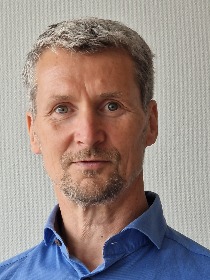
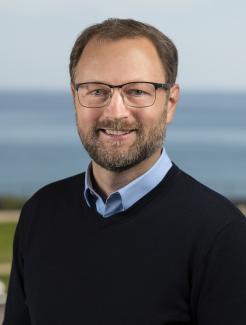
R. Michael Alvarez , Flintridge Foundation Professor of Political and Computational Social Science at Caltech, is a leading scholar in election technology, political methodology, and machine learning applications in social science. Affiliated with the Caltech/MIT Voting Technology Project , the Social and Decision Neuroscience Program , and the Resnick Sustainability Institute , his work bridges technology and democracy. Education: B.A. from Carleton College, Ph.D. from Duke University Academic Career: Caltech faculty since 1992 His research spans: Election Integrity : Monitoring election security, fraud detection, and ballot systems Computational Social Science : Applying machine learning to voter behavior and policy analysis Climate Policy : Examining public attitudes and behavioral interventions for sustainability Online Behavior : Analyzing toxicity in gaming and social media dynamics Key article trends show focus on election forensics (2025 Nature Climate Change study), game toxicity analysis (2025 CHI Play paper), and LLM applications in social science. His students include Jacob Morrier, Mitchell Linegar, and teams of postdocs and undergraduates in Caltech's SURF program. Scientific recognition includes: Google Cloud Research Innovators Class of 2022 Co-editor of multiple academic series including Cambridge Elements in Quantitative Methods
Kathrin Sele is a Senior Lecturer at the Department of Management Studies, Aalto University. Her research focuses on organizational routines, routine dynamics, and innovation management. She explores how organizations adapt to complex challenges through sociomaterial practices and embodied work. Key contributions include frameworks for analyzing routine ecologies, M&A synergy realization, and digital transformation in HR. Her work bridges practice theory, actor-network theory, and strategic management. Sele’s research spans extreme contexts (e.g., crisis management), gender equality, and ethical dilemmas in emerging markets. She collaborates on interdisciplinary projects like the ‘Routine Dynamics’ framework, emphasizing organizational adaptation in flux. Her publications appear in top journals such as Journal of Management Studies and Organization Studies . Her advising and grant activities are not explicitly detailed in the provided texts, though her prolific publication record suggests active research leadership. She contributes to academic communities through conference proceedings and edited volumes, particularly on grand challenges and innovation networks.
Professor William Housley is a Chair in Sociology at Cardiff University’s School of Social Sciences. He holds a PhD and DSc.Econ. (2012), and is a Fellow of both the Academy of Social Sciences (FAcSS) and Learned Society of Wales (FLSW). His expertise spans qualitative research methods, sociological theory, ethnomethodology, and digital sociology. He co-founded the COSMOS social media observatory and leads the EMTEDS research group, focusing on disruptive technologies and socio-digital systems. Education: PhD; DSc.Econ. (Cardiff University, 2012) Research interests include algorithmic accountability, automation, interaction studies, and the sociological implications of digital technologies. He has held prestigious roles such as the Vincent Wright Chair at Sciences Po, Paris (2017), and serves on international panels for the Volkswagen Foundation and UK REF 2021. His work emphasizes digital sociology’s role in understanding new socio-technical systems, with recent focus on AI ethics, social media governance, and interdisciplinary collaboration. Awards: DSc.Econ. (2012), Vincent Wright Chair (2017) Professor Housley supervises research in digital societies, ethnomethodology, and collaborative interdisciplinary practice. He has led projects like the Cardiff University Research Fellowship on disruptive digital technologies and contributed to policy reviews for ESRC, British Academy, and others. Active in editorial roles (e.g., Qualitative Research co-editor, 2012–2018), his lab (EMTEDS) explores emerging tech’s societal impacts. Current projects address algorithmic transparency, digital citizenship, and governance of social media.
David Darts is a Global Network Associate Professor of the Arts at New York University's Steinhardt School of Culture, Education, and Human Development. He directs the Laboratory of the Future Present, an artistic research studio exploring speculative design and societal issues through interactive media. His work spans installations, curatorial projects, and public interventions addressing themes like personal space, environmental interaction, and decentralized digital collaboration. Education details are not explicitly provided, but his professional roles and projects indicate extensive involvement in academic and creative spheres. Research interests include interactive technology, public art, and speculative design. His notable projects include the Personal Space Suit (2024), PirateBox (2011–2019), and the Nomad Lab exhibition (2020). His exhibitions and projects have been featured in venues like Alserkal Avenue (Dubai), NYU Abu Dhabi, and the Conflux Festival (New York). Awards or grants are not mentioned, but his work has received international media coverage in outlets like New Scientist and Wired Italia . Advising and grants: While no formal advisees are listed, Darts has curated exhibitions and collaborative projects involving artists and researchers. His work often involves interdisciplinary teams, such as the Playable Sculpture project with multiple artists. Labs/Teams: Directs the Laboratory of the Future Present and collaborates with institutions like Baltan Laboratories and NYU Abu Dhabi.
Gary Marks is a Distinguished Professor of Political Science at the University of North Carolina at Chapel Hill (UNC-Chapel Hill) and a Part-Time Professor at the European University Institute (EUI) in Florence. His primary affiliation is with the Department of Political Science at UNC-Chapel Hill, where he holds the Burton Craige Professorship. He also serves as a Research Professor at the Robert Schuman Centre for Advanced Studies at the EUI. Marks received his Ph.D. in Political Science from Stanford University and has held visiting professorships and fellowships at institutions such as VU Amsterdam, the Free University of Berlin, and the Hoover Institution. His research focuses on comparative politics, multilevel governance, European integration, and international organization. Notable contributions include his postfunctionalist theory of governance, detailed in works like Multi-Level Governance and European Integration (2001) and A Theory of International Organization (2019). He has been awarded prestigious honors, including the Humboldt Research Prize (2010), the Daniel Elazar Federalism Scholar Award (2017), and the Martha Derthick Award (2023) for his influential scholarship. Marks co-founded the UNC Center for European Studies (1994) and the EU Center of Excellence (1998). He currently co-leads an ERC Advanced Grant (TRANSNATIONAL) investigating political polarization in Western societies. His recent research explores education-based political cleavages, transnational governance, and the implications of crises like the pandemic on solidarity and policy responses. Awards: Humboldt Research Prize, Martha Derthick Award, Daniel Elazar Award, Honorary Doctorate from Maastricht University (2024) Grants: €2.5M ERC Advanced Grant (2010–2015), Current ERC Grant on Political Polarization (2021–2026) Labs/Teams: Transnational Lab at EUI, Chapel Hill Expert Survey (CHES) project Marks’ work bridges academic and policy circles, with datasets like the CHES providing foundational insights into global governance and political dynamics.
D.J. (David) Langley is a Full Professor of Digital Transformation & Strategy at the University of Groningen's Faculty of Economics and Business, Department of Innovation Management and Strategy. He holds concurrent roles as Senior Scientist at TNO and co-chairs the Innovation Ecosystems working group at aioti.eu. His research focuses on digital transformation, strategic management, and healthcare innovation. Langley has led projects across telecom, energy, banking, and public sectors, collaborating with firms like Philips, Rabobank, and the Dutch government. His work emphasizes digital technology's impact on institutional logic and strategic development patterns. He teaches courses on digital roadmapping and technology-driven innovation at the master's level. Key research outputs include frameworks on smart product ecosystems, flexible investment systems using real options valuation, and the role of social media in healthcare. His recent publications address climate change gamification and circular economy principles.
Dr. Mylene Lagarde is an Associate Professor of Health Economics and Deputy Head of Department (Research) at the London School of Economics and Political Science (LSE), Department of Health Policy. Her research focuses on applied economic analysis of healthcare decisions in low- and middle-income countries (LMICs), particularly provider behavior, healthcare demand, and health policy evaluation. She has conducted studies on topics such as health worker incentives, user fee removal policies, and the impact of performance-based financing. She holds affiliations with J-PAL and the University of Witwatersrand, South Africa. Her work combines quantitative methods, randomized experiments, and policy analysis to inform global health interventions. Educated in France and with field experience in Cameroon, Lagarde’s academic career includes roles at the London School of Hygiene and Tropical Medicine before joining LSE in 2016. She teaches advanced health economics courses, including MPhil/PhD programs in Health Economics and Policy, and modules on randomized evaluations of health programs. Her research has explored provider behavior in Senegal, Zambia, South Africa, and other LMICs, addressing challenges like antibiotic overprescription, healthcare quality under workload pressures, and equitable access to services. Key areas of focus include the role of pro-social preferences in healthcare workforce distribution, the effectiveness of group incentives for preventive care, and the framing effects of health policies. She has contributed to understanding how financial and non-financial incentives shape healthcare provider performance and patient choices, with implications for improving health system efficiency and equity globally.
Dr. Ezgi Cengiz is an Assistant Professor in the Department of Agricultural and Resource Economics at North Carolina State University's College of Agriculture and Life Sciences. Her research integrates industrial organization, applied microeconomics, econometrics, and health economics to examine policy-relevant questions in food and beverage markets. She holds a PhD in Resource Economics from the University of Massachusetts Amherst (2022) and an MSc from the same institution (2018), complemented by a BA in Economics from Istanbul University (2011). Research focuses on market responses to health policies, including advertising impacts, sweetened beverage taxes, and voluntary industry agreements for healthier products. She employs large-scale scanner data to analyze nutrient consumption patterns, product reformulation trends, and weather-related dietary variations. Recent work (2022-2024) demonstrates strong methodological focus on causal inference using barcode-level sales data to evaluate sodium/sugar reduction initiatives and tax policy effectiveness.
Eric Masanet is a Professor and Mellichamp Chair in Sustainability Science for Emerging Technologies at the University of California, Santa Barbara (UCSB), holding a courtesy appointment in the Department of Mechanical Engineering. He leads the Bren School's Industrial Sustainability Analysis Laboratory, focusing on decarbonizing industrial and IT sectors while advancing equity and sustainability. His research spans energy system analysis, climate mitigation, and sustainable manufacturing. Education: Ph.D. in Mechanical Engineering from UC Berkeley, with M.S. and B.S. degrees from Northwestern University and the University of Wisconsin-Madison, respectively. Research interests include data center sustainability, industrial decarbonization, and the intersection of technology and climate policy. He has contributed to the IPCC's Sixth Assessment Report, advised the U.S. White House, and serves on the DOE's Industrial Technology Innovation Advisory Committee. Notable achievements include authoring the U.S. Data Center Energy Usage Report and leading the Resources, Conservation, and Recycling journal as former Editor-in-Chief. His work bridges academia with policy, influencing international energy and climate strategies. Advising and grants: Supervises PhD students (e.g., Jaxon Stuhr) and postdocs (Antoine Merlo, Jason Ye) in decarbonization research. Collaborates with Lawrence Berkeley National Laboratory and international organizations like the IEA. Labs/Teams: Directs the Industrial Sustainability Analysis Laboratory, advancing models for low-carbon industrial and IT systems.
Libertad González is an Associate Professor of Economics at Universitat Pompeu Fabra and a researcher at the Barcelona School of Economics (Barcelona GSE). She is affiliated with the Department of Economics and Business, located at the Ciutadella Campus in Barcelona. She holds prestigious research grants, including an ICREA Academia Award and an ERC Consolidator Grant, underscoring her leadership in economic research. Research Interests: Her work spans Labor Economics, Public Economics, and Health Economics, with a strong focus on policy-relevant issues such as reproductive rights, parental leave, gender equality, and the socioeconomic impacts of health policies and pandemics. She uses rigorous empirical methods to evaluate long-term outcomes of social and health interventions. Her recent publications analyze the effects of abortion legalization, paternity leave reforms, and the impact of the Covid-19 pandemic on reproductive health. These studies reflect a consistent theme of evaluating how institutional and policy changes affect individual behavior and long-term socioeconomic and health outcomes, particularly for women and families. Scientific Awards: ICREA Academia Award ERC Consolidator Grant Advising and Grants: While specific students are not listed, she leads major funded research projects, including an ERC Consolidator Grant, which supports independent, high-impact research. Her ICREA Academia award recognizes excellence in both research and teaching, suggesting active mentorship and academic leadership. Labs and Research Teams: She collaborates with leading institutions and researchers across Europe, including the Centre for Economic Performance (LSE) and Nada Es Gratis. She is actively engaged in policy communication, presenting her findings through videos, interviews, and public blogs.
Abraham L. Newman is a Professor at the Edmund A. Walsh School of Foreign Service and the Government Department at Georgetown University, where he also serves as Director of the BMW Center for German and European Studies. His work bridges political science, international relations, and global regulatory studies, with a focus on the intersection of economic interdependence and political power. PhD in Political Science – University of California, Berkeley MA in Political Science – University of California, Berkeley MA in International Relations – Stanford University BA in International Relations – Stanford University His research centers on globalization, data privacy, financial regulation, and weaponized interdependence . He investigates how transnational networks, particularly in finance and digital infrastructure, are leveraged for geopolitical advantage. His work emphasizes the evolving role of private actors, regulatory institutions, and technological change in shaping international order. Analysis of his recent publications reveals a strong focus on economic statecraft, digital sovereignty, AI governance, and transatlantic regulatory dynamics . Themes such as financial sanctions, data privacy enforcement, and the weaponization of global networks recur across his scholarship, reflecting a cohesive research agenda on power in an interconnected world. While no specific scientific awards are listed in the provided text, his publications in top journals like Science , Nature , International Organization , and World Politics indicate significant scholarly recognition. He has advised or collaborated on major research projects related to transnational regulation, GDPR implementation, and global financial governance . Although no specific grants are listed, his leadership of the BMW Center suggests involvement in externally funded research initiatives. He has also edited or contributed to collaborative academic volumes across institutions such as Princeton and Rice Universities. His leadership of the BMW Center for German and European Studies places him at the center of a research team focused on transatlantic relations, EU policy, and comparative political economy. This center likely supports a network of scholars, students, and visiting researchers engaged in European and global governance studies.
Dr I-Shuo Chen is a Senior Lecturer in Organisational Behaviour at the School of Management, Faculty of Business and Law, Anglia Ruskin University (ARU). He previously held academic positions at the University of Dundee and Wuhan University, China, and earned his PhD in Business Studies from Trinity College, Dublin. He is actively engaged in research and editorial work, serving as Associate Editor for Frontiers in Psychology – Organisational Psychology . Education and Qualifications: PhD in Business Studies, Trinity College, Dublin Fellow (FHEA), Higher Education Academy (UKPSF), 2018 IPMA-HR Senior Certified Professional, 2000 Research Interests: Dr Chen's research focuses on organisational behaviour, particularly work engagement, work-life balance, green human resource management, creativity, innovation, and higher education. His work explores how personal and organisational resources influence employee well-being and performance, especially in digital and remote environments. Themes such as online leisure crafting, home boredom, and intelligent learning systems are central to his recent investigations. Publications and Research Trends: His recent publications appear in high-impact SSCI and SCI journals such as Computers in Human Behavior , International Journal of Hospitality Management , and Journal of Air Transport Management . The research demonstrates a consistent focus on applying psychological and management theories to practical organisational and educational challenges, with an increasing emphasis on digital transformation, employee resilience, and sustainable HR practices. Scientific Awards and Memberships: Fellow (FHEA), Higher Education Academy (UKPSF), 2018 IPMA-HR Senior Certified Professional, 2000 Associate Member, Chartered Institute of Personnel and Development (CIPD), 2019 Member, Chartered Management Institute (CMI), 2019 Member, UKRI Future Leaders Fellowships Peer Review College, 2021 Member, European Association of Work and Organisational Psychology, 2017 Member, European Academy of Occupational Health Psychology, 2014 Advising, Grants, and Editorial Roles: Dr Chen serves as Associate Editor for Frontiers in Psychology and has been an ad hoc reviewer for numerous top journals including Human Relations , International Journal of Human Resource Management , and Journal of Happiness Studies . While no specific grants or students are listed, his extensive peer review and editorial board involvement indicate active scholarly leadership. Labs and Research Teams: Although no specific lab or research team is named, Dr Chen collaborates internationally and presents regularly at major conferences such as the Academy of Management (AOM) and European Association of Work and Organisational Psychology (EAWOP), suggesting active participation in global research networks.
Nicola Paltrinieri is a Professor of Risk Assessment at the Department of Mechanical and Industrial Engineering, NTNU (Norway), and an Adjunct Professor at the University of Bologna (Italy). His expertise spans risk assessment, hydrogen technologies, process safety, and data-driven safety management. He holds Chartered Engineer and Chartered Scientist certifications and has served on editorial boards for journals like Safety Science and Journal of Risk Research . Education: PhD in Environmental, Safety and Chemical Engineering (University of Bologna, 2012) Master’s in Chemical and Process Engineering (University of Bologna, 2008) Research Interests: Focuses on hydrogen infrastructure safety, Natech accident analysis, risk-based inspection strategies, and AI integration in safety systems. His work emphasizes sustainable energy transitions and mitigating risks in emerging technologies like hydrogen. Key Projects (2022-2026): H2Glass : Decarbonizing glass and aluminum sectors via hydrogen HyInHeat : Hydrogen technologies for industrial heating HYDROGENi : Norwegian research center for hydrogen/ammonia Awards: Onsager Fellowship (2016–2021) Frank Lees Medal (2012) for safety-related publications Grants & Leadership: Head of NTNU Energy Team Hydrogen, coordinator for EU-funded projects like SUSHy , and active in international risk committees (e.g., EFCE, ESRA). His work bridges academia and industry, with over 8 PhD examinations supervised. Labs/Teams: Leads the NTNU Energy Team Hydrogen and collaborates on initiatives like SH2IFT-2 for safe hydrogen fuel handling. His research group focuses on AI-driven risk analysis and hydrogen infrastructure resilience.
Travis Robbins is an Assistant Professor of Biology at the University of Nebraska Omaha's College of Arts and Sciences. His research focuses on ecological and evolutionary adaptations in reptiles, particularly lizards, emphasizing thermal biology, epigenetics, and responses to environmental stressors such as invasive species. He holds a Ph.D. in Biology and has published extensively on topics including latitudinal clines in lizard physiology, predator-prey dynamics, and the effects of temperature on developmental and metabolic processes. Key research interests include understanding how lizards adapt to thermal environments, the role of epigenetic mechanisms in phenotypic plasticity, and the impacts of invasive species on native populations. His work integrates field observations with controlled laboratory studies to explore questions at the interface of ecology, physiology, and evolution. Recent studies investigate the physiological stress responses in lizards exposed to novel predators and the transgenerational effects of environmental challenges. Dr. Robbins' publications highlight trends in thermal adaptation, behavioral plasticity, and the ecological consequences of anthropogenic changes. His work on Sceloporus lizards has been particularly influential in elucidating mechanisms underlying latitudinal variation in body size, growth rates, and reproductive strategies. He has also examined how invasive species like fire ants affect predator-prey interactions and immune function in reptiles. No scientific awards are explicitly mentioned in the text, but his contributions include significant grants likely tied to fieldwork and laboratory research. He advises students in experimental ecology and conservation biology, though specific advisee names are not listed here. His research extends to habitat restoration and citizen science initiatives, emphasizing community engagement in ecological monitoring and conservation efforts. Dr. Robbins is affiliated with UNO's Biology Department and collaborates with institutions like the University of South Florida on projects involving epigenetic markers in herpetofauna. His lab focuses on translating ecological epigenetics into actionable insights for species conservation under climate change scenarios.
Prof. Dr. Katja Thoring is a Full Professor of Integrated Product Design at the Technical University of Munich (TUM School of Engineering and Design). She holds a doctorate in Design Research from Delft University of Technology and has previously served as Professor of Integrated Design at Anhalt University of Applied Sciences in Dessau from 2009–2022. Her research bridges product design, architectural space, and technology, focusing on how physical environments stimulate creativity and design processes across functional, emotional, and cognitive dimensions. Key areas include generative AI applications in design, innovative research methodologies, and creative workspace design. She developed methods like the 'Delphi Design Sprint' and contributed to frameworks such as the FOD (Future-Oriented Design) model. Thoring is a member of prominent design societies (DGTF, Design Society, DRS) and a founding member of the Academy of Design Innovation Management (ADIM). Notable awards include the 'Best Paper Award' at ADIM Conference (2017) and recognition as a top early-career researcher (2019). Her work integrates design education innovation, with studies on pedagogical spaces and cross-cultural design thinking. She has published extensively on design knowledge models, creative environments, and future-oriented design strategies.