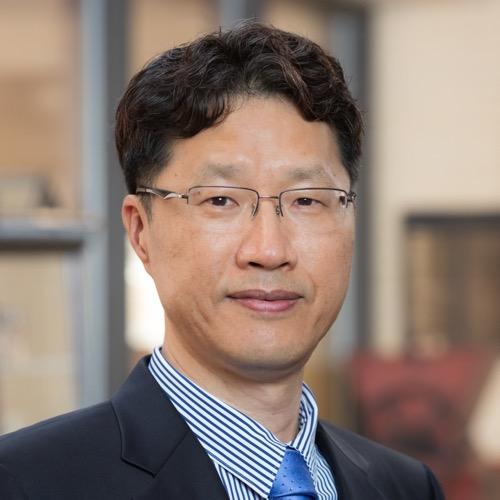
Professor Pengbo Zhou is a Professor of Pathology and Laboratory Medicine at Weill Cornell Medical College , where he has been on the faculty since 2010. His research focuses on the ubiquitin-proteasome system and its dysregulation in cancer, with particular emphasis on Cullin-RING E3 ligases, SPOP signaling, and DNA damage response pathways. Education: Ph.D., University of Michigan Medical School , 1993 B.S., Peking University (China) , 1987 Research Interests: Professor Zhou’s laboratory investigates how ubiquitin ligases, notably the CUL4 family and SPOP, orchestrate protein degradation to control genomic stability, hormone signaling, and oncogenesis. His work bridges biochemical mechanisms and translational cancer biology, exploring how disruption of these pathways leads to prostate, breast, and lung malignancies. He has pioneered studies on G3BP1-mediated regulation of SPOP, the role of UBR5 in tumor suppression, and the therapeutic targeting of ubiquitin signaling in metastatic disease. Publication Trends: Across more than 100 peer-reviewed publications, Professor Zhou’s work spans from foundational biochemical analyses of ubiquitin ligase structure-function relationships to large-scale genomic profiling of human tumors. Recent papers emphasize translational applications—engineering degron tools, characterizing cancer-associated mutations, and uncovering vulnerabilities in AR-driven prostate cancer. Scientific Awards & Funding: Principal Investigator, NIH/NCI grant “Upstream and downstream targeting of the SPOP ubiquitin signaling pathway in prostate cancer”, 2024-2029 Co-Principal Investigator, NIH/NCI grant “UBR5’s Mechanisms of Action in Tumorigenesis and Immunoregulation”, 2023-2028 Co-Investigator, NCATS Clinical and Translational Science Center UL1 award, 2022-2027 Advisory & Commercial Relationships: Advisory/Scientific Board Member, Culnexin Therapeutics LLC Ownership stake, Culnexin Therapeutics LLC Proprietary interest, Ship of Theseus LLC Professor Zhou’s team employs cell-based models, mouse genetics, and clinical specimen analyses to advance both mechanistic understanding and therapeutic strategies targeting the ubiquitin system in cancer.