Michael Lobet is a researcher at the Department of Physics , University of Namur, and affiliated with the Namur Institute of Structured Matter . His work spans metamaterials, plasmonics, and computational optimization techniques. Research Interests: Electrochromic materials and optical properties of metal oxides Genetic algorithms for photonic structure optimization Quantum optics and near-field angular momentum effects Zero-index metamaterials for quantum mechanics foundations Scientific Recognition: BPS prize for top Physics Master's thesis (2012) QEP committee Poster Prize runner-up (2012) Collaborative Projects: LAZIM (2023–2025): Lasing in near-zero refractive index media FSR-Cofin (2021–2022): Heat treatment effects on metal-dielectric glasses PLASMON-EC (2020–2023): Plasmon excitation in electrochromic nanoparticles
Christopher Rees is a Reader in Human Resources and Organisational Change at the Global Development Institute (GDI), University of Manchester. He holds dual professional qualifications: Chartered Psychologist (BPS) and Fellow of the Chartered Institute of Personnel and Development (CIPD). His academic roles include subject leadership for the Management and Governance (MGD) teaching cluster, overseeing MSc programmes in Organisational Change, HRM, and Development Projects. He is an active PhD supervisor with over 30 successful completions across diverse regions like Chile, China, UAE, and Thailand, focusing on HRM, organisational change, and public sector reform. Rees’ research interests center on international HR management, organisational development, and policy-driven change in transitional economies. His work spans sustainability, SME resilience, and cultural impacts on entrepreneurship in Africa. He has externally examined over 30 institutions globally, including the University of Birmingham and University of Malta. He serves as an Adjunct Professor at Universiti Teknologi Malaysia and editorial board member for journals like European Journal of Training and Development . Notable contributions include studies on UAE Happiness Agenda implementation, Ghana’s entrepreneurial ecosystems, and Chilean public education reform. His awards reflect professional recognition: Chartered Psychologist (2005) and CIPD Fellowship (2012). He actively participates in UN Sustainable Development Goals related to quality education and decent work.
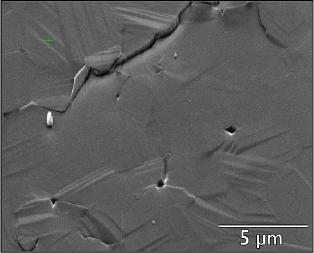
Jessica Anne Krogstad is an Associate Professor in the Department of Materials Science and Engineering at the University of Illinois, Urbana-Champaign. She holds a PhD from the University of California, Santa Barbara, and completed a postdoctoral fellowship at Johns Hopkins University. Her research focuses on materials in nonequilibrium configurations under extreme conditions, emphasizing structural materials’ phase/morphological evolution and functionality. Key areas include solid-state electrolytes, radiation-resistant materials, and microstructural design for energy applications. Education: PhD in Materials (UCSB, 2010s); Postdoc at Johns Hopkins (2014). Academic roles include teaching MSE 206 (Mechanics for MatSE) and MSE 440 (Mechanical Behavior of Metals). Her group operates from MRL 166, with lab equipment including TEM, SEM, and ion beam tools. Research interests span nanotwinned alloys, ceramic thermal barrier coatings, and hydrogen embrittlement. Recent trends in publications emphasize alloy composition tuning, solid electrolytes, and irradiation effects in nuclear materials. Over 50 articles published across high-impact journals like Scripta Materialia and Acta Materialia . Awards: DOE Early Career Award (2016), TMS Early Career Faculty Fellow (2020), ACerS Robert L. Coble Award (2019) Advising includes mentoring Megan Emigh (PhD 2018-2022) and collaborating on interdisciplinary projects with BP-ICAM and NPRE. Active in diversity initiatives, including JOM series on field challenges and outreach programs. Current projects explore hydrogen interactions in alloys, carbon-neutral energy materials, and sustainable manufacturing. Lab spaces include environmental furnaces, SPS systems, and in situ TEM setups.
Peter J. Harte is a Professor in the Department of Genetics and Genome Sciences at Case Western Reserve University School of Medicine. He is a member of the Cancer Genomics and Epigenomics Program at the Case Comprehensive Cancer Center. His research focuses on transcriptional activation, repression, chromatin structure , and homeotic genes , particularly their role in Drosophila development. Education: Ph.D. in Biology from Yale University (1982), Postdoctoral Fellow at Stanford University (Biochemistry) Research interests: Molecular mechanisms of homeotic gene regulation, chromatin remodeling, and Polycomb/Trithorax protein interactions. His work explores how spatial gene expression patterns are maintained through chromatin modifications. Scientific Awards: Jane Coffin Childs Postdoctoral Fellow G. Harold and Liela Y. Mathers Young Investigator Award Key Collaborations: Editorial Board member of Mechanisms of Development , co-authorships with researchers like Tie F, Banerjee R, and Cosgrove MS on chromatin-mediated gene silencing and activation.
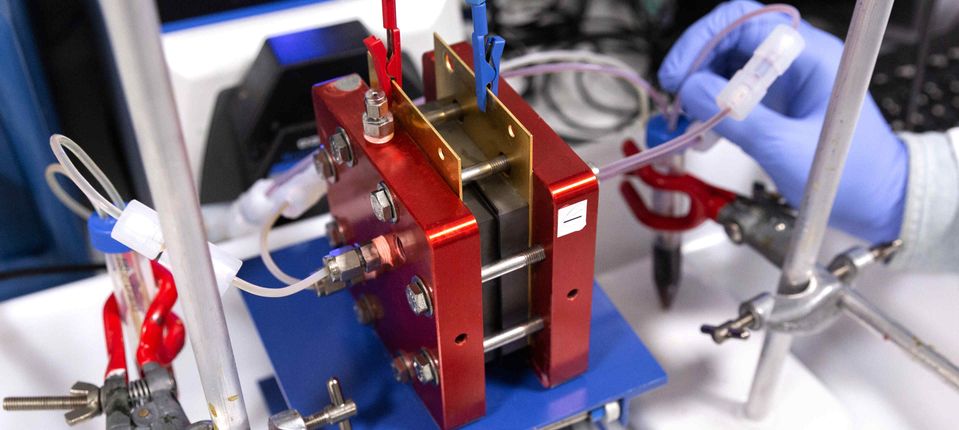
Dr Qilei Song is an Associate Professor in Chemical Engineering and a principal investigator at the Barrer Centre, Imperial College London. He leads the Functional Membranes and Energy Materials Group, focusing on porous materials and membrane technologies for molecular separations, catalysis, and energy systems. Affiliated with Grantham Institute and Institute for Molecular Science and Engineering Co-investigator in £9M EPSRC Programme Grant SynHiSel ERC Starting Grant recipient for membrane development in grid-scale energy storage His research spans CO2 capture , hydrogen production , ion exchange membranes , and advanced battery materials . Key projects include redox flow batteries, fuel cells, and water purification systems. The group maintains strong collaborations with industrial partners like BP-ICAM, Shell, Toyota Motor Europe, and Schlumberger. Notable scientific achievements include the IChemE Nicklin Medal and ERC Starting Grant . The group's publications emphasize ion transport mechanisms, microporous polymers, and electrochemical device optimization. Advising PhD students Charlotte Breakwell, Yijie Yang, Naiqi Meng, and others Alumni include Dr Anqi Wang (now KAUST), Dr Rui Tan (Swansea University), and Dr Zhiyu Fan (clean tech startup) The lab houses argon-filled glovebox systems for battery assembly and testing, supporting projects in lithium-ion batteries and redox flow batteries under inert conditions.
Mohammed Saad is a Professor of Innovation and Technology Management at the Bristol Business School within the University of the West of England's Faculty of Business and Law. He holds a PhD in Technology Management, complemented by an MSc in Operational Research, Diploma in Management Studies, and a Degree in Economics. His research focuses on knowledge exchange, university roles in innovation systems, SME capacity-building, and sustainable development, with interdisciplinary links to operations management and global policy. Saad leads an active research team investigating systems of innovation and founded the COSINUS network. He has secured over £1 million in research funding since 1999, including Horizon 2020 projects on sustainable public procurement and initiatives supporting SMEs. His collaborations span Oracle Corporation, BP, and international bodies like the Association of Commonwealth Universities. Saad co-edits the International Journal of Technology Management and Sustainable Development and has organized five international conferences. His teaching prepares students as 'agents of change' in courses like Innovation Management and Global Operations Risk, while his PhD supervision emphasizes practical transformation. Media engagements highlight his public impact. His research outputs predominantly explore innovation economics, education systems, and sustainable supply chains. Recent articles analyze Fintech skill gaps, university-industry links in developing economies, and agricultural labor patterns, employing empirical methods to derive policy insights. Major Grants: Horizon 2020 (sustainable procurement), CIPS Sustainability Index, Algerian higher education-industry linkage project (2018-2020) Labs/Teams: Leads systems of innovation research team; founded COSINUS academic network
Marian McLaughlin is a Senior Lecturer at the School of Psychology, Ulster University , with a focus on child and adolescent health psychology. She contributes to research aligned with UN Sustainable Development Goals (SDGs) related to health and well-being (SDG3) and reduced inequalities (SDG10). Her research spans: Behavioral change interventions for adolescent health Child health and well-being HPV education and prevention Pro-environmental behavior Policy development through participatory methods Recent publications include systematic reviews on adolescent mental health programs and HPV education. Her work employs behavioral models like Theory of Planned Behavior and COM-B framework. Scientific awards include Fellow of the Higher Education Academy Associate Fellow of the British Psychological Society (BPS) Member of Northern Ireland Division of Health Psychology Member of Children’s Research Network She collaborates with researchers across Ulster University's Business School and Psychology faculty on projects like EPIC Futures NI , addressing economic inactivity through behavioral science. Funders include BBSRC/ESRC, Health Services Executive, and Northern Ireland Chest Heart and Stroke. Her methodological expertise includes qualitative studies (focus groups, semi-structured interviews), psychometric evaluations, and systematic reviews. She supervises PhD researchers like Samantha Royston-Woods and contributes to public health policy design.
Professor Marian Wiercigroch is the Sixth Century Chair in Applied Dynamics and Director of the Centre for Applied Dynamics Research (CADR) at the School of Engineering, University of Aberdeen. He has held numerous leadership roles including Head of Engineering and Director of Internationalisation. His research spans theoretical and applied nonlinear dynamics with applications in drilling, energy harvesting, and mechanical systems. Research Interests: Nonlinear Dynamics and Chaos Applied Dynamics and Vibrations Rotary and Percussive Drilling (Resonance Enhanced Drilling) Energy Harvesting via Parametric Pendula Control of Smart Structures Underwater Acoustics and Fluid-Structure Interaction Machine Tool Dynamics and Precision Machining His recent publications (2022–2023) reveal a strong focus on vibro-impact systems, drilling dynamics, machining stability, and bio-inspired damping. The work integrates mathematical modeling, experimental validation, and control strategies, primarily published in journals such as International Journal of Mechanical Sciences , Communications in Nonlinear Science , and Physica D . Scientific Awards and Honors: Fellow of the Royal Society of Edinburgh (FRSE) Fellow of the Institution of Mechanical Engineers (FIMechE) Fellow of the Institute of Mathematics and Its Applications (FIMA) DSc honoris causa, Lodz University of Technology REF2021 and REF2014 Panel Member Senior Fulbright Fellow Scottish Champion of Knowledge Transfer Honorary and Distinguished Guest Professorships in China, Russia, and Argentina Advising and Grants: Professor Wiercigroch supervises multiple PhD students including Joseph Emans, Olusegun Ajibose, James Ing, and Richard Morrison. He has led major funded projects from EPSRC, Royal Society, BP, European Space Agency, and ITI Energy, including a £4.6M programme on Resonance Enhanced Drilling. His grants focus on nonlinear dynamics in engineering design, vibration control, and offshore systems. Labs and Teams: He leads the Centre for Applied Dynamics Research (CADR) at Aberdeen, which includes researchers like Dr. Ekaterina Pavlovskaia and Dr. David Wagg. The group collaborates internationally with institutions in Brazil, Poland, China, and the USA, and has developed experimental rigs for drilling and energy harvesting.
Jamie Chan is a Lecturer in the School of Humanities and Social Science at the University of Brighton, actively contributing to the Centre for Transforming Sexuality and Gender (as Communications Lead) and the Inclusive Digital Societies Research Excellence Group. She teaches across multiple psychology modules including Psychology Beyond the Barriers and leads the newly approved Consumer Culture, Body Image and Wellbeing module (2025/26), employing critical pedagogy to foster inclusive, dialogical learning environments that address systemic power dynamics. Education: PhD in Psychology, University of Sussex (2020-2024) MSc in Applied Social Psychology, University of Sussex (2018-2019) BSc (Hons) in Psychology, University of Surrey (2014-2017) Research Interests: Dr Chan's work critically examines how systemic inequalities shape body image experiences through intersectional lenses, with primary focus on: Body image among working-class women and minoritised ethnic/sexual groups Antiracist frameworks in body image research Impacts of white supremacy, classism, and sexism on appearance-based discrimination Objectification and commodification of women's bodies Her methodology centers on interpretative phenomenological analysis within critical social psychology. Publication Trends: Her 7 publications (2022-2025) reveal concentrated exploration of body image within intersectional frameworks, particularly examining white supremacy's role (SIBI framework), UK-based working-class women's experiences, and South Asian women's skin color dissatisfaction. This body of work bridges psychology, sociology, and critical race studies, demonstrating consistent thematic progression toward structural analyses of power. Advising and Professional Activities: Dr Chan co-supervises PhD projects on South Asian gay/bisexual men's career decisions and UK youth educational class dynamics, prioritizing mentorship for minoritised-background students. She holds key roles in the Centre for Transforming Sexuality and Gender (Management Board), BPS Psychology of Women and Equalities Section (Committee), and Inclusive Digital Societies REG (ECR Rep), while peer-reviewing for Body Image journal. Research Networks: She actively contributes to the Centre for Transforming Sexuality and Gender as Communications Lead, participates in the Inclusive Digital Societies Research Excellence Group, and collaborates externally with Sussex University's Sports, Physical Activity, Health and Exercise Research (SPHERE) Group.
Dr. Kerry Quincey is a Senior Lecturer in Psychology at De Montfort University, within the School of Applied Social Sciences. Her work bridges research, teaching, and public engagement, with a strong focus on health psychology and qualitative methodologies. Ph.D in Health Psychology MSc in Health Psychology PGCert in Learning and Teaching in Higher Education BSc (Hons) Human Psychology Her research centers on critical health issues, particularly the lived experiences of men with breast cancer, health inequalities, and the wellbeing of marginalized patient populations. She employs innovative visual methods such as photovoice and interpretative phenomenological analysis (IPA) to explore identity, masculinity, and chronic illness. Her work challenges the marginalization of men in breast cancer discourse and promotes inclusive healthcare narratives. Dr. Quincey's recent publications demonstrate a consistent focus on visual and qualitative approaches to understanding patient experiences, especially in male breast cancer and chronic conditions like M.E./CFS. Her work spans psychosocial oncology, gender studies, and methodological innovation in qualitative inquiry. Scientific Awards and Recognitions: Chartered Psychologist, British Psychological Society (BPS) Fellow of the Higher Education Academy (FHEA) Member, BPS Qualitative Methods Section (since 2018) Member, BPS Division of Health Psychology (since 2011) Dr. Quincey actively mentors doctoral students and has secured internal research funding at DMU for projects on lobular breast cancer and the experiences of gay and bisexual men with breast cancer. She collaborates with the NHS, breast cancer charities, and patient advocacy groups, emphasizing community-engaged research. She co-founded 'The Men's VMU', an online support platform for men with breast cancer, reflecting her commitment to translating research into practical support. She teaches across undergraduate and postgraduate programs, including Health Psychology and Qualitative Research Methods, and contributes to doctoral training in visual methodologies. Her research group affiliations include the Institute for Psychological Sciences and the Health Psychology cluster at DMU.
Angela Prout is the Lead Clinical Tutor at the Institute for Collective Place Leadership, School of Social Sciences, Humanities and Law (SSSHL) at Teesside University. She plays a central role in the Clinical Psychology Doctoral Training Programme, overseeing the clinical practice strand and ensuring placements meet standards set by the Health and Care Professions Council (HCPC) and the British Psychological Society (BPS). Her work involves close collaboration with NHS trusts, education commissioners, and regional training programs. She represents the university on national clinical psychology committees and boards, contributing to the strategic development of training and service delivery. Lead Clinical Tutor, Clinical Psychology Doctoral Programme Focus on high-quality clinical training and placement coordination Active engagement with NHS and national psychology education networks Angela Prout's research and professional interests center on Cognitive Analytic Therapy (CAT), complex trauma, personality disorders, and systemic barriers to equitable mental healthcare. She investigates how diagnostic labeling and organizational structures impact access to care and the effectiveness of therapeutic interventions. Her work also extends into organizational psychology, particularly in the context of service design and improvement within public health systems. With a strong background in NHS service leadership, she has led initiatives in service design and improvement, particularly within military, police, and occupational health settings. Her teaching emphasizes effective clinical supervision and evidence-based therapeutic practices. Her professional activities reflect a deep commitment to improving clinical training standards and addressing inequalities in mental health care through both practice and systemic change. External Roles and Professional Experience: Consultant Clinical Psychologist with extensive NHS experience Service leadership in NHS, including design and improvement projects Clinical work with military and police personnel Experience in private occupational health services, providing assessments and therapy Teaching Focus: Cognitive Analytic Therapy Complex trauma Effective supervision in clinical practice
M. Nasir Uddin is a Research Associate Professor at Texas A&M University's Health Science Center College of Medicine, specializing in Medical Physiology. His research focuses on translational studies in maternal fetal medicine, particularly hypertension during pregnancy and ovarian cancer metastasis. He holds a PhD from Gifu University (Japan) and completed postdoctoral training at Texas A&M and Baylor Scott & White Healthcare. Education: B.Sc. (Hons) and M.Sc. in Biochemistry and Molecular Biology, University of Dhaka, Bangladesh (1988 & 1990) PhD in Molecular Biology, Gifu University, Japan (2000) Postdoctoral Fellow, Japan Society for Promotion of Science in Molecular Medicine (2003-2005) Postdoctoral Research Associate/Assistant Research Scientist at Texas A&M Health Science Center (2006-2010) Research Interests: Dr. Uddin’s lab investigates pathogenic mechanisms of preeclampsia (focusing on marinobufagenin and angiogenic imbalance) and novel therapeutic targets for ovarian cancer metastasis. He uses rodent/small monkey models, cell lines, and patient studies, collaborating with institutions like Baylor Scott & White Healthcare. Key Scientific Contributions: His work has identified marinobufagenin as a key biomarker for preeclampsia and explored pravastatin’s protective effects on cytotrophoblasts. He also discovered a novel inhibitor for ovarian cancer metastasis using plant-derived compounds like trimethylquercetin. Awards & Recognition: Not explicitly listed but includes FAHA (Fellow of the American Heart Association). Labs/Teams: Leads a multidisciplinary lab integrating molecular biology, pharmacology, and clinical research in maternal health and oncology. Collaborators include David Zawieja (lymphatic physiology), Thomas Kuehl (vascular biology), and others.
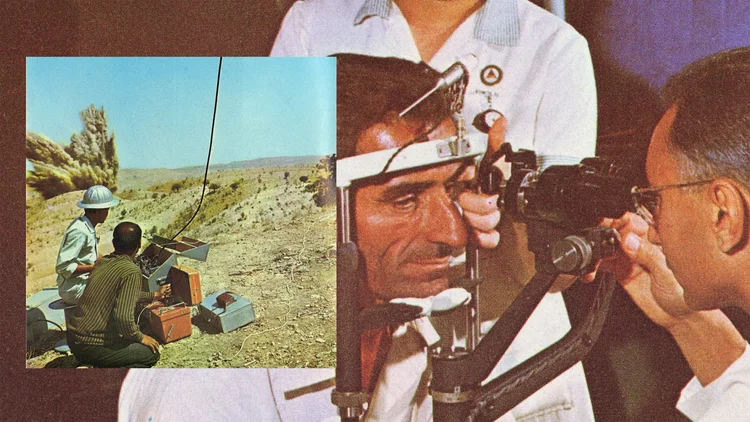
Sanaz Sohrabi (b.1988, Tehran) is an Assistant Professor at Concordia University's Department of Communication Studies. She is a visual culture researcher and artist-filmmaker conducting archival studies on oil industry visual regimes, postcolonial ecologies, and resource extraction cultures. Her work combines artistic research with academic analysis, focusing on the political economy of images. Education: BFA from University of Tehran College of Fine Arts, MFA from School of the Art Institute of Chicago (merit scholarship), PhD from Concordia University's Center for Interdisciplinary Studies in Society and Culture Teaching experience: School of the Art Institute of Chicago and University of Illinois at Chicago Her research explores colonial and postcolonial visual infrastructures in oil industries. Key projects include: One Image, Two Acts (2020) - Examines BP's colonial ethnographic films Scenes of Extraction (2023) - Critiques oil extraction visual cultures Specters of the Subterranean (2021-ongoing) - Reconstructs OPEC's cultural history Archives of Oil: Future Relics (2021) - Analyzes BP's historical media Sohrabi's work has been internationally acclaimed through: Exhibitions at Ljubljana Biennial, Berlinale Forum Expanded, and Montreal's Centre Clark Festival awards: IndieLisboa Best Short Film, Valdivia Special Jury Mention, Mimesis Best Documentary Short Residencies: Skowhegan School and RAW Académie She is currently developing a feature documentary about OPEC's establishment and preparing a 2025 artist book documenting her visual research processes.
Davide Gaiotto serves as an Adjunct Assistant Professor in the Department of Physics & Astronomy within the Faculty of Science at McMaster University. His extensive scholarly activity spans over two decades with numerous publications in high-impact theoretical physics journals. His research focuses on the deep connections between quantum field theory, string theory, and advanced mathematical structures. Key areas include supersymmetric gauge theories (particularly N=2 and N=4), geometric Langlands program, holography, vertex operator algebras, and topological aspects of quantum field theories. His work often reveals profound mathematical structures underlying physical phenomena, bridging theoretical physics with pure mathematics. Analysis of his recent publications (2023-2025) shows continued exploration of quantum analytic Langlands correspondence, twisted holography, and the interplay between gauge theories and mathematical structures. His work demonstrates remarkable consistency in addressing fundamental questions at the physics-mathematics interface while maintaining technical rigor. Gaiotto has received significant scholarly attention with publications referenced across multiple platforms including Wikipedia pages, academic social networks, and research databases. His work shows strong interdisciplinary impact across theoretical physics and mathematics. His scholarly network includes collaborations across the theoretical physics community, with publications showing connections to leading researchers in mathematical physics and string theory. While specific grant information isn't provided in the text, the volume and quality of publications suggest sustained research support.
Dr. Nevenka Meštrović is a senior research scientist and Head of the Laboratory of non-coding DNA at the Ruđer Bošković Institute, Division of Molecular Biology, in Zagreb, Croatia. She is also a mentor and supervisor for doctoral students at the University of Zagreb and other Croatian universities. Education: Ph.D. in Genetics and Evolution, Faculty of Science, University of Zagreb (1999) Mr.Sc. in Biochemistry, Faculty of Science, University of Zagreb (1994) B.Sc. in Molecular Biology, Faculty of Science, University of Zagreb (1989) Research Interests: Dr. Meštrović's research focuses on the evolution and function of non-coding DNA , particularly satellite DNA sequences and their role in centromere biology , genome evolution , and chromosomal organization . Her work spans in silico analyses, molecular cytogenetics, and comparative genomics across nematodes, beetles, and other model organisms. She also explores the epigenetic regulation of repetitive DNA and its implications in development and speciation. Recent publications highlight her expertise in Tribolium castaneum genomics, holocentric chromosomes, and satellite DNA dynamics across taxa. Her research integrates long-read sequencing, transcriptomics, and bioinformatics to uncover the mechanisms behind repetitive DNA proliferation and its evolutionary significance. Scientific Awards: Annual Award of the Ruđer Bošković Institute for best scientific papers (2020) Award J. J. Strossmayer (Croatian Academy of Sciences and Arts, 2008) Supervision & Grants: Dr. Meštrović has supervised multiple PhD students, including Evelin Despot-Slade and Martina Pavlek. She has led or collaborated on numerous nationally and internationally funded projects, including: Principal Investigator: "(Epi)genomics and transcriptomics of euchromatic satellite DNAs" (Croatian Science Foundation, 2020–2024) Principal Investigator: "Development of genomic markers for parasitic nematodes" (Adris Foundation, 2019–2022) Collaborator: COST Action 872, FP7-REGPOT, Croatian-French bilateral projects, and more. Laboratory & Team: As Head of the Laboratory of non-coding DNA at the Ruđer Bošković Institute, Dr. Meštrović leads a dynamic team focused on satellite DNA evolution, centromere genomics, and epigenetic regulation. The lab utilizes cutting-edge genomic and cytogenetic tools to study model organisms such as Tribolium castaneum and root-knot nematodes.