- Spectroscopy
- Quantum Fluids
- Superfluid Helium
- +۵ مورد دیگر
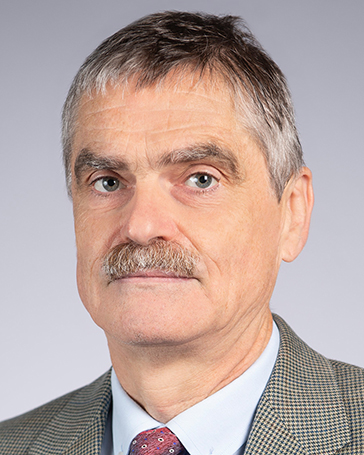
Andrey F. Vilesov serves as Professor of Chemistry and Physics and Astronomy at the University of Southern California within the Dornsife College of Letters, Arts and Sciences, holding a primary appointment in the Department of Chemistry. His office is located in the Seeley G. Mudd Building (SSC 723), and he maintains an active research profile with publications extending to 2025. His educational background includes: Ph.D. in Physics from St. Petersburg State University (1985) Habilitation (H.D.R.) in Chemical Physics from the University of Göttingen (1999) Vilesov's research pioneers the spectroscopic investigation of quantum systems in superfluid helium environments, specializing in infrared and x-ray techniques to study molecular ions, clusters, and carbocations at near-absolute zero temperatures. His work bridges physical chemistry and quantum physics, focusing on solvation dynamics, ion-molecule reactions, and the structural properties of quantum fluids. The Vilesov Research Group develops advanced methodologies for isolating reactive species in helium nanodroplets, enabling unprecedented observation of transient chemical intermediates. Analysis of his 2022-2025 publications reveals three dominant research thrusts: (1) high-resolution infrared spectroscopy of cationic clusters (e.g., CH 5 + , C 2 H + , water dimer cations), (2) quantum fluid dynamics including vortex formation and phase separation in rotating droplets, and (3) x-ray free electron laser applications for imaging ionization dynamics and nanoplasma evolution. His group consistently advances techniques for generating large, vortex-free helium droplets and characterizing solute aggregation in quantum solvents. The Vilesov Research Group operates specialized cryogenic beam facilities at USC, collaborating with international x-ray laser facilities to probe ultrafast dynamics in quantum systems. Their experimental approach combines molecular beam techniques with advanced spectroscopy to investigate fundamental processes in isolated quantum environments, with implications for astrochemistry, quantum computing, and nanoscale material synthesis.