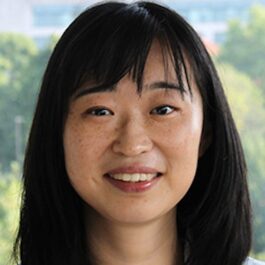
Ermin Wei is an Associate Professor in the Department of Electrical & Computer Engineering at Northwestern University 's McCormick School of Engineering. She is also affiliated with the Industrial Engineering and Management Sciences department and the Communications and Networking Laboratory . Education PhD in Electrical Engineering and Computer Science, MIT MS in Electrical Engineering and Computer Science, MIT BS in Computer Engineering, Finance, and Mathematics with a minor in German, University of Maryland Her research focuses on distributed optimization algorithms for networked systems , with applications to smart grids , energy markets , and multi-agent networks . Key areas include nonlinear convex optimization , asynchronous algorithms , and game theory . Recent publications address federated learning stability, EV charging optimization , energy network privacy , and attack resilience in multi-agent systems , reflecting interdisciplinary work combining machine learning , power engineering , and economic modeling . Scientific Awards Ernst A. Guillemin Thesis Award (2nd place) for Master's Thesis, MIT
Ana Oskoz is a Professor at the University of Maryland Baltimore County (UMBC) in the Department of Modern Languages, Linguistics & Intercultural Communication. She currently serves as Associate Dean in the College of Arts, Humanities, and Social Sciences and chaired her department from 2018 to 2022. Her research focuses on technology-driven second language acquisition. Key areas include: Use of synchronous/asynchronous tools (chats, blogs, wikis) Promotion of cultural discussions through digital platforms Enhancing intercultural competence and FL writing Digital storytelling and Web 2.0 integration in education Recent publications highlight her work with collaborative technologies like Wikis, Screencast-O-Matic, and Microsoft Word for multimodal feedback in FL classrooms. She co-edits the CALICO Journal, contributing to CALL (Computer-Assisted Language Learning) discourse.
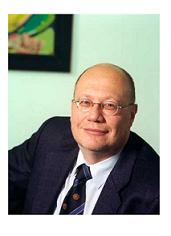
Adam Wolisz is a full Professor of Electrical Engineering and Computer Science at Technische Universität Berlin (TU Berlin), where he founded and led the Telecommunication Networks Group (TKN) from 1993 until 2018. He also served as Executive Director of the Institute for Telecommunication Systems (2001-2018), inaugural Dean of the Faculty of Electrical Engineering and Computer Science (2001-2003), and is currently an Einstein Center Digital Future (ECDF) Fellow. Since 2005 he has held an adjunct appointment at the University of California, Berkeley, and is presently a visiting researcher at the Berkeley Wireless Research Center. Education Dipl.-Ing. in Control Engineering, Silesian Technical University, Gliwice (1972) Dr.-Ing. in Computer Engineering, Silesian Technical University, Gliwice (1976) Habilitation in Computer Engineering, Silesian Technical University, Gliwice (1983) Research Interests Professor Wolisz has spent five decades advancing the architectures, protocols, and performance evaluation of communication networks. His current work centres on mobile multimedia communication , wireless sensor networks , and cognitive/cooperative wireless systems . Methodologically, he combines rigorous analytical modelling with large-scale simulation and real-world experimentation, frequently within the open testbeds run by TKN. A cross-cutting theme is Quality of Service (QoS) —from early work on real-time operating systems and industrial field-buses to recent studies on QoE-driven adaptive video streaming and ultra-reliable low-latency vehicular communications. His group is internationally recognised for contributions to reinforcement-learning-based MAC scheduling , spectrum sharing between LTE-U and WiFi , and energy-efficient protocol design . Publication Impact & Trends Across more than 200 refereed publications, two clear trajectories emerge: (1) a continuous evolution from wired network modelling (WDM optical networks, ATM, early Internet QoS) toward fully wireless and mobile settings, and (2) an increasing reliance on machine-learning techniques to tackle uncertainty and dynamics in dense, heterogeneous wireless environments. Recent papers exploit deep reinforcement learning for scheduling, federated learning for context-aware services, and transfer learning for realistic mobile-app testing. Scientific Awards & Recognition Best Paper Awards: IEEE WoWMoM 2020, IEEE INFOCOM CNERT 2019, ACM MSWiM 2017, IEEE EW 2017, IFIP WD 2017, IEEE EW 2009 Best Demo Award: ACM/IEEE IPSN 2014 (EVARILOS benchmarking platform) Senior Member, IEEE & IEEE ComSoc; Member, ITG (VDE); Steering Board, GI/ITG KuVS Doctoral Advising, Projects & Funding Since establishing TKN in 1993, Professor Wolisz has supervised over 60 completed PhD dissertations . Current and recent funding includes the DFG Collaborative Research Centre 1053 “MAKI”, DFG priority programme “SmartSynch”, EU projects (e.g., Fed4FIRE+, H2020 5G-Infrastructure), and industrial collaborations with Deutsche Telekom, Nokia, and Rohde & Schwarz. The group operates large-scale indoor and outdoor testbeds (FIT/IoT-LAB Berlin, TKN campus testbed, EVARILOS benchmarking framework) that are open to external researchers. Laboratories & Teams At TU Berlin, Professor Wolisz heads the Telecommunication Networks Group (TKN) , comprising more than 25 researchers (post-docs, PhD candidates, MSc students, technical staff). TKN maintains four major labs: the Wireless Communication Lab (software-defined radios, mmWave, IEEE 802.11ax/ay), the Sensor Networking Lab (IoT, 6TiSCH, energy harvesting), the Networking Testbed (optical backhaul, network softwarisation), and the QoE & Multimedia Lab (adaptive streaming, immersive media). Multiple spin-off companies have emerged from TKN research, most recently “Wolisz Technologies” (founded 2020) commercialising AI-driven Wi-Fi optimisation.
Lina Battestilli is a Teaching Professor in the Department of Computer Science at North Carolina State University's College of Engineering, where she has served since 2012. Her career spans industry research at IBM and academia, with promotions from Assistant to Associate and Full Teaching Professor reflecting her impact on computer science education and diversity initiatives. PhD in Computer Science, North Carolina State University (2005) MS in Computer Networking, North Carolina State University (2002) BS in Electrical Engineering with Minor in Applied Mathematics, Kettering University (1999) Her research centers on innovative computer science pedagogy , particularly academic help-seeking behaviors, peer collaboration frameworks, and scalable teaching methods for large courses. She champions broadening participation in computing through evidence-based interventions targeting women and underrepresented groups, while maintaining expertise in cloud networking and software-defined networking architectures. Analysis of her 2023-2025 publications reveals dominant themes in computer science education research, with 80% focused on student persistence, help-seeking behaviors, and hybrid flexible (HyFlex) instruction models. A significant portion addresses diversity interventions, particularly lightweight self-assessment techniques proven to improve women's retention in computing. Her work bridges educational theory with practical classroom applications, emphasizing data-driven approaches to course design. Scientific Awards NC State Outstanding Teaching Award (2023) Cultural Competence in Computing (3C) Faculty Fellow (2021-2023) NC State DELTA Faculty Fellow (2020-2022) NC State Computer Science Person of Exceptional Performance Award (2021) NC State Women & Minority Engineering Best Online Pivot Award (2021) NC State Computer Science Awesome Award for Teaching (2021) ACMP/AITP Carol Miller Outstanding Undergraduate Lecturer Award (2016) Nancy G. Pollock University-wide Best Dissertation Award (2006) As Faculty Adviser for Women in Computer Science (WiCS) since 2013 and Grace Hopper Conference Coordinator since 2015, she mentors hundreds of students annually. Her $363,925 in externally funded grants—including three NSF awards—supports initiatives like the Early Research Scholars Program and diagnostic studies on student retention pathways. She integrates growth mindset theory into all courses while developing tools like MATLAB-based CAD applications for engineering education. She leads the Academic Help-Seeking research group recruiting undergraduate Peer Teaching Fellows, and collaborates with Business Management and Physiology faculty on HyFlex instruction studies. Her BlendFlex research examines academic confidence under workload stress, while legacy work includes PowerEN networking technology development at IBM Research.
Professor Weihua Gui is an Academician of the Chinese Academy of Engineering (elected in November 2013) and a renowned expert in industrial automation of non-ferrous metal production processes at Central South University. He serves as the director of the Engineering Research Center of 'Colored Metallurgical Automation' of the Ministry of Education and leads the National Natural Science Fund for Creative Research Groups. Professor Gui's research focuses on addressing resources, energy, and environmental issues in China's non-ferrous metals industry through advanced control theory, artificial intelligence, and deep learning applications. His work has successfully identified key automation challenges in smelting processes for copper, aluminum, lead, and zinc, leading to practical industrial implementations that have improved efficiency, resource utilization, and environmental performance. His research interests span across several interconnected fields: Industrial automation of non-ferrous metal production Complex process control systems Artificial intelligence and deep learning applications in industrial processes Fault detection and isolation techniques Soft sensor development for industrial monitoring Optimization of metallurgical processes Professor Gui's publication record demonstrates a consistent focus on applying advanced computational methods to industrial process control problems. His recent work (2018-2021) shows a strong emphasis on deep learning techniques for feature extraction, fault diagnosis, and soft sensor modeling in complex industrial processes. The research spans applications in chemical processes, hydrocracking, and non-ferrous metal production, reflecting an evolution from traditional control theory toward integration with modern AI methods. Professor Gui has been recognized with numerous prestigious awards: 3 National Science and Technology Progress Awards 15 provincial and ministerial Scientific and Technological Progress Awards Ho Leung Ho Lee Foundation Science and Technology Progress Award (2009) Hunan Guangzhao Technology Award (2012) China Process Control Technology Contribution Award As the director of the Engineering Research Center of 'Colored Metallurgical Automation,' Professor Gui leads a research team focused on developing innovative automation solutions for the non-ferrous metals industry. His work bridges theoretical advances in control systems and artificial intelligence with practical industrial applications, resulting in significant improvements in process efficiency, resource utilization, and environmental performance. His leadership in this field has established him as a key figure in China's efforts to modernize and optimize its critical non-ferrous metals sector.
Ying Cai is a prolific researcher with significant contributions across diverse domains of computer science, mathematics, and biomedical applications. Their work spans artificial intelligence, medical imaging, cybersecurity, and computational methods, as evidenced by recent publications in journals like Engineering Applications of Artificial Intelligence and IEEE Transactions on Medical Imaging . Key research areas include lung cancer detection algorithms, distributed filtering under cyber-attacks, and cryptographic protocols. 2025: 9 publications 2024: 18 publications 2023: 8 publications Notable collaborations include work with Yang Zhao, Zeyu Zhang, and Daji Ergu on medical AI applications and computational techniques. Their recent articles demonstrate expertise in: Medical imaging and diagnostic automation Deep learning optimization Secure communication protocols Computational mathematical models Ying Cai's research bridges theoretical rigor with practical implementation across domains like health informatics, network security, and educational technology.
Hao Chen is a researcher at KTH Royal Institute of Technology, affiliated with the School of Electrical Engineering and Computer Science (EECS), specifically within the Computer Science department focusing on Communication Systems and the Optical Network Laboratory (ON Lab). He also contributes to research in Intelligent systems and Information Science and Engineering. Chen completed his doctoral dissertation titled 'Reliable and Efficient Distributed Machine Learning' in 2022, establishing himself as an emerging expert in distributed machine learning systems. Chen's research interests center around distributed and federated machine learning architectures, with particular emphasis on optimizing communication efficiency in decentralized systems. His work addresses critical challenges in distributed learning including communication bottlenecks, straggler nodes (devices with slow responses), and privacy preservation. His research spans applications in wireless IoT networks, satellite communications, and edge computing environments. His publication record shows a clear trajectory of increasingly sophisticated approaches to distributed machine learning. Starting with foundational work on coded stochastic ADMM methods in 2021, he progressed to developing asynchronous parallel algorithms (2023) and exploring applications in specialized domains like speech fatigue recognition (2024). A consistent theme across his work is the optimization of communication resources while maintaining learning performance, with particular attention to real-world constraints in wireless and satellite networks. Chen has collaborated extensively with researchers including Ming Xiao, Mikael Skoglund, Yu Ye, and others across multiple publications. His research has been supported by funding sources including the EU Horizon 2020 program (grant 825272) and the Swedish Foundation for Strategic Research (APR20-0023). His work appears in high-impact journals including IEEE Transactions on Big Data, IEEE Internet of Things Journal, and IEEE Wireless Communications. As a researcher at KTH, Chen contributes to cutting-edge work at the intersection of machine learning and communication systems, developing techniques that enable efficient distributed intelligence across networked devices while addressing practical constraints of real-world deployment.
Mukesh Singhal serves as a Professor in the Department of Electrical Engineering at the University of California Merced, where he maintains an active research program and teaching responsibilities. His contact information includes office email msinghal@ucmerced.edu and phone number (209) 228-4344. Professor Singhal's research spans critical areas in computational science with primary focus on Machine Learning, Distributed Systems, and Cybersecurity. His work pioneers optimization techniques for deep learning (including quasi-Newton methods and cubic regularization), Byzantine fault-tolerant protocols, and adversarial defense mechanisms in artificial intelligence. He has developed significant contributions to secure distributed systems, machine learning interpretability, and applications in agricultural technology such as irrigation efficiency modeling. His interdisciplinary approach bridges theoretical computer science with practical engineering solutions across multiple domains. Analysis of his 2022-2025 publications reveals three dominant research trajectories: (1) Fundamental advances in optimization for deep learning (e.g., Symmetric Rank-One Quasi-Newton and Quasi-Adam), (2) Breakthroughs in Byzantine agreement protocols achieving optimal communication efficiency (e.g., Slim-ABC and Prioritized-MVBA), and (3) Cross-domain applications including adversarial defense in computer vision and precision agriculture. His work consistently emphasizes algorithmic efficiency, security guarantees, and real-world applicability, with increasing focus on environmental sustainability through agricultural technology. While specific advising records and grant details remain unspecified in available sources, Professor Singhal's extensive publication record across top venues indicates active leadership in multiple collaborative research projects. His work shows no indication of laboratory-specific infrastructure but demonstrates strong engagement with interdisciplinary teams through co-authored publications spanning computer vision, distributed systems, and agricultural informatics. Current research directions appear to be converging toward secure, efficient AI systems with tangible societal impact in cybersecurity and sustainable resource management.
Carlos Esteban Budde is a Professor in both the Department of Economics and Management and the Department of Information Engineering and Computer Science at the University of Trento, Italy. His research focuses on rare event simulation, formal methods, and cybersecurity, with particular emphasis on developing automated algorithms for importance splitting techniques applicable to high-reliability systems and fault trees. Education: PhD in Computer Science (2012-2017) from National University of Córdoba, Argentina. Thesis: "Automation of Importance Splitting Techniques for Rare Event Simulation." MSc in Computer Science (2010-2012) from National University of Córdoba, Argentina. Final project: "Fully measurable non-determinism in continuous probabilistic processes." BSc in Computer Analyst (2007-2010) from National University of Córdoba, Argentina. Professor Budde's research centers on rare event simulation and formal methods for analyzing stochastic systems. His work develops theoretical frameworks for automated importance splitting algorithms that can handle general stochastic models beyond Markovian assumptions. He implements these techniques in practical tools like FIG (Finite Improbability Generator) for reliability analysis of high-criticality systems, with applications spanning cybersecurity, infrastructure maintenance, and safety-critical systems. His interdisciplinary approach bridges theoretical computer science with practical engineering challenges in system reliability. His recent publications demonstrate a strong focus on quantitative security analysis using attack and fault trees, with increasing integration of machine learning techniques for predictive maintenance. Budde has made significant contributions to rare event simulation methods applicable to non-Markovian systems, extending formal verification techniques to hybrid systems where traditional model checking approaches fail. His work consistently emphasizes practical implementation and empirical validation through diverse case studies. Scientific Awards: MSCA Postdoctoral Fellowship (2022) for "Projection of Security Vulnerabilities caused by Exploits in Dependencies" Best short-paper award at QEST 2020 for "The Dynamic Fault Tree Rare Event Simulator" Best MSc grade point average award from National University of Córdoba (2012) Flag bearer of the Faculty of Mathematics, Astronomy, Physics, and Computer Science (2011) Professor Budde has supervised numerous MSc and BSc theses at University of Twente and National University of Córdoba, with students working on topics including Bayesian network applications, predictive maintenance, fault tree analysis, and statistical model checking. His research is supported by multiple international projects including CS4E (Cyber Security for Europe, H2020), SEQUOIA (Smart maintenance optimization), and SUCCESS (SecUre aCCESSibility for IoT). As an active member of the research community, Budde serves on program committees for major conferences including TACAS, QEST, and CSF, and has organized workshops such as PM 2021. His work bridges theoretical computer science with practical applications in system reliability and cybersecurity.
Emilio Leonardi is a Full Professor at the Department of Electronics and Telecommunications (DET) of Politecnico di Torino, Italy, since 2015. His research focuses on communication systems, complex networks, epidemic spreading, and online social networks. He has held visiting roles at INRIA (2016-2017), NEC Laboratories Europe (2012), and collaborated with institutions like UCLA, Bell Labs, and Stanford. Key research areas: Telecommunications and network engineering Stochastic processes in network modeling AI-driven caching and content delivery Social network temporal dynamics Epidemic propagation on graphs Recent publication trends highlight his expertise in similarity caching algorithms, federated learning, re-identification attacks, and generative AI applications in information retrieval. His work spans both theoretical modeling and practical implementation in real-world networks. Scientific recognition: Best Paper Award at IEEE Globecom (2002) Multiple IEEE/ACM conference awards (2006, 2012) Guest Editor for IEEE special issues Editorial board member of IEEE Transactions Teaching and mentoring: Main teacher for PhD courses in Electrical, Electronic and Communications Engineering, including Stochastic processes and queuing theory and Operational research . Supervised PhD student Franco Galante (2020-2024) on social interaction modeling. Labs and collaborations: Member of TNG research group at DET. Participated in European projects like NAPA-WINE (FP7), COOPERATION-ICT, and national PRIN initiatives. Industry collaborations with Lucent, IBM, Microsoft Research, and NEC.
Stefan Haar is a researcher at the Laboratoire méthodes formelles (LMF – Univ. Paris-Saclay, CNRS, ENS Paris-Saclay, CentraleSupélec and Inria) and serves as Deputy Director of Research at the Computer Sciences Graduate School at Université Paris-Saclay. His work bridges theoretical computer science with practical applications in biological and ecological systems. Haar specializes in formal methods and discrete event dynamic systems, with particular focus on Petri nets theory. His research spans multiple domains including concurrent systems modeling, automatic control applications for network supervision, systems biology for cell reprogramming studies, and ecological modeling for colony survival prediction. He has developed novel formal methodologies that connect continuous systems with discrete abstractions, creating what he describes as the "most permissive" approach to modeling complex transitions. Throughout his career, Haar has established significant research collaborations with institutions including Institut Curie, University of Luxembourg, INRAE, and Université d'Évry. His current work at the Computer Sciences Graduate School encompasses a wide range of subject areas including program security, distributed systems, Internet of Things, high-performance computing, digital health, and computer science for ecological transition. Haar has held positions across multiple institutions including Humboldt University in Berlin, Inria in Nancy/Paris/Rennes, University of Ottawa, and Alcatel-Bell Labs. In 2010, he created the Modelling and exploitation of interaction and concurrency project team, focusing on asynchronous supervision of distributed computing systems.
Agnieszka Joniak-Lüthi is a Full Professor at the Department of Social Sciences, University of Fribourg, Switzerland. Specializing in Social Anthropology with focus on China and Central Asia, she leads the German-language program and directs the SNSF-funded projects ROADWORK (2018-2023) and Maintaining Relations (2024-present) on infrastructure and community resilience in borderlands. PhD in Social Anthropology (University of Bern) Master's in Chinese Studies (Adam Mickiewicz University) Her research examines infrastructure as a political-ecological interface, analyzing roads in China's Xinjiang region and Central Asia through historical and contemporary lenses. She explores how infrastructural projects mediate state sovereignty, local economies, and cultural identities, with emphasis on maintenance practices and temporal asynchronicity. As co-founder and Managing Editor of the diamond Open Access journal Roadsides , she advocates for free academic publishing. Her fieldwork in Xinjiang (2011-2012) and Kyrgyzstan informs studies on ethnic identity negotiation, particularly among Han Chinese communities in Uyghur-majority areas. Current projects on hydropower infrastructure sustainability Extensive teaching in social anthropology and ethnographic methodology Curator of transregional art-science exhibitions
Dr. Sally Keith is a Senior Lecturer in Marine Biology at the Lancaster Environment Centre, Lancaster University. She serves as Assistant Undergraduate Admissions Tutor for Ecology & Conservation Degree Programmes and leads the Macrobehaviour Lab, which is part of the wider LEC-REEFS research group. Her research focuses on understanding how animal behavior scales up to influence biodiversity and ecosystem function, particularly in coral reef systems. Research Interests Using coral reefs as a model system, Dr. Keith's research aims to: (1) determine if, when, how and why animal behavior can scale up to influence the diversity and distribution of life on Earth; (2) identify and explain global geographical patterns in animal behavior; and (3) capture the impact of environmental change on these processes, predict ecological vulnerability, and offer solutions to increase ecosystem resilience. Her work combines purpose-built fieldwork with a macroecological approach, conducting behavioral research in multiple locations worldwide to identify generalizable "rules" for how animals behave in real-world systems. Research Themes Dr. Keith's current research focuses on four main areas: (1) Testing fundamental behavioral theory using a macroecological lens; (2) Exploring the effects of rapid environmental change on animal behavior; (3) Understanding implications of behavioral adjustments across ecological scales; and (4) Explaining geographical patterns in animal behavior. Her recent publications show a strong focus on coral reef fish behavior, particularly damselfish and butterflyfish, and how these behaviors respond to environmental changes such as coral bleaching and habitat degradation. Scientific Contributions Dr. Keith has published extensively in top ecology and marine science journals including Nature Climate Change, Proceedings of the Royal Society B, and Global Ecology & Biogeography. Her work has been influential in demonstrating how behavioral shifts in reef fishes are linked to mass coral bleaching events and how environmental changes can erode established behavioral patterns among species. Teaching and Mentoring Dr. Keith teaches several courses including LEC.101 Global Environmental Challenges, LEC.144 Global Change Biology, LEC.248 Vertebrate Biology, and LEC.351 Coral Reef Ecology. She has supervised numerous PhD students and postdoctoral researchers, with current students working on diverse topics such as reef fish cognition, coral reef diversity patterns, and impacts of habitat degradation on competitive networks. Research Groups Dr. Keith leads the Macrobehaviour Lab and is an active member of the LEC-REEFS research group at Lancaster University. Her lab brings together researchers interested in understanding animal behavior at macroecological scales, with a particular focus on coral reef ecosystems.
Bruno Delord is a University Professor of Computational Neuroscience at Sorbonne University, affiliated with the ACID team. He works in Tower 65, Room 307, at 4, Place Jussieu, Paris. Education: Ecole Normale Supérieure de Lyon (ENS-Lyon) Ph.D. in Computational Neuroscience (Sorbonne University, 1993) Habilitation in Computational Neuroscience (Sorbonne University, 2010) His research focuses on biophysical modeling of neurons and networks, with emphasis on neuromodulation, plasticity, and collective dynamics underlying cognition in rodents and primates. He has developed models for recurrent networks, attractor dynamics, and spike-timing dependent plasticity. Key trends in his publications include studies on dopamine signaling , endocannabinoid-mediated plasticity , inhibitory network control , and computational models of cortical and basal ganglia circuits . Scientific awards: Pierre Delattre Prize (French Society of Theoretical Biology, 1998) Delord collaborates extensively with researchers like Emmanuel Procyk, Hugues Berry, and Bruno Cessac. He contributes to experimental-theoretical frameworks bridging molecular pathways and cognitive function. He is part of the ACID team at Sorbonne University's Institute for Intelligent Systems and Robotics (ISIR), focusing on interdisciplinary research in neural dynamics.
Shannon Roddy is a faculty member at American University's Washington College of Law, serving as the Student Services Librarian since 2015. With prior experience as a family law attorney and clerk at the Superior Court of the District of Columbia, she bridges practical legal expertise with academic librarianship. MLIS, The Catholic University of America (2012) J.D., American University Washington College of Law (cum laude, 2006) B.A., University of North Carolina at Chapel Hill (2002) Her research focuses on family law and experiential learning , with notable publications addressing technology integration in legal education and future-oriented law library practices . Roddy teaches courses in Legal Research & Writing, Advanced Legal Research, and Family Law while maintaining active membership in the American Association of Law Libraries (AALL) and Law Librarians’ Society of Washington, DC (LLSDC). Prior leadership roles include editorship of Law Library Lights newsletter. Her work examines non-traditional legal collections , digital equity , and pedagogical innovations in legal research instruction.