معرفی
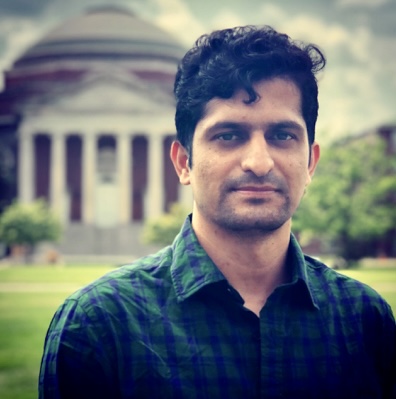
Mukesh Singhal serves as a Professor in the Department of Electrical Engineering at the University of California Merced, where he maintains an active research program and teaching responsibilities. His contact information includes office email msinghal@ucmerced.edu and phone number (209) 228-4344.
Professor Singhal's research spans critical areas in computational science with primary focus on Machine Learning, Distributed Systems, and Cybersecurity. His work pioneers optimization techniques for deep learning (including quasi-Newton methods and cubic regularization), Byzantine fault-tolerant protocols, and adversarial defense mechanisms in artificial intelligence. He has developed significant contributions to secure distributed systems, machine learning interpretability, and applications in agricultural technology such as irrigation efficiency modeling. His interdisciplinary approach bridges theoretical computer science with practical engineering solutions across multiple domains.
Analysis of his 2022-2025 publications reveals three dominant research trajectories: (1) Fundamental advances in optimization for deep learning (e.g., Symmetric Rank-One Quasi-Newton and Quasi-Adam), (2) Breakthroughs in Byzantine agreement protocols achieving optimal communication efficiency (e.g., Slim-ABC and Prioritized-MVBA), and (3) Cross-domain applications including adversarial defense in computer vision and precision agriculture. His work consistently emphasizes algorithmic efficiency, security guarantees, and real-world applicability, with increasing focus on environmental sustainability through agricultural technology.
While specific advising records and grant details remain unspecified in available sources, Professor Singhal's extensive publication record across top venues indicates active leadership in multiple collaborative research projects. His work shows no indication of laboratory-specific infrastructure but demonstrates strong engagement with interdisciplinary teams through co-authored publications spanning computer vision, distributed systems, and agricultural informatics. Current research directions appear to be converging toward secure, efficient AI systems with tangible societal impact in cybersecurity and sustainable resource management.