معرفی
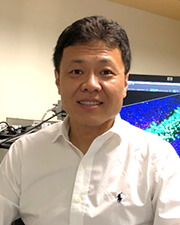
Yuxiang Sun is a Professor and Associate Department Head for Graduate Programs in the Department of Nutrition at Texas A&M University, with additional roles as an AgriLife Research Faculty Fellow. He holds a M.D. from Beijing Medical University, a Ph.D. from the University of Manitoba, and completed postdoctoral training at Baylor College of Medicine. His research focuses on the intersection of immuno-metabolism, inflamm-aging, and neuro-inflammation, with particular emphasis on ghrelin signaling in metabolic and inflammatory diseases. Key projects include studying ghrelin’s role in obesity, diabetes, Alzheimer’s, and aging-related healthspan extension. Sun’s lab investigates how ghrelin receptor (GHSR) suppression shifts metabolic and inflammatory states, offering potential therapeutic targets for age-related disorders. Recent work highlights GHSR’s dual roles in nutrient sensing, immune regulation, and neuronal protection. Collaborative studies integrate microbiome analysis, metabolomics, and genetic models to explore disease mechanisms. His findings have advanced understanding of ghrelin’s systemic impacts, from adipose tissue inflammation to gut-brain axis interactions.
Education:
- M.D., Beijing Medical University (Beijing, China)
- Ph.D., University of Manitoba (Winnipeg, Canada)
- Postdoctoral Fellowship, Baylor College of Medicine (Houston, Texas)
Research Interests:
- Immuno-metabolism and its role in chronic diseases
- Inflamm-aging mechanisms and interventions
- Neurodegenerative diseases, particularly Alzheimer’s
- Ghrelin receptor signaling in inflammation and metabolism
- Healthy aging strategies targeting metabolic and immune pathways
Advancing Work:
- Developing GHSR-based therapies for metabolic and inflammatory conditions
- Exploring microbiome-gut-brain axis interactions in aging
- Investigating ghrelin’s role in muscle atrophy and neuroprotection
Labs/Teams: Sun leads a multidisciplinary lab integrating molecular biology, animal models, and computational approaches to study systemic metabolic and immune pathways.