معرفی
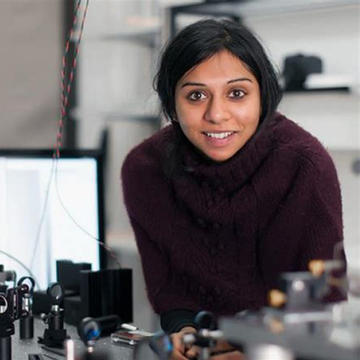
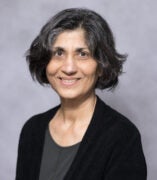
Yamuna Krishnan is the Louis Block Professor of Chemistry at the University of Chicago, where she leads innovative research at the intersection of chemistry, biology, and nanotechnology. Her work focuses on developing DNA-based nanodevices for quantitative chemical imaging of living systems, with particular emphasis on mapping the chemical composition of cellular organelles.
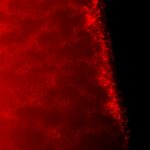
Dr. Krishnan's research interests center on understanding how the lumenal chemical composition of organelles—optimized over evolutionary timescales—impacts organelle function, cell physiology, and ultimately organism behavior. Her lab has pioneered several groundbreaking DNA nanodevices including CalipHluor for calcium measurement in acidic organelles, Clensor for chloride ion measurement, and z-cHOClate for measuring pH and hypochlorous acid levels in phagosomes.
Her recent work published in Science Advances (2024) identified the protein responsible for calcium entry into lysosomes, a discovery with significant implications for understanding and potentially treating neurodegenerative disorders like Parkinson's and ALS. The Krishnan lab's publications span diverse areas including organelle-specific ion dynamics, DNA nanotechnology applications, and quantitative chemical imaging methodologies.
Major Scientific Awards:
- Infosys Prize in Physical Sciences (2017)
- Shanti Swarup Bhatnagar Award, Chemical Sciences (2013)
- Cell's 40 under 40: next generation of thinkers in biology (2014)
- Innovator of the Year, Association of Women in Science, Chicago (2016)
- Scientific Innovations Award from the Brain Research Foundation (2015)
Dr. Krishnan mentors a diverse team of graduate students, postdocs, and technicians working across multiple model systems including C. elegans, zebrafish, and mammalian cells. Her lab has received funding from prestigious sources including the National Institutes of Health, Human Frontier Science Program, and Ono Pharma Foundation. The Krishnan Lab is part of the Gordon Center for Integrative Science at the University of Chicago, where they continue to push the boundaries of quantitative chemical imaging in living systems.