معرفی
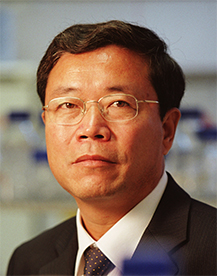
Professor Xiao Qingzhong is a Professor of Stem Cell and Cardiovascular Disease at Queen Mary University of London's William Harvey Research Institute (WHRI), within the Faculty of Medicine and Dentistry. He leads an independent research lab focusing on stem cell biology, vascular development, and cardiovascular disease mechanisms. His academic career includes roles as Senior Lecturer (2013) and Reader (2016) before becoming Chair Professor in 2018.
Education & Early Career: He earned a Bachelor of Medicine from Chongqing University of Medical Sciences (1994), followed by a Master's (Medical Immunology) and PhD (Pathology) from Sun Yat-Sen University (1999–2003). Postdoctoral training at St George's and King's College London (2003–2009) focused on stem cell differentiation into vascular cells. In 2010, he joined WHRI with a British Heart Foundation (BHF) fellowship to establish his research program.
Research Focus: His lab explores molecular mechanisms governing vascular cell differentiation from stem cells, with applications in cardiovascular therapies. Key areas include:
- Identifying signaling pathways (e.g., microRNAs, transcription factors) regulating endothelial/smooth muscle cell differentiation.
- Role of non-coding RNAs in stem cell pluripotency and vascular biology.
- Stem cell therapy for cardiovascular diseases like atherosclerosis and restenosis.
- Proteinases (e.g., MMP8, NE) in atherosclerosis progression and macrophage polarization.
- Cellular reprogramming for vascular regeneration.
Awards & Funding: Recipient of the BHF Intermediate Basic Science Fellowship (2010). Current grants include BHF project funding. Collaborators include Prof Qingbo Xu (King's College), Prof Shu Ye, and international teams at Zhejiang University and Tsinghua University.
Lab Team & Training: Supervised over 20 PhD students and postdoctoral researchers (e.g., Dr Wei Wu, Dr Weiwei An). Current students include Eithne Maguire and Shiping He. Alumni hold academic and clinical roles globally.
Publications: Over 150 peer-reviewed articles, including high-impact studies in Circulation Research, Cardiovascular Research, and Journal of Biological Chemistry. Recent work highlights novel roles for Nrf3, miRNAs, and mechanosensing in vascular pathology.