معرفی
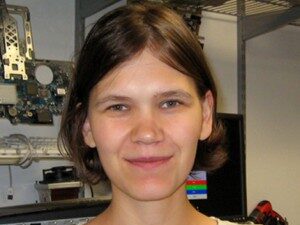
Wynn Meyer is an Assistant Professor in the Department of Biological Sciences at Lehigh University, leading the Meyer Lab since joining the faculty in fall 2020. Her research integrates genomic variation analysis to unravel evolutionary history and adaptive mechanisms across species, with particular emphasis on mammalian dietary specialization.
Education:
- PhD in Human Genetics, University of Chicago
- Postdoctoral Research, University of California, Berkeley
- Postdoctoral Research, University of Pittsburgh
Research Focus: Dr. Meyer specializes in convergent evolution through the lens of population genetics and comparative genomics. Her lab investigates how repeated dietary adaptations (e.g., herbivory) in diverse mammalian lineages reveal underlying genetic mechanisms, employing advanced bioinformatics for large-scale genomic analysis. Current projects explore gene regulatory evolution in liver metabolism and metabolic disease susceptibility.
Publication Trends: Her scholarly output demonstrates consistent innovation in evolutionary genomics methodology and cross-species analysis. Key themes include the genetic basis of convergent traits (evident in marine mammal detoxification systems and primate pigmentation), development of computational tools like RERconverge, and exploration of fundamental population genetics principles. Work frequently bridges theoretical frameworks with empirical genomic data.
Awards:
- AAAS Science & Technology Policy Fellow at NIH
Advising & Collaboration: Dr. Meyer actively mentors PhD students in Cell/Molecular Biology and Evolutionary Biology concentrations, supervises undergraduate researchers, and maintains cross-lab collaborations (notably with Kowalko Lab on cavefish and tetra fish projects). Her team includes postdoctoral researchers, graduate students, and K-12 teacher participants through dedicated recruitment initiatives.
Lab Structure: The Meyer Lab operates from Lehigh's Iacocca Hall with dedicated computational resources for genomic analysis. Current research leverages bat formations for data visualization and maintains active projects on mammalian dietary genomics, cavefish evolution, and liver gene regulation. The lab emphasizes interdisciplinary training and science-policy engagement.