معرفی
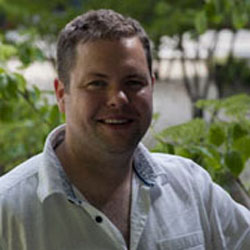
Dr. Wes Fraser is a Reader in Physical Geography at Oxford Brookes University, affiliated with the School of Law and Social Sciences. He holds a PhD, MSc, and multiple BSc degrees, along with a Postgraduate Certificate in Teaching in Higher Education (PCTHE), reflecting both academic and pedagogical excellence. His research bridges geography, geology, and environmental science, focusing on plant-environment chemical interactions over geological timescales.
His primary research interest lies in developing and applying biogeochemical proxies derived from pollen and spores to reconstruct past ultraviolet (UV) radiation levels and environmental change. This includes pioneering work on sporopollenin chemistry as a recorder of historical UV-B exposure, with applications from the Permo-Triassic extinction to the K/Pg boundary. He is a member of the Human Origins and Palaeo Environments (HOPE) research group, contributing to major projects on ecosystem resilience, solar irradiance, and deep-time vegetation dynamics.
His recent publications reveal a strong trend in organic geochemistry, palynology, and experimental geobiology, often employing advanced analytical techniques such as FTIR, GC-MS, and isotope analysis. These studies span disciplines including climate science, evolutionary botany, and atmospheric chemistry, with a recurring focus on how plants have influenced Earth's chemical weathering, atmospheric composition, and climate regulation over millions of years.
Dr. Fraser has made significant contributions to understanding greenhouse gas emissions from vegetation under UV stress, the durability of biopolymers in the fossil record, and the chemotaxonomic identification of grasses. His work has been published in top-tier journals such as Nature Geoscience, Science Advances, and Geochimica et Cosmochimica Acta.
He teaches a range of undergraduate and postgraduate modules in physical geography, including Introduction to Physical Geography, Global Change, Earth Systems, Climate Change, and the Geography Dissertation. His teaching emphasizes fieldwork, laboratory analysis, and computer-based practicals, fostering hands-on learning and research skills.
While no formal list of students is provided, his role in supervising dissertation projects and leading research teams indicates active mentorship. He collaborates extensively with researchers across the UK and internationally, particularly within the HOPE group. Although no specific grants or awards are listed, the volume, quality, and impact of his research suggest sustained funding and scholarly recognition.
Dr. Fraser’s work is housed within interdisciplinary research networks focused on palaeoenvironments, human origins, and environmental change, contributing to broader scientific understanding of Earth system evolution and future climate challenges.