معرفی
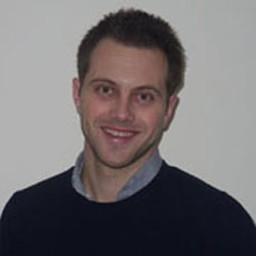
Gareth Preston is a Research Fellow in Quaternary Environmental Change and Geo-archaeology at Oxford Brookes University, affiliated with the School of Law and Social Sciences and the Human Origins and Palaeoenvironments (HOPE) Research Group. His interdisciplinary research bridges geoscience and archaeology to understand human-environment interactions in arid regions, particularly in south-east Arabia.
- BSc in Geography & Physical Geography (First Class Honours), Oxford Brookes University (2001–2004)
- Ph.D. in Geography, Oxford Brookes University (2005–2011)
His research focuses on palaeoenvironmental reconstruction, Quaternary science, and geo-archaeology, with an emphasis on reconstructing landscape and climatic changes during the Holocene and Pleistocene in the Arabian Peninsula. He investigates how early human populations adapted to environmental variability through changes in subsistence, settlement, and technology.
The analysis of his recent publications reveals a consistent focus on luminescence dating, lake and wetland sediment analysis, and human occupation chronologies in arid environments. His work integrates geochemical, sedimentological, and archaeological data to build robust environmental frameworks that contextualize human prehistory. Key themes include monsoon variability, pluvial phases, coastal and inland hydrology, and early human dispersal across Arabia.
While no formal scientific awards are listed, his research has been published in leading journals such as Quaternary Science Reviews, Scientific Reports, and Journal of Quaternary Science, reflecting significant scholarly impact.
Gareth has collaborated on multiple international research projects, particularly in the United Arab Emirates and Saudi Arabia. He has conducted fieldwork in the UK (Brecon Beacons, Snowdonia, Loch Lomond, Wittenham Clumps) and has contributed to major interdisciplinary initiatives on Arabian palaeoenvironments. His doctoral work analyzed relict lake deposits to reconstruct Holocene climate change and its influence on Neolithic societies. He continues to advance understanding of human resilience in marginal environments through ongoing research with the HOPE group.
There is no information available about students he may have advised or specific grants he has led. However, his active publication record through 2025 suggests ongoing research engagement and collaboration.