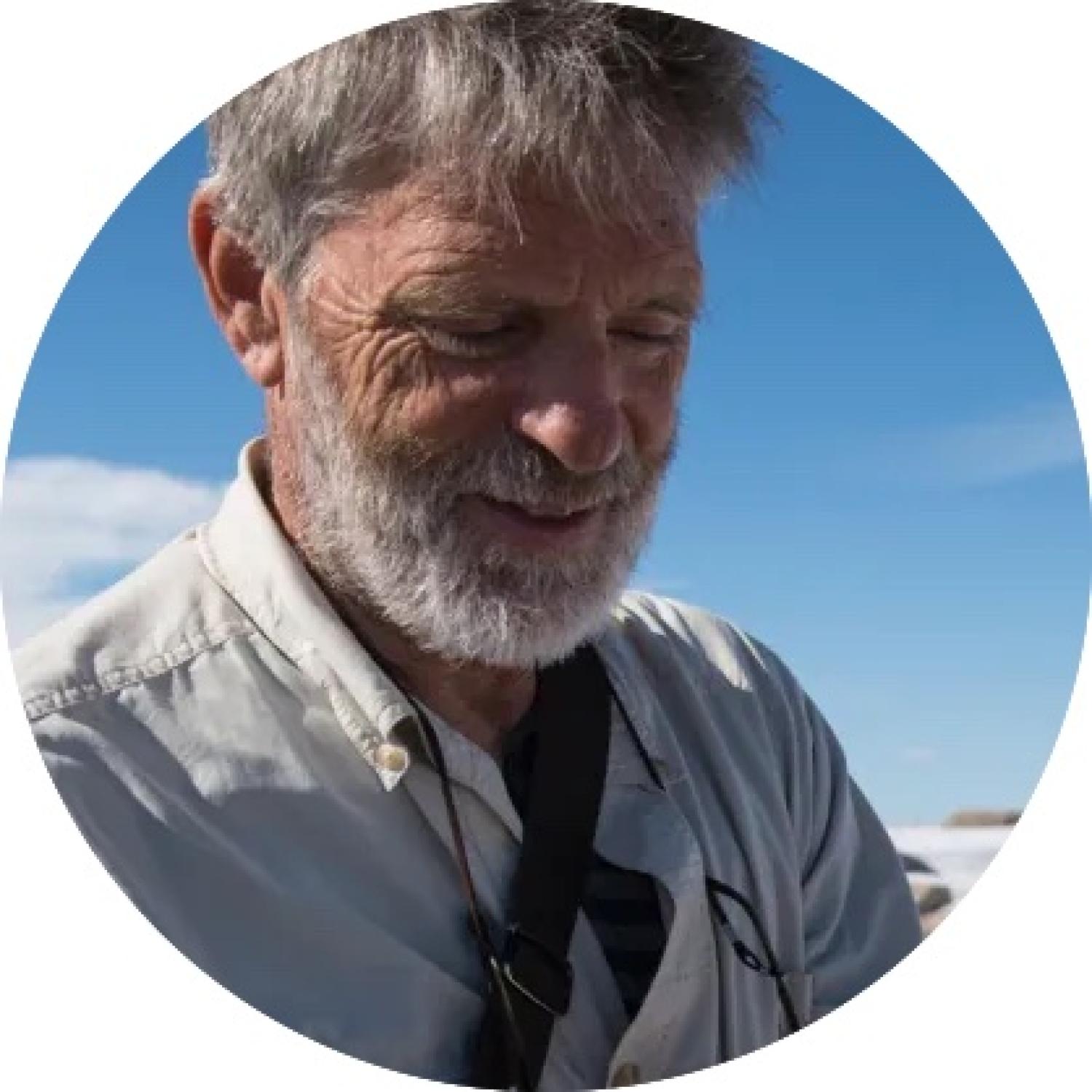
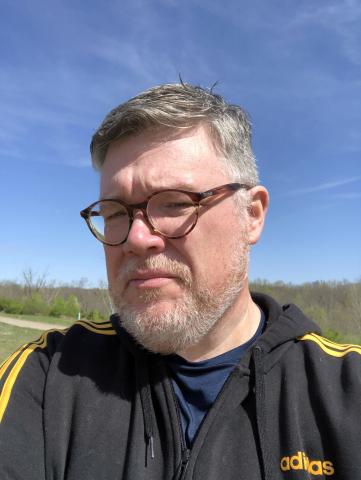
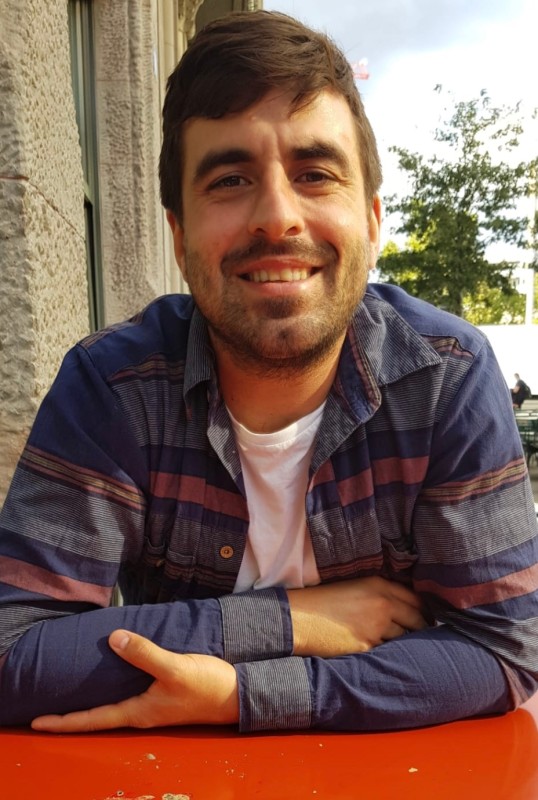
Prof. Willy Tinner is a leading academic at the University of Bern, serving as Head of the Paleoecology section and Vice Executive Director within the Institute of Plant Sciences. His research focuses on reconstructing past environmental changes through pollen analysis, vegetation dynamics, and human-ecosystem interactions. Tinner's work integrates paleoecological data with climatology, archaeology, and conservation biology to understand long-term ecological processes. His expertise spans Holocene climate impacts, Neolithic land use patterns, and biodiversity conservation challenges in alpine and Mediterranean ecosystems. Notable research includes studies on Fagus-Quercus forest coexistence in Italy, Abies alba climatic adaptations, and human-driven vegetation changes across Europe. Tinner collaborates internationally, contributing to projects in Greece, Ukraine, and the Balkans. He has published extensively on topics such as fire regimes, lake sediment archives, and the ecological consequences of ancient agricultural practices. His leadership positions reflect his role in shaping Switzerland's ecological research priorities through institutions like WSL Cadenazzo.
Carol Smith is an Associate Professor in the Department of Soil & Physical Sciences at Lincoln University, New Zealand, where she serves as Head of Department since 2017. She has been an elected academic staff member of the Lincoln University Council from 2018-2022. Dr. Smith holds a PhD from the University of Aberdeen, an MSc from the University of Reading, and a BSc(Hons) from the University of Portsmouth, forming the foundation of her expertise in soil science and physical geography. Her research spans both fundamental and applied aspects of pedology. On the fundamental side, she investigates Quaternary pedology and paleoenvironmental reconstruction using loess stratigraphy, geomorphology, and micromorphology, which provides critical data for verifying future climate change predictive models. Applied research focuses on sustainable use of recycled organic matter and rehabilitation of degraded soils. She collaborates internationally on multidisciplinary projects involving paleoclimate reconstruction, paleoliquefaction, Antarctic soils, and viticulture. Dr. Smith is passionate about teaching and science communication, employing experiential learning methods to develop practical field skills in soil science through 'soil judging competitions' in New Zealand and Australia. Her research addresses UN Sustainable Development Goals including Life on Land (15), Climate Action (13), and Quality Education (4). Among her notable recognitions are the Norman H Taylor Memorial award 2020 from the New Zealand Society of Soil Science for outstanding contributions to soil science in New Zealand and Fellowship in the Royal Geographical Society, London. She serves as Associate Editor of Natural Sciences Education and was previously editor of Quaternary Australasia. Dr. Smith has supervised numerous graduate students through research-based supervision, with completed projects covering diverse topics from soil patterns in Southland to Antarctic soil ecology. She teaches advanced courses in field research, soil science, and physical landscapes, and has developed innovative approaches to teaching during the pandemic, including virtual field trips.
Dr. Lee Nordt is a Professor and Dean of the College of Arts & Sciences at Baylor University. He holds a Ph.D. from Texas A&M University. His research focuses on Biogeosciences, Paleoclimatology, and Geoarcheology, with expertise in Paleoclimate, Pedology/Paleopedology, Quantitative Geomorphology/Quaternary environments, and Hydrologic/Surface Processes. Education: Ph.D., Texas A&M University Research Interests: - Biogeosciences and Paleoclimatology - Geoarcheological analysis of Quaternary environments - Pedological studies linking ancient and modern soils - Quantitative geomorphology and hydrologic processes Office: Baylor Sciences Building, Room E.421 Contact: (254) 710-3362
Angelo Peccerillo is a distinguished Full Professor of Petrology at the University of Perugia, Italy, with an extensive academic career spanning multiple Italian universities. He previously served as Full Professor of Petrology at the Universities of Calabria (1993-1997) and Messina (1985-1993), and as Associate Professor of Volcanology (1982-1985) and Assistant Professor (1971-1982) at the University of Florence. He earned his Laurea Degree in Geology from the University of Florence in 1970 and has been a member of Academia Europaea since his election. Peccerillo's research focuses on the petrology and geochemistry of magmatic processes, with particular expertise in igneous petrology, geochemistry, volcanology, orogenic volcanism, and continental rift magmatism. His scholarly work has established him as a leading expert in understanding the complex relationships between mantle processes, crustal interactions, and volcanic activity in the Mediterranean region and beyond. His research methodology integrates petrological, geochemical, and geophysical approaches to develop comprehensive models of magmatic systems. Analysis of Peccerillo's recent publications reveals a consistent focus on magmatic processes across diverse geological settings. His work spans from detailed studies of specific volcanic systems like the Aeolian Islands and Ethiopian Rift to broader investigations of mantle structure and geodynamic processes in the Mediterranean region. A recurring theme is the integration of multiple analytical approaches to model magma plumbing systems, understand mantle composition, and elucidate the geodynamic evolution of volcanic regions, particularly examining the relationships between deep and shallow mantle processes. Antonio Feltrinelli Price 2006 for Earth Sciences, awarded by the National Academy of Lincei, Italy Professor Peccerillo has supervised numerous MSc and PhD students both at his home institution and abroad. His editorial leadership includes serving as Chief Editor of the "European Journal of Mineralogy" from 2006 to 2008 and membership on the editorial boards of several prestigious journals including "Lithos," "Journal of Volcanology and Geothermal Research," "Geological Society of Italy Bulletin," and "Open Mineralogy Journal." He has been actively involved in research evaluation, serving on national and international panels for organizations such as NSF, ESF, CNR, MIUR, and NATO. Peccerillo maintains strong international scientific connections through visiting positions at institutions like the Australian National University, University of Gottingen, and University of Paris XI at Orsay. His leadership extends to professional organizations, having served as President of the Italian Petrology Group and currently as a Member of Academia Europaea. His administrative experience includes serving as Department Head and Coordinator of PhD programs at the Universities of Messina, Cosenza, and Perugia.
Tom Veldkamp is a Professor and Rector Magnificus at the University of Twente. His research focuses on Quaternary geology, geomorphology, and coupled human-ecological systems. He has supervised 32 PhD theses and currently advises 2 ongoing projects. His fieldwork spans over 30 countries, including Indonesia, Turkey, and Rwanda. Editorial Roles: Editor-in-Chief of Agriculture Ecosystems and Environment , former editorial roles at Landscape Ecology , Ecosystems , and others. Research Themes: Land use change modeling, soil dynamics, and sustainable development. Key regions of study include Sundaland (Indonesia), Mediterranean landscapes, and Rwanda. Recent Contributions: Over 230 publications, including landmark studies on hominin fossils in Java and landscape evolution models. His work addresses global challenges like environmental sustainability and land-use transitions, with a focus on integrating natural and social sciences.
Dr. Christopher M. Wolverton is a Professor of Materials Science and Engineering at Northwestern University , where he leads the Wolverton Research Group . His work focuses on computational materials science with applications in energy sustainability , particularly in batteries , hydrogen storage , and thermoelectrics . PhD in Physics from University of California, Berkeley BS in Physics (summa cum laude) from University of Texas, Austin His research leverages first-principles quantum mechanical simulations and machine learning to enable virtual materials synthesis before laboratory testing. The group specializes in hybrid computational methods integrating Density Functional Theory (DFT) , Monte Carlo simulations , and phase-field microstructural models . The article portfolio shows leadership in energy storage materials , with recent work on data-driven nanoparticle facet control , mixed-anion semiconductors , and machine learning-accelerated discovery . Publications span top journals including Nature Energy , Nature Materials , and Science . 2006 Ford Motor Company Technical Achievement Award 2005 Ford Patent & Publication Awards 2003 Ford Environmental/Physical Sciences Recognition As advisor to PhD candidates Zhenpeng Yao , Shiqiang Hao , and Shane Patel , he fosters interdisciplinary research connecting materials informatics with experimental validation . The group maintains active collaborations with Argonne National Lab and MIT/Harvard teams.
Nicole M. Gasparini is an Associate Professor in Tulane University's Department of Earth and Environmental Sciences, School of Science & Engineering. She holds a Ph.D. from MIT (2003) and researches fluvial/tectonic geomorphology, landscape evolution modeling, and climate-erosion interactions using tools like Landlab. Her work investigates sediment transport, river network evolution, and human impacts on landscapes. Research integrates field data with numerical models to quantify erosion processes across diverse environments. Publications demonstrate expertise in geomorphic model development, particularly through contributions to the Landlab toolkit. Recent articles focus on climatic controls on erosion, fault geomorphology, and uncertainty quantification in earth-surface models. Awards: Marguerite T. Williams Award for contributions to geosciences and advocacy against harassment in STEM Leads collaborative projects on landscape response to climate change and mentors students/postdocs in geomorphology and computational modeling.
Gifford H. Miller is a Professor at the University of Colorado Boulder and serves as the Director of the Center for Geochemical Analysis of the Global Environment (GAGE) . His research focuses on reconstructing Earth's climate system using Quaternary records, with expertise in amino acid geochronology and cosmogenic exposure dating. Specializes in Arctic climate history, ice sheet dynamics, and human impacts on ecosystems Active in teaching courses on global change, Quaternary dating methods, and Holocene nonlinearities His recent work explores Holocene climate variability through lake sediments in Iceland and Baffin Island, integrating biomarkers and ancient DNA. Awards include the 2021 University of Colorado Distinguished Professor title and fellowships from AGU and GSA. 2021: Distinguished Professor, University of Colorado System 2018: Distinguished Career Award, American Quaternary Association 2009: Elected Fellow, American Geophysical Union
Professor Patrick Moss is a leading academic in Physical Geography and Head of School at QUT's School of Earth & Atmospheric Sciences. His research focuses on understanding landscape responses to climate change and human impacts, with expertise in palaeoecology, Quaternary Science, and environmental management. He holds a PhD from Monash University and supervises PhD and undergraduate students in these disciplines. Key research interests include wetland resilience, fire ecology, and the application of palynology to environmental history. His work integrates archaeological perspectives to address contemporary conservation challenges, such as ecosystem restoration and climate adaptation strategies. Publications span over three decades, emphasizing global fire regimes, human-environment interactions, and Quaternary environmental reconstruction. Collaborations include international projects on peatlands, monsoon variability, and volcanic ash stratigraphy.
Dr. John Warren Huntley is an Associate Professor in the Department of Geological Sciences at the University of Missouri. His research examines the fossil record of biotic interactions including parasitism, predation, and competition, with additional focus on conservation paleobiology and morphological disparity evolution. Dr. Huntley investigates host-parasite dynamics in marine bivalves, human impacts on mollusk populations, and Phanerozoic predation patterns. His work integrates stratigraphic paleobiology with ecological and evolutionary analyses to reconstruct historical ecosystem dynamics. His recent publications demonstrate expertise in paleoparasitology, taphonomy, and conservation paleobiology, applying novel analytical methods to questions about parasite-host coevolution, preservation biases, and extinction events. This research provides critical insights into long-term ecological patterns and biological responses to environmental change. Dr. Huntley has received significant recognition including an NSF CAREER Award and Humboldt Research Fellowship, and he co-edited the comprehensive volumes 'The Evolution and Fossil Record of Parasitism'.
Simone Fior is a Lecturer at the Department of Environmental Systems Science , ETH Zürich , focusing on ecological genetics and plant adaptation. Their research integrates genomic, quantitative genetics, and ecological field experiments, particularly on Dianthus (Caryophyllaceae) along altitudinal and climatic gradients. Recent work explores climate-induced range shifts, local adaptation, and genomic responses to environmental changes. Professional experience includes roles at ETH Zürich since 2013 (Senior Assistant, Postdoc) and prior positions at the Edmund Mach Foundation (2009-2012) and University of Insubria (2007-2008). Education spans a PhD in Plant Biology (University of Milan, 2007) and an MSc in Natural Sciences (University of Milan, 2003). Simone co-organizes the Bioinformatics for Adaptation Genomics Winter School . Key research areas include adaptive divergence , polygenic adaptation , climate change biology , and phylogenomics . Articles emphasize genomic selection signatures, functional-structural modeling, and ecological-genetic interactions. Notable collaborations involve Jake Alexander, Alex Widmer, and interdisciplinary teams at ETH Zurich.
Nuri Yazdani is a Lecturer at the Department of Information Technology and Electrical Engineering at ETH Zürich, Switzerland. Based at the Institute for Electronics (Institut für Elektronik) in Zurich, Dr. Yazdani contributes to both teaching and research in advanced materials and nanotechnology. His work spans multiple interdisciplinary areas connecting physics, chemistry, and electrical engineering, with particular emphasis on nanocrystal-based materials and their applications in electronics and optoelectronics. Dr. Yazdani's research focuses on the synthesis, characterization, and application of nanomaterials, particularly semiconductor nanocrystals and quantum dots. His work explores the fundamental physical properties of these materials, including exciton-phonon interactions, structural ordering in multicomponent systems, and charge transport mechanisms in nanocrystal assemblies. He investigates how nanoscale phenomena affect macroscopic material properties, with applications ranging from catalysis to optoelectronic devices. His approach combines experimental techniques like small-angle X-ray scattering with theoretical modeling to understand structure-property relationships in nanomaterials. Analysis of Dr. Yazdani's recent publications reveals a strong emphasis on perovskite and chalcogenide nanocrystals, with particular interest in how structural features like cation distribution, octahedral tilting, and surface chemistry affect optical and electronic properties. His work bridges fundamental physics with practical applications, spanning from quantum optics to energy conversion technologies. A recurring theme is the investigation of size-dependent phenomena and the role of phonons in determining material behavior at the nanoscale. Dr. Yazdani collaborates extensively with researchers across multiple institutions and disciplines, as evidenced by his authorship on numerous multi-investigator publications. His work appears in high-impact journals including Nature Communications, Journal of the American Chemical Society, and Nature Physics, reflecting the significance and interdisciplinary nature of his contributions to nanoscience and nanotechnology.
Dr. Justin Belsky is an Assistant Professor of Emergency Medicine at Yale School of Medicine, serving as the COVID-19 Safety Officer and Co-Director of Resident Research in Emergency Medicine. He holds an MD from Wayne State University School of Medicine (2011) and an MPH from Harvard School of Public Health (2016). His research focuses on sepsis diagnosis and treatment, including biomarkers, clinical trials, and risk stratification tools. He led the Yale site for the VICTAS trial evaluating vitamin C, thiamine, and hydrocortisone in septic shock. Dr. Belsky directs the Yale Emergency Medicine Specimen Biobank, collecting samples from critically ill patients for future research. His awards include the Partners in Excellence Team Award (2016) and an Outstanding Poster Award (2015). He is actively involved in resident research training and clinical guideline adherence studies. Education: MD: Wayne State University School of Medicine (2011) Emergency Medicine Residency: Henry Ford Hospital (2014) Research Fellowship: Massachusetts General Hospital (2016) MPH: Harvard School of Public Health (2016) Research Interests: Early sepsis identification and treatment Biomarker development for critical illness Fluid management strategies in septic shock Micronutrient therapies in sepsis Emergency department quality improvement Recent Work Focus: Fluid resuscitation protocols and guideline adherence Long-term outcomes of sepsis therapies Actin cytoskeleton as a sepsis biomarker Antibiotic timing in sepsis Awards: 2016: Sepsis Care Redesign, Partners in Excellence Team Award 2015: Outstanding Poster Award (Shock Symposium) Grants & Mentorship: Principal investigator for CLOVERS trial (fluid management in sepsis) Co-Director of Yale’s Emergency Medicine Research Training Program Leadership in resident research mentorship and biobank initiatives
Mark Abbott is a Professor at the University of Pittsburgh, specializing in paleoclimatology and environmental science. He holds a PhD from the University of Minnesota (1997) and conducted postdoctoral research at the University of Massachusetts. His research integrates stratigraphy, geochemistry, and isotopic analysis to study climate change impacts on human societies and environmental systems. Abbott leads projects recovering lake sediment cores to document Holocene climate variability, focusing on annual-resolution records for temperature and drought reconstructions. He has authored over 50 peer-reviewed articles, with recent work emphasizing monsoon dynamics, Arctic mercury deposition, and tropical Andean glacial retreat. His fieldwork spans North America, South America, and Asia, including collaborative projects in Alaska, Peru, and India. Education: PhD in Geology (Minnesota, 1997), MS (Colorado, 1991), BA in Biology (Colorado, 1987) Postdoctoral Training: Climate System Research Center (UMass) Research interests include reconstructing past environmental changes via lacustrine archives, with emphasis on human-environment interactions. His lab analyzes stable isotopes, organic biomarkers, and sedimentology to address critical climate questions. Recent studies highlight climate-vegetation-fire linkages in the Pacific Northwest and Holocene lake-level changes in Canada/Yunnan. Recent articles focus on decadal-to-millennial climate shifts in mountain regions, Arctic permafrost dynamics, and anthropogenic impacts on lake ecosystems. Abbott’s work is supported by grants from NOAA and the NSF, with field sites in the Canadian Rockies, Himalayas, and Alaskan Arctic.
Dr. Patrick J. McNamara is an Associate Professor in the Department of Civil, Construction and Environmental Engineering at Marquette University's College of Engineering. He directs the McNamara Research Group, which focuses on understanding how chemicals from consumer products impact public health and the environment once they pass through water treatment systems. His research bridges environmental engineering and microbiology to address critical water quality challenges facing modern infrastructure. Dr. McNamara's educational background includes: Ph.D., 2012, Civil Engineering, University of Minnesota, Twin Cities M.S., 2008, Environmental and Water Resources Engineering, University of Texas at Austin B.S., 2006, Civil Engineering (Minor - Spanish for the Business Professions), Marquette University His research program investigates how consumer product chemicals impact engineering treatment processes that rely on healthy bacteria to treat water. The McNamara Research Group develops non-traditional treatment processes to remove these chemicals from water and mitigate their environmental effects. His work spans antibiotic resistance in water systems, micropollutant removal technologies, pyrolysis of biosolids, PFAS contamination, and electrochemical treatment processes. Specific areas include the impact of corrosion inhibitors on antibiotic resistance, removal of chemicals via drinking water treatment, environmental antibiotic resistant bacteria, beneficial biosolids reuse, and pyrolysis applications. Dr. McNamara's publication record demonstrates a strong focus on emerging water quality challenges, particularly the intersection of chemical contaminants and antibiotic resistance. His recent work examines corrosion inhibitors' impact on antibiotic resistance in drinking water, PFAS mitigation through advanced treatment processes, and environmental drivers of antibiotic resistance in stormwater systems. His research combines fundamental microbiology with practical engineering solutions to address complex water quality issues. Dr. McNamara has received numerous honors and awards: 2022 OCOE Outstanding Researcher Award from Marquette University Marquette University's Campus 2020 KEEN Rising Star Faculty Scholar Award from Provost Office (2019) Central States Water Environment Association Bill Boyle Outstanding Educator Award (2018) Way Klingler Young Scholar Award (Marquette University, 2018) Excellence in Review Award – Environmental Science & Technology (2017) Dr. McNamara has secured significant research funding as Principal Investigator on multiple projects, including NSF grants focused on mitigating antibiotic resistance in drinking water and studying the environmental impacts of quaternary ammonium compounds. His current research portfolio includes projects on PFAS removal through novel electrocoagulation-peroxidation processes, designing green stormwater infrastructure to combat antibiotic resistance, and removing contaminants from greywater using electrocoagulation technology in collaboration with industry partners like Kohler Company. The McNamara Research Group at Marquette University maintains strong collaborations with researchers across multiple institutions and works closely with water utilities and industry partners to translate research findings into practical solutions for water treatment challenges. Their work addresses critical infrastructure needs while protecting environmental and public health through innovative engineering approaches.