معرفی
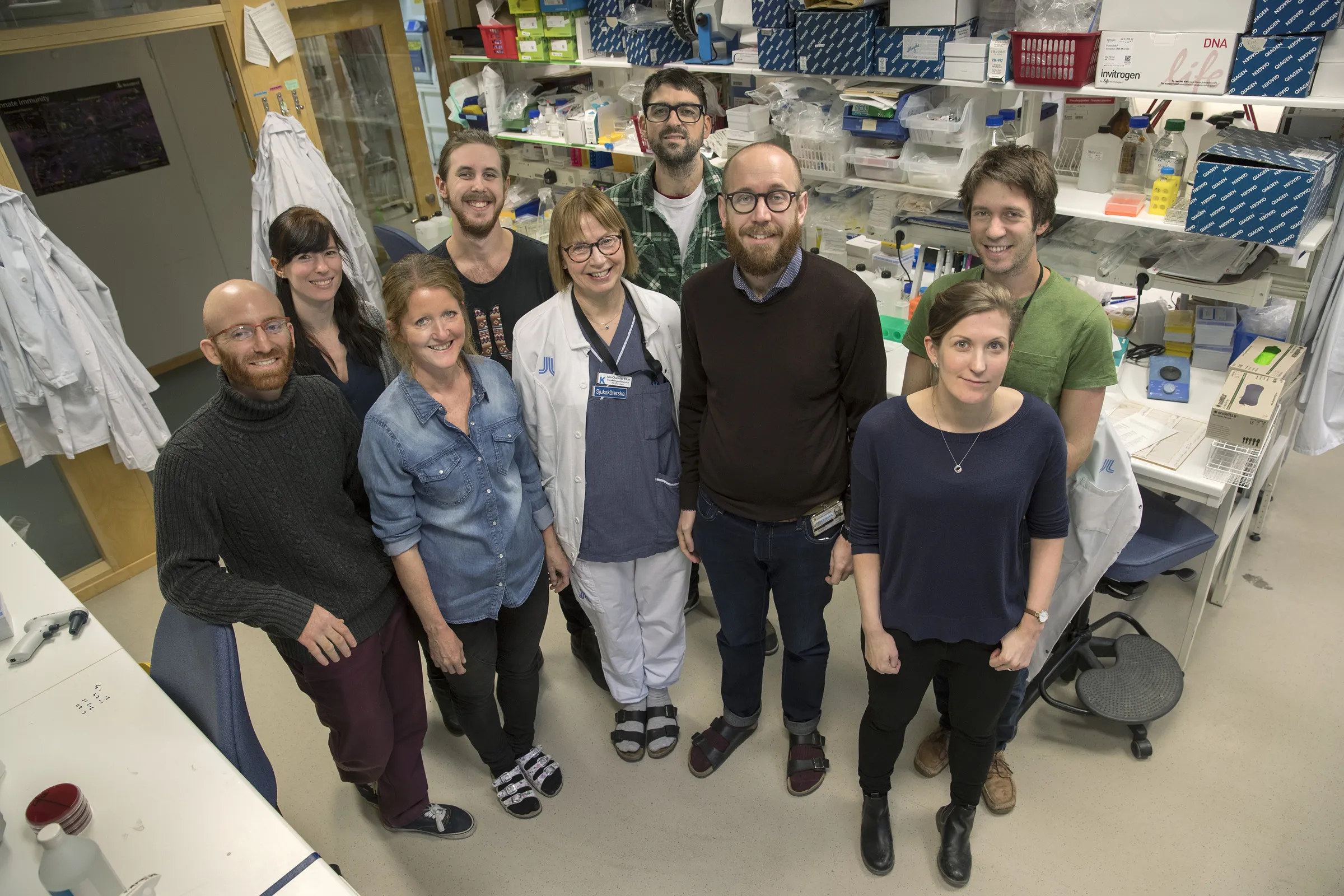
Volker Lauschke is an Associate Professor at the Department of Physiology and Pharmacology, Karolinska Institutet, where he leads the Personalized Medicine and Drug Development research group. His work integrates advanced 3D cell culture systems, microfluidics, and molecular profiling to develop novel therapeutic strategies.
- Department: Physiology and Pharmacology (FyFa)
- Research Focus: Inflammatory conditions (NASH), infectious diseases (COVID-19), metabolic diseases (type 2 diabetes)
- Funding: Swedish Research Council Consolidation Grant, KI Faculty Consolidator Grant
His research spans pharmacogenomics, population-scale genetics, and machine learning to map ethnogeographic variability in drug response genes. The lab develops 3D primary human tissue models of liver, pancreas, adipose tissue, and skeletal muscle using patient-derived cells, with emphasis on cell-cell interactions and tissue-tissue crosstalk in microfluidic systems. They uniquely employ Nano Reaction Injection Molding (NanoRIM) for biomedical device fabrication and BRET-based biosensors for intracellular signaling monitoring.
Analysis of recent publications reveals a strong focus on precision medicine applications through ethnogeographic pharmacogenomic atlases (e.g., PharmFreq), organ-on-chip systems for metabolic disease modeling, and viral pathogenesis mechanisms for hemorrhagic fevers. Key methodologies include chemogenomic screening in patient-derived models, population genomics, and advanced microphysiological systems.
- Swedish Research Council's Consolidation Grant for "Modulation of Tissue Communication to Combat Non-Alcoholic Fatty Liver"
- KI Faculty Consolidator Grant (1.2 million SEK/year for 5 years)
- Contributions to WHO-recommended baricitinib treatment for severe COVID-19
The lab actively collaborates on major initiatives including the Biofab core facility at Biomedicum. Their work on hepatic spheroids has opened new avenues for liver regeneration research, while pharmacogenomic studies directly inform clinical implementation of precision medicine. Current projects emphasize rare variant analysis in pharmacogenes and development of microfluidic multi-organ systems for glycemic control modeling.