معرفی
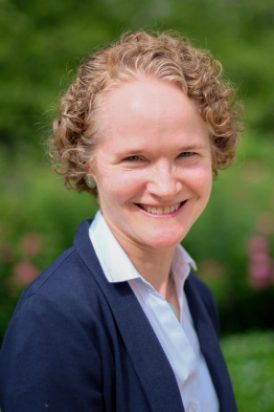
Victoria Booth is a Professor of Mathematics and Associate Professor of Anesthesiology at the University of Michigan, serving as Associate Chair for Regular Faculty in the Department of Mathematics. She holds a B.A. from Smith College (1986) and a Ph.D. from Northwestern University (1993). Her research integrates mathematical modeling to study neural mechanisms underlying sleep regulation, acetylcholine dynamics, and circadian rhythms in pain processing. Key projects include modeling sleep-wake networks, cholinergic modulation of hippocampal activity, and the interplay between homeostatic and circadian processes. She collaborates across disciplines, with affiliations in both the College of Literature, Science, and the Arts (LSA) and the Medical School. Booth’s work bridges applied mathematics and neuroscience, providing quantitative frameworks for experimental hypotheses. Her lab focuses on developing models to predict neural activity patterns and inform clinical insights.
Education:
- B.A., Smith College, 1986
- Ph.D., Northwestern University, 1993
Research Interests:
Her research emphasizes mathematical analysis of neural systems at multiple scales, including single-neuron dynamics and large-scale network interactions. Current projects address sleep consolidation in children, acetylcholine’s role in synaptic plasticity, and circadian modulation of pain sensitivity. She employs differential equations, nonlinear dynamics, and numerical simulations to explore these topics.
Grants & Advising:
Booth has secured funding from the NSF for multiscale modeling of sleep-circadian interactions. While no specific student names are listed, she advises graduate students in applied mathematics and mathematical biology. Her work frequently appears in journals like *Journal of Neuroscience* and *PLoS Computational Biology*.
Labs/Teams:
Her research group collaborates with neuroscientists and clinicians, focusing on translational models of brain function. Projects often involve interdisciplinary teams studying sleep disorders, pain mechanisms, and neural network dynamics.