معرفی
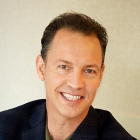
Professor Valerie Pomeroy is a leading academic in neurorehabilitation at the University of East Anglia (UEA), where she holds the Chair in Neurorehabilitation within the School of Health Sciences. She is a member of the Norwich Institute for Healthy Aging, Lifespan Health, and leads research in acquired brain injury rehabilitation. Her work is supported by major funding bodies including the National Institute for Health and Care Research (NIHR) and NHS boards.
- PhD, University of Southampton, School of Medicine
- BA, GradDipPhys, Cambridge School of Physiotherapy
- Professional Qualifications: FCSP, Member of Association of Chartered Physiotherapists in Neurology, Society for Research in Rehabilitation, Stroke Society of Australasia
Her research focuses on personalized neurorehabilitation, particularly in stroke recovery and rehabilitation. She investigates movement control, neural correlates of therapy response, and the mechanisms underlying impairment and recovery. Her program emphasizes Phase I and II clinical trials to inform larger efficacy studies, integrating biomechanical and neurophysiological methods. She actively explores functional strength training, telerehabilitation, and novel neuromodulation techniques.
Recent publications highlight her work in telerehabilitation, mirror movement therapy, kinematic assessment of movement, and neurophysiological monitoring post-stroke. Her studies span dose-finding trials, reliability assessments, and protocol development for large-scale interventions. The overarching trend is toward precision rehabilitation—understanding which therapies work, for whom, and under what conditions.
Scientific contributions include editorial leadership and national policy input:
- Associate Editor, Physiotherapy (since 1998)
- Contributor to national and international reports/position papers (since 2007)
Professor Pomeroy leads or collaborates on multiple active research projects, including NIHR-funded trials on spatial neglect (SIGHT), brain injury rehabilitation, and the neural mechanisms of mirror therapy. She supervises and collaborates with a broad team of researchers, though specific students are not listed. Her work is conducted through the Acquired Brain Injury Rehabilitation Alliance at UEA, where she integrates clinical innovation with scientific rigor.