معرفی
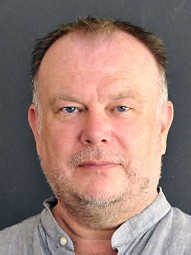
Ulrich Willems is a Professor for Political Theory with a special focus on Politics and Religion at the University of Münster (Westfälische Wilhelms-Universität Münster). He serves as Principal Investigator in the Cluster of Excellence 2060 "Religion und Politik. Dynamiken von Tradition und Innovation" and is a member of the General Assembly. Previously, he was Principal Investigator in Cluster of Excellence 212 "Religion und Politik in den Kulturen der Vormoderne und der Moderne" from 2008-2018 and served on its board from 2009-2018. He has held leadership positions including Executive Director (2018-2020) and Deputy Executive Director (2016-2018, 2008-2010) of the Institute for Political Science at the University of Münster.
Willems' research centers on political theory, particularly examining the political and legal constitution of culturally and religiously plural societies. His work explores democracy theory, politics and religion, religious policy, political sociology, and biopolitics. He investigates how modern democracies can maintain political stability while accommodating religious diversity, analyzing concepts like the modus vivendi as frameworks for religious-political order. His scholarship addresses tensions between secularism and religious pluralism, examining how religious arguments function within liberal democracies and how religious freedom can be reconciled with political unity.
His extensive publication record shows consistent scholarly output with 15 recent publications (2012-2023) demonstrating thematic continuity in religious pluralism, secularism, and political theory. His work spans theoretical political philosophy, empirical analysis of religious policy, and practical examinations of religious freedom in contemporary politics. The publications reveal a methodological diversity combining normative political theory with empirical political science approaches, particularly in analyzing German and European contexts of religion-state relations.
Willems has supervised numerous doctoral students whose research topics reflect his own scholarly interests, including religious pluralism, secular state theory, deliberative democracy with religious arguments, religious policy, and religious diversity in political contexts. His academic leadership extends to directing research centers including the Centrum für Religion und Moderne (2012-2016) and co-leading the graduate school "Religiöse Pluralität und ihre Regulierung in der Region" since 2016.