معرفی
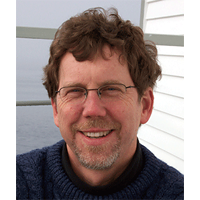
Timothy D. Herbert is the Henry L. Doherty Professor of Oceanography and Professor of Earth, Environmental, and Planetary Sciences at Brown University. His research focuses on reconstructing Earth's climatic history, particularly oceanic responses to perturbations across timescales. He investigates ocean surface temperatures, ecosystems, and greenhouse gas dynamics using fieldwork, sea expeditions, and laboratory analyses of biomarkers and isotopes. Herbert's work emphasizes the Neogene period, exploring Antarctic deglaciation and the transition to ice ages. He has been recognized with prestigious awards, including the Salomon Award (2023) and AAAS Fellowship. His teaching includes courses on Earth’s climate evolution and ocean biogeochemistry.
Education
- B.S., Yale University, 1980 (Magna Cum Laude)
- Ph.D., Princeton University, 1987
Research Interests
Herbert’s research integrates geochemical proxies (e.g., alkenones, stable isotopes) with sediment core analysis to study Plio-Pleistocene climate shifts, ocean-atmosphere interactions, and the role of CO₂ in glacial cycles. His recent projects include investigating seafloor spreading impacts on sea levels and the Mediterranean’s climatic evolution during the Miocene.
Publications Overview
His articles emphasize oceanographic reconstructions, such as Pliocene westerly wind patterns and Miocene sea surface temperature gradients. Key themes include the interplay between tectonic processes and long-term climate trends, as seen in studies on seafloor spreading slowdowns and CO₂ degassing effects.
Awards
- Henry L. Doherty Professorship (Brown University)
- Fellow, AAAS
- Salomon Award (2023)
Grants & Funding
Herbert leads NSF-funded projects on dust-climate feedbacks, Pliocene glaciations, and high-resolution equatorial Pacific studies. He also directs outreach initiatives like the GK-12 program linking environmental science to Providence schools.
Labs & Collaborations
His lab collaborates with institutions globally, including IODP expeditions for deep-sea core sampling. Partners include researchers at the University of Massachusetts Dartmouth (Altabet), Woods Hole Oceanographic Institution, and international universities.