معرفی
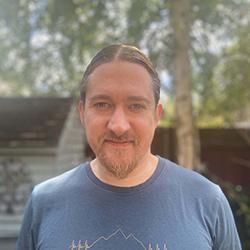
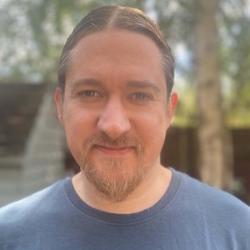
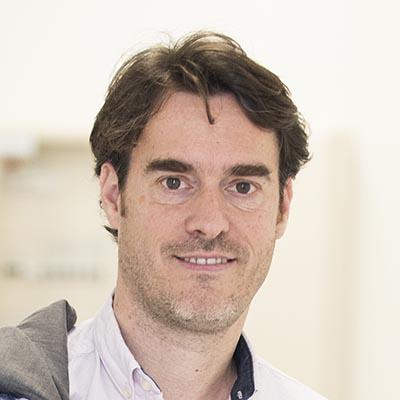
Dr. Thomas Hiscock is a Senior Lecturer in Systems Biology at the Institute of Medical Sciences, University of Aberdeen, within the School of Medicine, Medical Sciences and Nutrition. He leads an active research group focused on understanding developmental processes through mathematical modeling and computational approaches. His work bridges theoretical physics and developmental biology to unravel how embryos self-organize into complex adult forms.
- University of Cambridge: B.A., M.Sci in Theoretical Physics
- Harvard Medical School: Ph.D. in Developmental Biology
- University of Cambridge: Postdoctoral research with John Marioni and Ben Simons
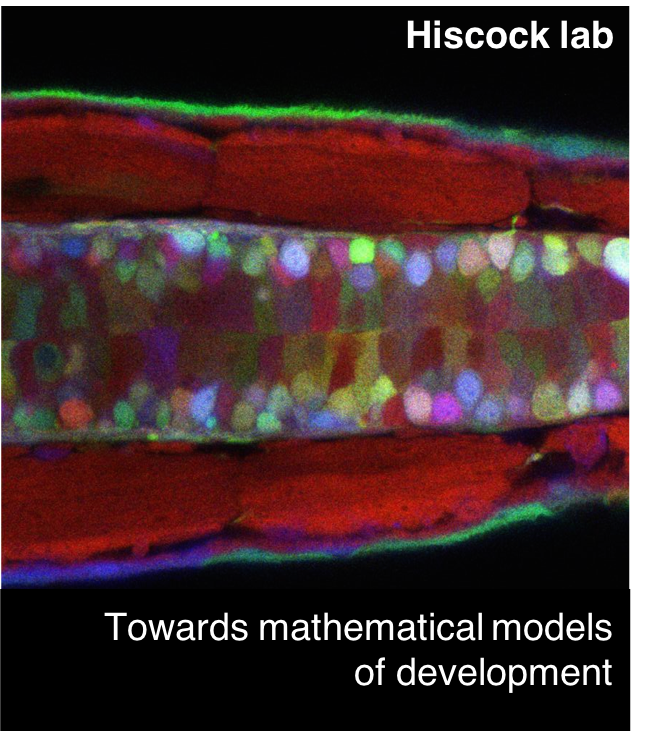
Dr. Hiscock's research centers on self-organization in embryonic development, particularly how spatial patterns emerge through reaction-diffusion mechanisms and other self-organizing processes. His lab develops mathematical models (often partial differential equations) to understand pattern formation in developing embryos. The group takes a theory-led approach where mathematical frameworks not only validate biological observations but also generate new hypotheses for experimental testing. Current projects investigate stripe orientation mechanisms, generic properties of Turing-like patterns, limb development, and non-periodic pattern formation, supported by an ERC Starting Grant.
His publication record shows a strong trajectory in developmental biology and mathematical modeling, with significant contributions to understanding Turing mechanisms in vivo, particularly in limb development. Key findings include identifying bona fide Turing mechanisms operating in developing limbs and discovering how dynamic morphogen gradients orient cartilage rings in airways. His work demonstrates how theoretical approaches can bridge molecular mechanisms with emergent tissue-level patterns.
- ERC Starting Grant for research on novel self-organizing mechanisms
Dr. Hiscock actively mentors PhD students and postdocs, currently supervising Daniel Muzatko and Paula San Martin Blanco (PhD students) and Bijoy Daga (postdoc). His group collaborates extensively with experimental labs including those of Cliff Tabin at Harvard and Ben Steventon at Cambridge. He welcomes new students interested in applying computational methods to developmental biology problems and supports applications for independent fellowships. The lab culture emphasizes systematic exploration and celebrates the process of discovery, using metal detecting as a metaphor for scientific research.
The Hiscock Lab is embedded within Aberdeen's strong developmental biology community, benefiting from proximity to Scotland's natural landscapes which inspire their work on biological pattern formation.