معرفی
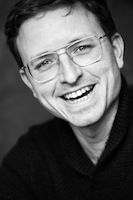
Thomas Hecken is a Professor of Modern German Literature, with a specialization in Pop and Popular Cultures, at the University of Siegen’s Faculty of Arts and Humanities. He has held this position since 2017, following a temporary professorship from 2012 to 2017 and prior substitute roles at the Universities of Bochum and Siegen. A leading scholar in the field of pop culture studies, he is co-editor of the journal Pop. Kultur und Kritik and its digital platform pop-zeitschrift.de since 2012.
His research focuses on aesthetic theory, conceptual history, artistic avant-gardes, and the theory and history of popular and pop cultures. These interests are reflected in his extensive body of work, including around 200 articles and 15 books, many of which explore the intersections between high and low culture, media forms, and cultural legitimacy.
His recent publications (2021–2024) demonstrate a sustained engagement with the mechanisms of popularity, including rankings, charts, and public attention. He examines diverse cultural forms such as pop art, late-night shows, quiz shows, pop music, and journalism, often questioning the boundaries between art and popular culture. Collaborations with scholars like Niels Werber and Marcus S. Kleiner highlight his interdisciplinary approach.
Thomas Hecken has been actively involved in multiple research groups, including A02, A06, AG1 Theorien des Populären, FW5 Fallanalysen, and CRG projects on 'Billige Bücher um 1970' and 'Listen, Rankings, Charts. Zur Behauptung von Popularität'. These affiliations underscore his central role in current German-language research on popular culture.
He has not received any explicitly mentioned scientific awards in the provided text. However, his sustained scholarly output and editorial leadership indicate significant recognition in his field.
While no formal advisees or grant projects are listed, his ongoing research, editorial work, and participation in collaborative projects suggest an active academic profile. He is deeply embedded in the study of popular culture through structured research groups and interdisciplinary collaborations, contributing both theoretical and historical perspectives to the field.