معرفی
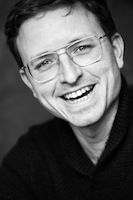
Prof. Dr. Niels Werber is a faculty member in the Department of German Studies at the University of Siegen, within the Philosophical Faculty. He is a leading figure in the Collaborative Research Center (SFB) 1472 'Transformationen des Populären' and has founded the Research Center 'Populäre Kulturen'. He leads Project A01 on serial politics in pop aesthetics, focusing on superhero comics and science fiction novels like Perry Rhodan.
His educational background includes a doctorate (1993) and habilitation in German Philology (2001), with an expanded venia legendi in Media Studies. He was appointed Professor for Modern German Literature at Siegen in 2008.
Werber's research centers on popular culture, the dynamics of popularity, seriality, fan practices, paratexts, and the ideological implications of media forms. He investigates how popularity is constructed, maintained, and contested, especially through digital platforms, rankings, and social media. His work critically engages with the high/low cultural divide and explores how populism and media practices shape public attention.
His recent publications analyze Donald Trump’s media strategies, Taylor Swift’s fan culture, Tolkien’s Middle-earth, and the mechanisms of depopularization. These works reveal a consistent focus on the political dimensions of popularity, the role of rankings in amplifying visibility, and the transformation of cultural legitimacy in digital environments.
Scientific awards or fellowships are not mentioned in the provided texts.
He actively mentors junior researchers such as Niels Penke and collaborates extensively within the SFB 1472. He has no indicated grants listed, but his leadership roles suggest involvement in major funded projects. He participates in podcasts, public lectures, and academic workshops, contributing to both scholarly and public discourse.
Werber is a core member of several research groups, including the Cooperative Research Group (CRG) on 'Listen, Rankings, Charts' and 'Kommentar und Konflikt'. He is also involved in working groups on the politics of pop aesthetics, theories of the popular, and gender and intersectionality. His research is conducted through the Forschungsstelle 'Populäre Kulturen' and the SFB 1472 infrastructure.