معرفی
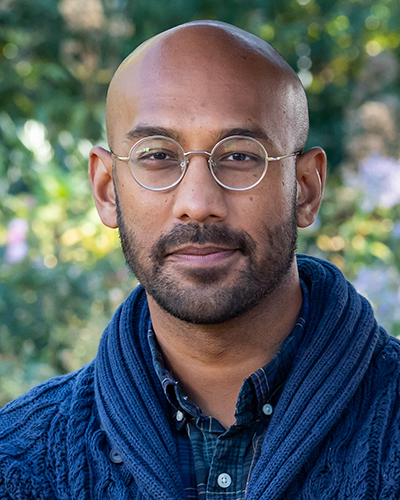
Sujit S. Datta is an Associate Professor of Chemical and Biological Engineering at Princeton University, with a joint appointment at the Omenn-Darling Bioengineering Institute. He leads the Datta Lab, which recently relocated to Caltech. His research integrates soft matter physics, fluid dynamics, and biological systems to address challenges in sustainability, health, and energy.
Education:
- Ph.D., Physics, Harvard University, 2013
- A.M., Physics, Harvard University, 2010
- M.S., Physics, University of Pennsylvania, 2008
- B.A., Physics and Mathematics, University of Pennsylvania, 2008
Research Focus: Datta's work centers on three interconnected areas: (1) Complex fluids in porous media, examining how polymer solutions and colloidal dispersions flow through confined spaces with applications in environmental remediation; (2) Mechanics of porous hydrogels, studying swelling behavior and fracture mechanics for water harvesting and agricultural applications; (3) Microbial collectives, investigating how bacteria move, grow, and form communities in complex environments for bioremediation and medical applications. His approach combines advanced microscopy, microfluidics, and theoretical modeling.
Publication Trends: Recent articles (2019-2022) demonstrate a focus on bacterial dynamics in confined environments, hydrogel mechanics under constraint, and anomalous fluid transport in porous systems. His work consistently bridges fundamental physics with applications in biotechnology and environmental engineering.
Honors and Awards:
- AIChE Allan P. Colburn Award (2023)
- Society of Rheology Arthur B. Metzner Award (2023)
- American Physical Society Early Career Award (2023)
- Camille Dreyfus Teacher-Scholar (2022)
- Pew Biomedical Scholar (2021)
- NSF CAREER Award (2019)
- ACS Unilever Young Investigator (2020)
- Andreas Acrivos Dissertation Award (2015)
Advising and Funding: Current advisees include Anna Hancock and Sanjana Kamath. Major grants support his work, including awards from NSF, ACS Petroleum Research Fund, and Pew Charitable Trusts. His laboratory develops experimental platforms for studying transport phenomena in complex environments.