معرفی
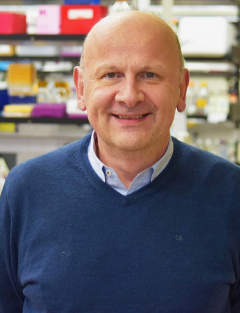
Steven James Mennerick serves as the John P Feighner Professor of Neuropsychopharmacology and Professor of Neuroscience at Washington University School of Medicine, concurrently holding leadership positions as Associate Dean for Biology and Biomedical Sciences and Scientific Director of the Taylor Family Institute for Innovative Psychiatric Research.
Education
- Ph.D., Washington University in St. Louis (1995)
- B.A., Earlham College (1988)
His research program investigates neurotransmitter control of neuronal excitation and inhibition in the central nervous system, with three core projects: (1) cellular responses to neuromodulators affecting synaptic inhibition/excitation, (2) astrocyte influence on neuronal development and function, and (3) engineering dopamine biosensors to study release dynamics. He employs electrophysiological, molecular, and imaging techniques across culture systems, expression models, and intact brain slices to bridge fundamental mechanisms with therapeutic applications.
Analysis of his 2024-2025 publications reveals dominant trends in molecular antidepressant mechanisms (nitrous oxide/SK2 channels), neuroinflammation's impact on hippocampal plasticity, neurosteroid-based psychiatric therapeutics, and GABA receptor modulation in prefrontal cortical networks. These studies consistently integrate synaptic physiology with translational psychiatric applications, particularly for depression and cognitive disorders.
Scientific Awards
- Graduate Student Mentorship Award (2005)
- Klingenstein Award in the Neurosciences (1999)
- NARSAD Young Investigator Award (1999)
Dr. Mennerick actively mentors graduate students, recognized by his 2005 Mentorship Award, and maintains substantial NIH-funded research programs as evidenced by his dedicated funding portal. His grant portfolio focuses on synaptic function in psychiatric disease models and novel therapeutic approaches targeting neurotransmitter systems. He leads collaborative research initiatives through the Taylor Family Institute, emphasizing innovative psychiatric treatment development.
His laboratory specializes in glutamate and GABA synapse function within the mammalian hippocampus, leveraging the region's well-defined neuroanatomy, critical role in learning/memory processes, and vulnerability to neurological diseases to investigate fundamental synaptic mechanisms and pathological alterations.