معرفی
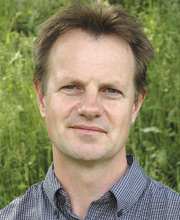
Steve Robinson is an Associate Professor in the Department of Geography and Environmental Science at the University of Reading. His research centers on soil biogeochemistry, nutrient dynamics, and water quality, with a focus on phosphorus cycling in agricultural and wetland systems. He employs remote sensing to model pollution pathways and evaluates organic amendments for sustainable agriculture. He leads international research and collaborates across Europe and Africa, particularly in Ghanaian cocoa systems.
Research Interests:
- Soil biogeochemistry of phosphorus at the soil-water interface
- Nutrient cycling in organic and conventional farming systems
- Environmental impact of agricultural runoff and pollution mitigation
- Use of remote sensing to identify critical pollution source areas
- Valorization of bio-wastes (e.g., cocoa husk, biochar, bone char) for sustainable agriculture
- Wetland restoration and biogeochemical functioning in peat soils
Publication Trends: His recent work emphasizes circular economy approaches in agriculture, particularly phosphorus recovery from waste streams, biochar applications in tropical soils, and sustainable management of cocoa agroecosystems. His interdisciplinary research bridges soil science, environmental chemistry, and sustainable development.
Scientific Service and Collaboration:
- Regular lecturer at the University of Rostock, Germany, under the Erasmus Staff Mobility Programme
- Member of the Science and Horticulture Advice Committee, Royal Horticultural Society
- Extensive supervision of international postgraduate students
- Collaborative projects across the UK, EU, USA, and West Africa
Advising and Grants: Robinson has supervised numerous research projects, especially involving overseas students, and has led significant funded research, including an EU FP6 project on recycling bone meal for sustainable crop nutrition. His work is consistently supported by national and international funding bodies focused on environmental sustainability and agricultural resilience.
Laboratories and Research Groups: He is affiliated with the Environmental Science Research Division at the University of Reading, contributing to interdisciplinary research on soil, water, and ecosystem services. His work integrates field studies, laboratory analysis (e.g., 31P-NMR spectroscopy), and modeling approaches.