معرفی
Stanley M. Hileman, Ph.D., is a Professor at West Virginia University School of Medicine, holding faculty appointments in the Departments of Physiology, Pharmacology & Toxicology, Neuroscience, and the Rockefeller Neuroscience Institute. He also serves as Senior Advisor for STEM Outreach and Engagement at the WVU Health Sciences Center.
Education:
- Ph.D. in Neuroendocrinology, University of Kentucky
Research Interests:
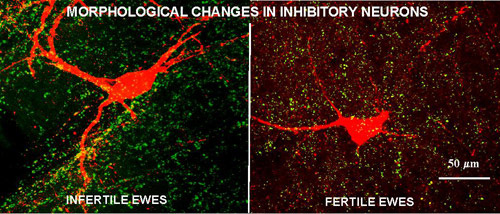
Dr. Hileman's research focuses on neuroendocrine regulation of reproduction and puberty, particularly how nutrition influences fertility through hypothalamic pathways. His lab investigates the roles of leptin, insulin, IGF-1, kisspeptin, neurokinin B, and dynorphin in modulating GnRH secretion. A major emphasis is on sex-dependent differences in metabolic control of reproduction and obesity in females, using sheep and rodent models.
His recent work examines KNDy neurons (co-expressing kisspeptin, neurokinin B, and dynorphin) as central regulators of puberty onset, and how estradiol negative feedback modulates these systems. He also studies nitric oxide signaling and neuroanatomical pathways connecting metabolic cues to reproductive output.
Scientific Contributions & Trends:
His publications from 2015–2021 reveal a consistent focus on neuroendocrine control of puberty in sheep, with increasing emphasis on kisspeptin and neurokinin B signaling, estradiol feedback mechanisms, and sexual dimorphism in reproductive neurobiology. His work bridges basic science and agricultural applications, aiming to improve reproductive efficiency in livestock and inform human fertility treatments.
Student Mentorship & Teaching:
Dr. Hileman directs the Graduate Program in Cellular and Integrative Physiology and has served on over 40 Ph.D. and Master’s committees. He mentors students through NIH-funded programs and contributes extensively to graduate and undergraduate education.
Labs & Collaborations:
He leads a neuroendocrinology lab at WVU and collaborates with Dr. Casey Nestor at North Carolina State University on nutrition-reproduction interactions. His team uses surgical, molecular, and neuroanatomical techniques, including tract tracing, immunohistochemistry, and RT-PCR.