معرفی
Professor Allan E Herbison serves as Professor of Neuroendocrinology and Wellcome Trust Senior Research Fellow within the Department of Physiology, Development and Neuroscience at the University of Cambridge. His work is central to Cambridge Reproduction, an interdisciplinary research initiative focused on reproductive biology. As a Fellow of the Royal Society of New Zealand (FRSNZ), he maintains significant international recognition for his contributions to reproductive neuroendocrinology.
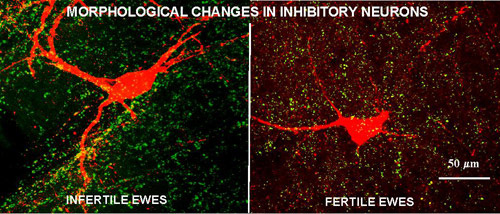
Herbison's research program investigates the neural circuitry controlling fertility, with primary focus on gonadotropin-releasing hormone (GnRH) neurons and kisspeptin neurons. His laboratory employs advanced neuroscience approaches and mouse models to address fundamental questions about how these neural populations generate the pulsatile and surge patterns of hormone secretion responsible for puberty initiation and reproductive function maintenance. Current research examines neural mechanisms underlying infertility conditions like hypothalamic amenorrhea and polycystic ovary syndrome (PCOS), with particular interest in estrogen and progesterone modulation of reproductive circuitry.
Analysis of his recent publications reveals a strong emphasis on neural pulse generator dynamics, kisspeptin neuron synchronization, and translational applications for infertility. His work increasingly integrates optogenetics, calcium imaging, and CRISPR-based molecular techniques to dissect reproductive neurocircuitry with cellular precision. The research demonstrates consistent progression from basic neural mechanisms toward disease models, particularly PCOS and lactational infertility.
Scientific recognition includes:
- Wellcome Trust Senior Research Fellowship
- Fellowship in the Royal Society of New Zealand (FRSNZ)
Herbison's laboratory maintains active collaborations across neuroscience and reproductive medicine, with significant contributions to understanding how stress, metabolic factors, and reproductive states modulate the GnRH pulse generator. Current projects investigate prolactin-mediated suppression of fertility during lactation, noradrenergic modulation of kisspeptin neurons, and evolutionary conservation of reproductive neurocircuitry. His work bridges fundamental neuroscience with clinical applications in contraception and infertility treatment.