معرفی
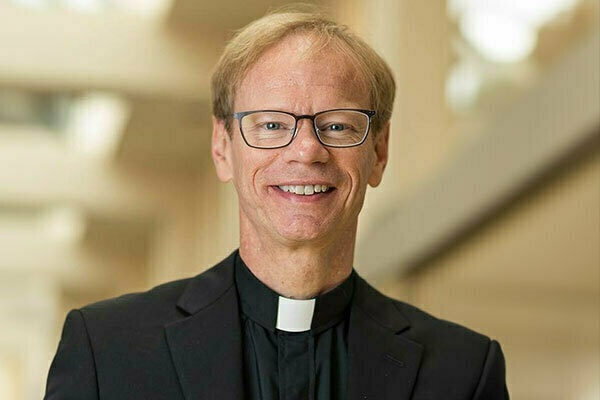
Sebastian Rosato is Professor of Political Science at the University of Notre Dame, where he serves as Director of Graduate Studies. He holds fellowships at the Kroc Institute for International Peace Studies, the Liu Institute for Asia and Asian Studies, and the Nanovic Institute for European Studies. His institutional affiliations demonstrate deep integration with Notre Dame's international research ecosystem.
Professor Rosato earned his B.A. (Honors) in History from Cambridge University, an M.Phil. in International Relations from Oxford, and a Ph.D. in Political Science from the University of Chicago. Prior to graduate studies, he worked at Goldman Sachs in London, providing practical experience that informs his academic work.
His research focuses on international relations theory with particular expertise in foreign policy rationality, great power politics, and European integration. Rosato examines how states make strategic decisions, the role of uncertainty in international conflict, and the political dynamics behind European unification. His theoretical work challenges conventional wisdom about state behavior and decision-making processes in international affairs.
His publications reveal a consistent focus on rationality in foreign policy, with recent work exploring cognitive models of state behavior. The trajectory shows increasing theoretical sophistication, moving from historical analysis of European integration to fundamental questions about how states process information and make strategic choices in an uncertain world.
- Morton Grodzins Prize Lectureship (University of Chicago)
- Reverend Edmund P. Joyce Award for Excellence in Undergraduate Teaching (2013)
- Nobel Fellowship from The Norwegian Nobel Institute (Summer 2012)
Professor Rosato has secured significant research funding from the Charles Koch Foundation (2018-19), University of Notre Dame Office of Research (2016-18), and the Earhart Foundation (2012-13). His work bridges theoretical and empirical approaches to international relations, advising numerous graduate students while maintaining active research collaborations across Notre Dame's international studies institutes. His current projects examine the cognitive foundations of foreign policy decision-making through both historical case studies and theoretical modeling.