معرفی
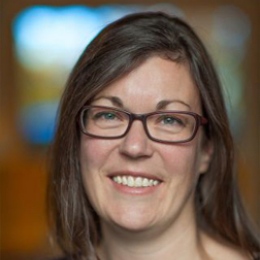
Sarah Greenwood is a Wallenberg Academy Fellow and Research Fellow in Paleoglaciology at Stockholm University's Department of Geological Sciences. She received her PhD in Physical Geography from the University of Sheffield in 2008, focusing on the paleo-glaciology of the Irish Ice Sheet. After completing a post-doctoral position at Stockholm University's Department of Physical Geography & Quaternary Geology, she joined the Department of Geological Sciences in 2010 where she has established herself as a leading researcher in glacial geomorphology and ice sheet dynamics.
Dr. Greenwood's research focuses on investigating ice sheet behavior through the analysis of glacial landforms and landscapes. She works at regional-to-continental scales in both terrestrial and marine environments, utilizing high-resolution digital terrain models and seafloor geophysical datasets to understand past ice sheet flow and retreat dynamics. Her work is particularly relevant to contemporary concerns about marine-terminating ice sheets and their stability in a warming climate.
Her research portfolio includes significant projects funded by the Swedish Research Council (VR), Wallenberg Academy Fellowship, NERC (UK), and the Geological Survey of Sweden. Current projects examine the role of ice-dammed lakes in ice sheet demise, deglacial behavior of the Baltic & Bothnian Seas, East Antarctic ice sheet behavior in the western Ross Sea, retreat dynamics of marine-based ice sheets, and the behavior of outlet glaciers in Lake Vättern, Sweden.
Dr. Greenwood's scholarly contributions reveal consistent patterns in ice sheet retreat mechanisms and grounding line stability across different regions and time periods. Her work demonstrates how high-resolution geophysical data has revolutionized our understanding of glaciated landscapes, particularly in marine environments where former ice sheet sectors can now be investigated for the first time.
- Wallenberg Academy Fellow
As an educator, Dr. Greenwood teaches primarily in the undergraduate distance program in Geoscience, including courses on Palaeoclimatology and the Ocean System, Tellus III – Geology, Field Study in Geoscience, and Geological Sciences field excursions. Her teaching connects theoretical knowledge with practical field applications, emphasizing the importance of understanding past climate systems for interpreting contemporary environmental changes.
Her research group, IGV's Marine Geology group, studies the geology and history of the oceans through analyses of marine sediment archives and submarine landforms, contributing significantly to our understanding of Earth's glacial history and its implications for future climate scenarios.