معرفی
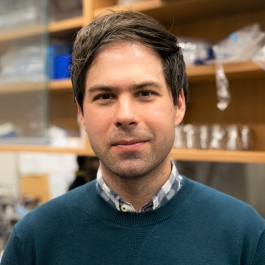
Robert J. Huber is a Professor in the Department of Biology at Trent University. He holds an H.B.Sc. and Ph.D. from the University of Toronto and completed a postdoctoral fellowship at Harvard Medical School and Massachusetts General Hospital. His lab uses Dictyostelium discoideum to study lysosomal function, protein trafficking, neurodegeneration (e.g., Batten disease), and molecular networks. He teaches Cell Biology (BIOL 2070H), Molecular Biology (BIOL 3080H), and Human Cell Biology (BIOL 4130H). His research focuses on translating findings from Dictyostelium to human disease models, with recent work emphasizing CLN proteins, lysosomal dysfunction, and signal transduction. Recent publications highlight his team’s exploration of protein secretion defects, transcriptomic changes in disease models, and the role of CLN proteins in molecular networks. Students in his lab include Samer Mathavarajah, Josephine, and Lexie Northey, supported by grants like NSERC USRA and Canada Graduate Scholarships. The Huber Lab is housed in LHS D244/D246, and Dr. Huber’s office is in LHS D243.
Education:
- H.B.Sc., University of Toronto
- Ph.D., University of Toronto
- Postdoctoral Fellow, Harvard Medical School & Massachusetts General Hospital
Research Interests: His work integrates cell biology and developmental biology, with a focus on lysosomes, intracellular trafficking, and the molecular mechanisms underlying neurodegenerative diseases. Recent advances include characterizing CLN5 and CTSD secretion pathways and linking mfsd8 mutations to altered secretomes. The lab collaborates with institutions like Dalhousie University’s Dellaire Lab, as seen in a 2025 Cell Reports publication.
Advising & Grants: Dr. Huber mentors graduate and undergraduate students, emphasizing translational research. Notable student achievements include Josephine’s NSERC Canada Graduate Scholarship and Sean’s transition to a Ph.D. program. Lab facilities include specialized imaging and molecular biology equipment.
Labs & Teams: The Huber Lab collaborates across disciplines, leveraging Dictyostelium as a versatile model system to bridge basic science and clinical applications in neurodegeneration.