معرفی
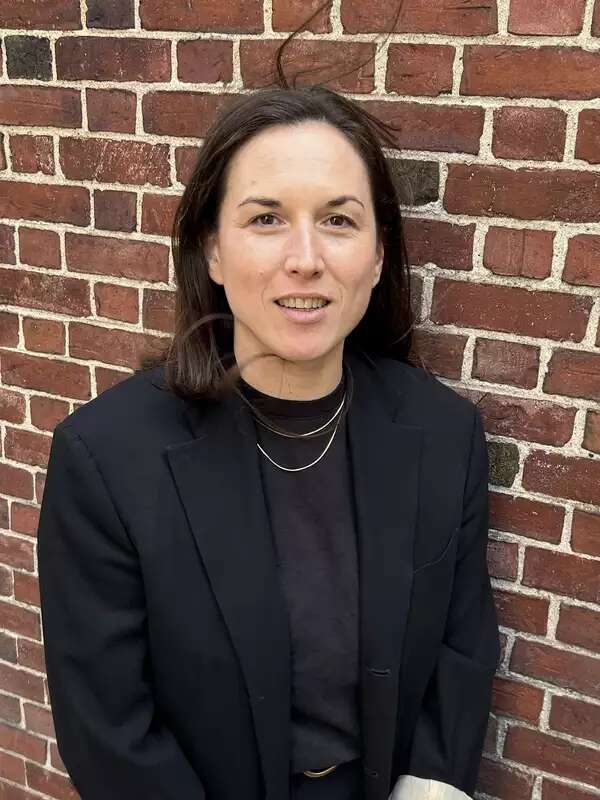
Ria Banerjee is Professor of Comparative Literature at the CUNY Graduate Center, where she also serves as Faculty Awards Director and Deputy Director of the CUNY Academy for the Humanities and Sciences. She is concurrently Associate Professor of English at Guttman Community College, where she teaches developmental writing and literature courses. At the Graduate Center, she is consortial faculty in Liberal Studies and Film and Media Cultures, reflecting her interdisciplinary academic profile.
Dr. Banerjee earned her Ph.D. in English from The Graduate Center, CUNY in 2014, following an M.A. in English from the same institution in 2010. Her undergraduate education includes a B.A. in English, Anthropology, and Film Studies from Bryn Mawr College in 2006, establishing the interdisciplinary foundation for her current scholarly work.
Her research focuses on British and European modernism, film histories and historiography, and writing pedagogy, with particular emphasis on spatial theory in modernist literature and postcolonial perspectives on film. Banerjee's work demonstrates how modernist texts can be productively engaged with contemporary concerns including climate change and social justice. Her monograph Drafty Houses in Forster, Eliot, and Woolf: Spatiality and Cultural Politics (2024) explores how architectural imagery functions in modernist writing to articulate perspectives on art and politics.
Analysis of her recent publications reveals a consistent engagement with postcolonial perspectives on modernism and film, particularly examining how colonial power dynamics operate in cultural production. Her work on Black Narcissus (2025) demonstrates how unscripted elements in film can resist colonialist narratives, while her environmental humanities scholarship connects modernist literature to contemporary climate concerns. This dual focus on historical analysis and contemporary relevance characterizes her scholarly approach.
As an educator at both community college and graduate levels, Banerjee has developed innovative approaches to teaching modernism that connect historical texts to students' contemporary concerns, particularly regarding climate change and social justice. Her work in community college pedagogy demonstrates how humanities education can address student anxieties about environmental crises while maintaining rigorous engagement with literary texts.
.png)