معرفی
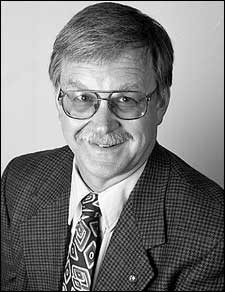
Dr. Randolph J. Nudo serves as University Distinguished Professor and Vice Chair of Research in the Department of Physical Medicine and Rehabilitation at the University of Kansas School of Medicine. He concurrently holds the position of Associate Director at the Landon Center on Aging and the Marion Merrell Dow Distinguished Professorship in Aging.
His educational foundation includes:
- BS in Psychology/Statistics from Pennsylvania State University
- MS in Psychology from Florida State University
- PhD in Psychology/Neuroscience from Florida State University
- Post Doctoral Fellowship in Physiology at the University of California at San Francisco
Leading the Cortical Plasticity Laboratory with continuous NIH funding since 1985, Dr. Nudo investigates neural self-repair mechanisms following brain injury. His research integrates neuroscience with engineering to develop implantable microdevices for neural pathway repair, biomaterials for cranial defect treatment, and wearable imaging systems for brain hemodynamics monitoring. Key focus areas include traumatic brain injury recovery, stroke rehabilitation, and age-related neural changes, utilizing rodent and non-human primate models to explore cortical reorganization and therapeutic interventions.
Analysis of his 2023-2025 publications reveals dominant themes in biomaterial-based therapies for TBI (hydrogels, polymeric drug delivery), advanced neuroimaging techniques (photoacoustic imaging), and closed-loop neuromodulation systems. His work consistently bridges fundamental neuroplasticity research with translational applications, particularly in motor recovery following cortical injury and the development of time-sensitive therapeutic windows for intervention.
Dr. Nudo's scientific recognition includes:
- Fellow of the American Heart Association (FAHA)
- Fellow of the American Society of Neurorehabilitation (FASNR)
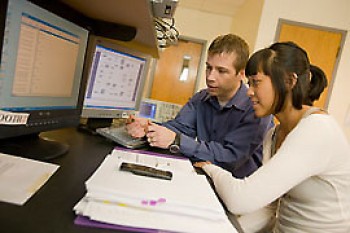
With uninterrupted NIH support since 1985, his laboratory has secured substantial grant funding for neurotrauma research. Though specific advisees aren't detailed in source materials, his Cortical Plasticity Laboratory functions as a collaborative hub for neuroscientists, engineers, and clinicians developing novel rehabilitation technologies. Current projects include patent-pending implantable microdevices and biomaterial systems for neural repair.
The Cortical Plasticity Laboratory drives interdisciplinary innovation through partnerships with biomaterials engineers, imaging scientists, and neurosurgeons. Current initiatives focus on thiolated tissue hydrogels for bone regeneration, closed-loop brain-spinal interfaces, and deep-structure imaging technologies to monitor real-time hemodynamic responses during rehabilitation.