معرفی
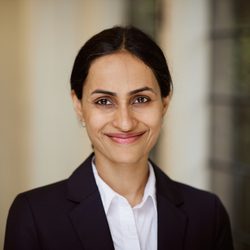
Dr. Radhika Khosla is Associate Professor at the Smith School of Enterprise and Environment and Research Director of the Oxford India Centre for Sustainable Development at the University of Oxford. She also serves as Programme Leader in Zero Carbon Energy Use at Oxford's ZERO Institute and maintains an academic affiliation with the University of Pennsylvania.
Her educational background includes a PhD in Geophysical Sciences from the University of Chicago and undergraduate and master's degrees in Physics from the University of Oxford.
Dr. Khosla's research focuses on critical intersections between energy consumption, urban development, and climate change governance. Her interdisciplinary work examines how societies can improve human well-being while preserving the natural environment, with particular attention to:
- Urbanization, lifestyle changes, and energy use patterns
- Governance approaches for climate adaptation in urban settings
- Accelerating energy transitions in emerging economies
- Equitable approaches to global cooling needs amid rising temperatures
Her recent publications demonstrate a strong focus on sustainable cooling solutions, systemic cooling poverty, and just transitions to net zero. These works span climate science, urban studies, social equity, and policy analysis, reflecting her interdisciplinary approach to addressing fundamental questions of human well-being and environmental preservation.
Scientific Recognition
- Honourable Mention for the Bina Agarwal Prize in Ecological Economics (2023)
- Recognized as one of the 'most influential people' in UK-India relations (2019)
- Editor-in-Chief of the high-impact journal Environmental Research Letters
Dr. Khosla actively engages with policy through roles including Special Scientific Advisor to the UK's House of Commons Environment Audit Committee and membership on the UK Government's UK-India Advisory Board. She has contributed to major international reports including UNEP's Global Cooling Watch (2023), UNEP Emissions Gap Report (2020), and the IPCC's Sixth Assessment Report (2022). Her research has been covered in over 2,700 articles across 53 countries including The New York Times, The Guardian, and CNN.