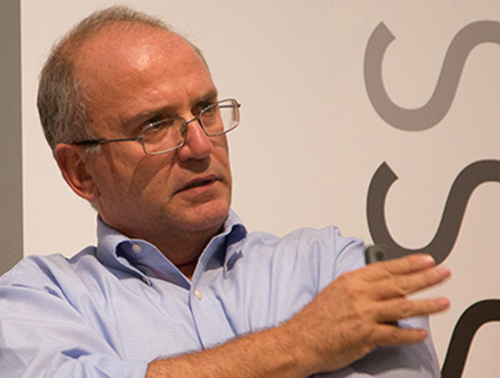
معرفی
Philip Plowright is Professor of Architecture and Department Chair at Lawrence Technological University, where he leads the Department of Architecture. His academic work bridges architecture, cognitive science, and design theory, focusing on how humans conceptualize and create built environments. He is also Editor-in-Chief of ENQ: The ARCC Journal of Architectural Research and a registered architect in Michigan.
Education:
- B.A. (Fine Art), University of Guelph, Canada (1994)
- M.Arch, University of British Columbia, Canada (1998)
- Ph.D. in Cognitive Linguistics, Universidad de Castilla-La Mancha, Spain (2017)
Plowright's research centers around cognitive processes in design methodology and cognitive semantics, with particular interest in defining foundational knowledge for use in pedagogical environments. His work explores how embodied cognition shapes our understanding of space and architecture, examining the relationship between human cognition and the built environment. He investigates how spatial semantics inform design processes and how these concepts can be systematically taught, developing frameworks that connect theoretical cognitive science with practical architectural applications.
His publications reveal a consistent trajectory from individual spatial experiences to urban-scale design principles. The most recent works demonstrate increasing sophistication in connecting cognitive frameworks with design practice, particularly evident in his handbook approach to making complex cognitive concepts accessible for designers and educators. His research shows how universal cognitive patterns shape our built environments across different scales.
Professional Recognition:
- Editor-in-Chief of ENQ: The ARCC Journal of Architectural Research
- Registered architect in Michigan, USA
- International publication record across multiple continents
As Department Chair, Plowright oversees academic programs while maintaining an active research agenda. His international collaborations are evident in his co-authored works and publications in global architecture journals. His methodological approach combines theoretical analysis with practical design applications, creating a bridge between academic research and professional architectural practice. Current research appears focused on expanding cognitive semantics applications to urban design challenges, building on his established foundation in architectural cognition.