معرفی
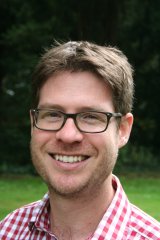
Peter Allen is a Professor of Politics and Co-Director of the Institute for Policy Research at the University of Bath. He has held roles such as Director of Research in the School of Politics, Languages & International Studies (2018–24) and was a member of the University Senate (2020–23). Previously, he worked at Queen Mary University of London and returned to Bath in 2017 after a stint as an AHRC International Placement Fellow at the Library of Congress in Washington D.C. He is also an Associate Member of the Centre for Democratic Engagement at the University of Leeds.
His research focuses on political representation, political ambition, and the societal inequalities shaping who holds political power. Notable projects include the ESRC-funded 'Born Politicians' study (2016–2018) and contributions to the Representative Audit of Britain. He has published two books with Oxford University Press: The Political Class: Why It Matters Who Our Politicians Are (2018) and How to Think About Politics: A Guide in Five Parts (2025). These works explore the social and economic origins of politicians and advocate for greater diversity in political representation.
His recent articles analyze topics like identity politics, political narratives, and gender dynamics across the UK and Europe. He actively engages with media, think-tanks, and interest groups, and is open to supervising doctoral students in political representation, ambition, and political attitudes.
- Scientific Awards: 2016–2017 AHRC International Placement Fellowship at the John W. Kluge Center.
Advising & Grants: Supervises PhD students in political representation and ambition. His research has been funded by the ESRC, AHRC, British Academy, and others. He led the ESRC Future Research Leaders project 'Born Politicians' and contributed datasets like the 2017 Political Ambition in Britain Survey (available via UK Data Service).
Labs/Teams: Affiliated with the Centre for the Study of Violence at Bath and collaborates with the University of Leeds’ Centre for Democratic Engagement. His work intersects with the UN Sustainable Development Goals on reduced inequalities (SDG 10) and gender equality (SDG 5).