معرفی
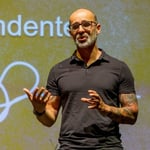
Pedro Vasconcelos is an Associate Professor in the Department of Sociology at the School of Sociology and Public Policy, ISCTE – University Institute of Lisbon, and an Integrated Researcher at CIES-Iscte, Center for Research and Studies in Sociology, affiliated with the 'Gender, Life Course and Health' research group. He has been teaching since 1996 and holds a PhD in Sociology from ISCTE (2011), a Master’s in Social Sciences from ICS-UL (2002), and a Bachelor’s in Sociology from ISCTE (1995).
- PhD in Sociology, ISCTE-IUL, 2011
- Master's Degree in Social Sciences, ICS-UL, 2002
- Bachelor's Degree in Sociology, ISCTE-IUL, 1995
His research focuses on sociological theory, social inequality, gender, class, racialization, and transgender issues. He explores how gender identities are socially constructed and how structural inequalities shape life trajectories, particularly through intersections of gender, sexuality, and social class. His work critically examines masculinities, femininities, and the political and cultural challenges of trans recognition.
The 15 most recent publications reflect a strong emphasis on gender transformations, trans lives, social elites, and structural inequalities. They span theoretical and empirical studies, often from transnational and life-course perspectives, published in high-impact journals such as Men and Masculinities and Postcolonial Studies. Key themes include trans masculinities, anti-gender ideologies, elite structures, and the materiality of gendered embodiment.
His scientific awards include:
- Scientific Award ISCTE-IUL 2015 – for a Q1 journal article
- António José Saraiva Award (1995)
- Teófilo Braga Award (1995)
Pedro Vasconcelos has advised 12 doctoral students (4 in progress, 8 completed) and 21 master's students. He has led or participated in major research projects such as WED PT - Elites in Portugal and the Erasmus Mundus MFAMILY program. He has also directed multiple academic programs, including the Master’s in Sociology and the Master’s in Interdisciplinary Studies of Gender and Sexuality. His leadership extends to institutional governance, including roles in the General Council and Scientific Committee.
He has organized key scientific events such as 'Trans*Formations: lives and politics beyond the gender binary' (2016) and 'Gender, Sexuality and the Body: critical perspectives' (2013). He is an active member of the European Sociological Association, American Sociological Association, and Portuguese Sociology Association, contributing to the advancement of sociological knowledge in Portugal and internationally.