معرفی
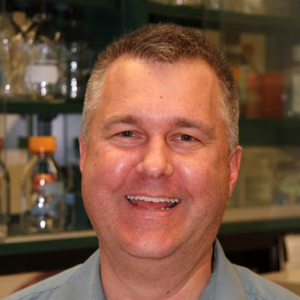
Dr. Patrik M. Bavoil serves as Professor and Chair of the Department of Microbial Pathogenesis at the University of Maryland School of Dentistry, with secondary appointments in Microbiology and Immunology. A leading Chlamydia pathogenesis researcher, he has pioneered work on type III secretion systems and contact-dependent bacterial development models.
His academic training includes:
- Diplôme Universitaire d'Etudes Supérieures (DUES) in Chemistry-Biology, Université de Grenoble, France (1972)
- Maîtrise and Diplôme d'Etudes Approfondies (DEA) in Biochemistry, Université Claude Bernard, Lyon, France (1975-1976)
- Ph.D. in Microbiology, UC Berkeley (1982)
- Postdoctoral Fellowship, UC San Francisco (1982-1984)
- Postdoctoral Fellowship, Stanford University (1984-1987)
Dr. Bavoil's research focuses on molecular mechanisms of Chlamydia infection, particularly type III secretion, polymorphic membrane proteins, and ecopathogenomics. His NIH-funded EPSTI center investigates the triad of Chlamydia trachomatis pathogenomics, vaginal microbiota dynamics, and host genetics through the STING cohort study. Recent publications demonstrate increasing integration of mathematical modeling and multi-omics approaches to understand bacterial development and host-pathogen interactions.
His scientific contributions are recognized through:
- Research Fellowship, American Social Health Association (1982-1984)
- National Research Service Award, NIAID/NIH (1984-1986)
- Research Career Development Award, NIAID/NIH (1992-1996)
- "Professeur Invité" at Institut Pasteur, Paris (1994-1995)
- Fellow, American Academy of Microbiology (2015-present)
As co-director of the NIH-NIAID-funded STI Cooperative Research Center (EPSTI), Dr. Bavoil leads a multi-institutional consortium involving UMB, Duke University, University of Technology Sydney, and University of Idaho. His editorial leadership includes serving as Editor-in-Chief of Pathogens and Disease, and past presidency of the Chlamydia Basic Research Society. His laboratory work centers on the molecular pathogenesis of obligate intracellular bacteria within the Department of Microbial Pathogenesis.