معرفی
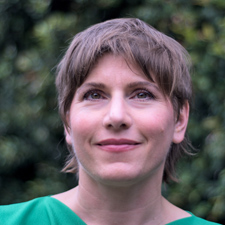
Pamela K. Smith is a Professor of Economics and Management at the Rady School of Management, University of California San Diego. Her research examines power, status, influence, and hierarchical dynamics in social and organizational contexts, with significant contributions to understanding gender representation in workplaces.
Education:
- Ph.D. in Social Psychology, New York University (2004)
Dr. Smith's work investigates how power affects cognitive processing, motivation, and interpersonal behavior. She explores how individuals signal and perceive power through language, nonverbal cues, and decision-making patterns. Her research demonstrates that power increases abstract thinking, alters temporal discounting, and influences social judgments like blame attribution. She also examines gender disparities in professional settings, including women's representation at academic conferences.
Her 15 most recent publications (2016-2025) reveal consistent focus on power dynamics across multiple domains. Key trends include the relationship between power and prosocial behavior, the role of communication medium in signaling power, and gender-based inequities in academic and organizational hierarchies. Publications appear in top journals including Journal of Personality and Social Psychology and Personality and Social Psychology Bulletin.
Scientific Awards:
- No major awards listed in source material
Dr. Smith serves on editorial boards for Journal of Personality and Social Psychology and Social Psychological and Personality Science, having previously held associate editor roles at Personality and Social Psychology Bulletin. While specific grant details aren't provided, her sustained publication record in high-impact journals indicates successful research funding. She mentors graduate students through UCSD's Ph.D. program.
Dr. Smith leads an active research laboratory investigating power dynamics in everyday contexts, with recent work examining how power manifests through vocal pitch, visual communication, and decision-making processes. Her lab's findings have practical implications for leadership development and creating equitable organizational structures.