معرفی
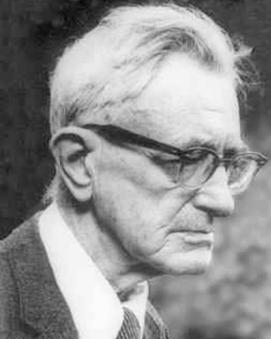
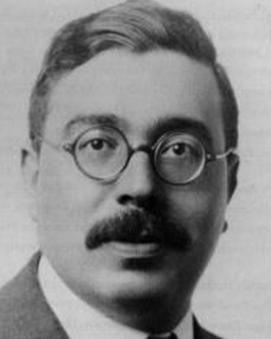
Norbert Wiener was a renowned mathematician and professor at the Massachusetts Institute of Technology (MIT) from 1919 until his death. He is best known as the founder of cybernetics, an interdisciplinary field studying control and communication in animals and machines. Wiener earned his bachelor's degree in mathematics from Tufts University (1909) and a PhD in mathematical logic from Harvard University (1913). His academic career included collaborations with luminaries like Bertrand Russell and David Hilbert.
His research spanned stochastic processes, Brownian motion, and generalized harmonic analysis, with landmark papers such as 'Differential Space' (1923) and 'Generalized Harmonic Analysis' (1930). Wiener received the Bôcher Prize (1933) and later the National Medal of Science (1963). He co-developed the theory of prediction of stationary time series during WWII, which underpinned cybernetics. His 1948 book 'Cybernetics' popularized the field, influencing robotics, automation, and computer science.
Wiener was deeply concerned with the ethical implications of scientific progress, particularly nuclear weapons and AI. His legacy includes the Wiener Award at Tufts for exceptional students and enduring contributions to mathematics and interdisciplinary science.