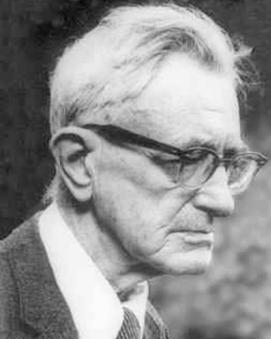
معرفی
Dirk Jan Struik (1894–2000) was an eminent Dutch-American mathematician and historian of mathematics, renowned for his work in differential geometry and socio-historically contextualized mathematical historiography. He held academic positions at MIT from 1926 until his retirement in 1960, attaining the rank of Professor Emeritus. His career spanned collaborations with Norbert Wiener and J.A. Schouten, and his research emphasized the interplay between mathematical advancements and societal contexts.
Education: Born in Rotterdam, Struik studied at the University of Leiden (B.Sc. 1912–1917), earned a doctorate in tensor analysis under J.A. Schouten at Delft (1922), and pursued postdoctoral research in Rome and Göttingen (1924–1926). His political activism, aligned with Marxist principles, led to McCarthy-era persecution, though he was ultimately exonerated.
Research Interests: Struik pioneered the social-historical analysis of mathematics, emphasizing the role of socio-economic factors in its development. His seminal works include A Concise History of Mathematics (1948) and Lectures in Classical Differential Geometry (1950). He also engaged in ethno-mathematics and promoted accessibility of mathematical history to global audiences.
Scientific Awards: Recipient of the Kenneth Ownsworth May Prize (1989), Mexico’s Gold Medal of Achievement (1975), and an honorary role at Harvard’s History of Science Department (1972). His legacy includes contributions to the Dibner Institute and advocacy for academic freedom during the Red Scare.
Legacy: Struik remained active post-retirement, delivering lectures into his 90s and maintaining ties with Tufts University. His centennial tribute in 1994 underscored his dual impact on mathematics and Marxist scholarship. He attributed his longevity to 3M: Marriage, Mathematics, and Marxism.