معرفی
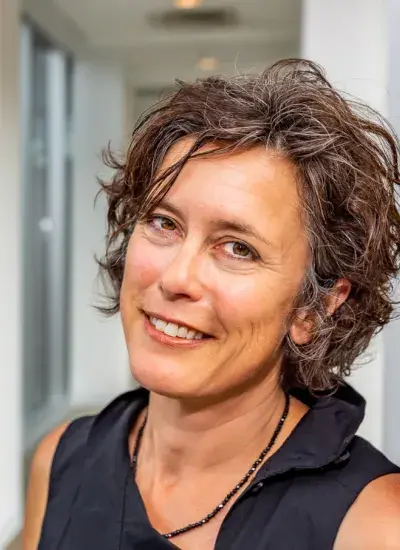
Nesra Yannier is a Senior Systems Scientist at the Human-Computer Interaction Institute (HCII) within Carnegie Mellon University's School of Computer Science. Her interdisciplinary work bridges physical and virtual worlds to create innovative educational technologies that significantly enhance children's learning and engagement across museum exhibits, schools, and community programs.
Her academic credentials include:
- Bachelor's degrees in Physics and Computer Engineering
- M.S. in Computational Sciences & Engineering
- M.A. in Learning, Design & Technology
- Ph.D. in Human-Computer Interaction
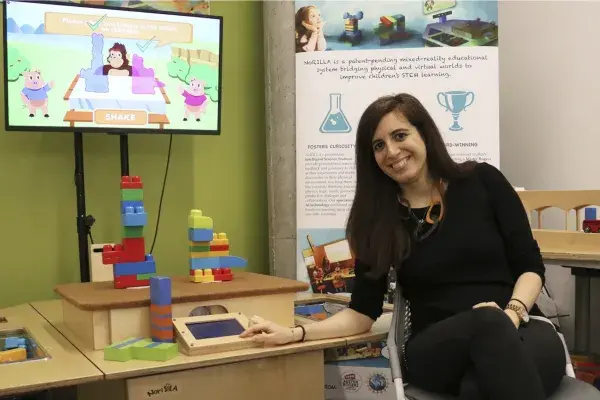
Dr. Yannier pioneers research in educational technology through tangible mixed-reality systems that transform STEM learning. Her work integrates artificial intelligence with physical interaction to create intuitive learning experiences, focusing on how children absorb scientific concepts through hands-on exploration combined with digital feedback. This approach has demonstrated measurable learning gains, with her Intelligent Science Stations improving educational outcomes fivefold compared to conventional screen-based methods.
Her distinguished recognition includes:
- Mister Rogers Scholarship (Emmy’s College Television Awards)
- Innovation Fellowship from Swartz Center for Entrepreneurship
Major funding from the National Science Foundation, PNC Grow Up Great, EQT Foundation, Grable Foundation, and Sprout Foundation has propelled her research from academic prototypes to real-world implementations. These grants support the deployment of her patented NoRILLA system and Intelligent Science Stations across hundreds of educational institutions throughout the United States and Europe, directly impacting millions of learners. Her collaborative projects frequently involve partnerships with museum networks, school districts, and technology developers to scale evidence-based educational innovations.
Dr. Yannier leads interdisciplinary R&D teams that merge expertise in human-computer interaction, learning sciences, and engineering to create next-generation educational tools. Her current initiatives focus on expanding AI-powered adaptive learning systems that respond to children's physical interactions in real-time, with ongoing work to integrate these technologies into broader educational ecosystems through public-private partnerships.