معرفی
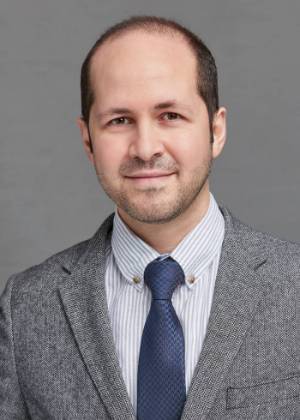
Nathan DeYonker is an Associate Professor in the Department of Chemistry at the University of Memphis, where he has been faculty since 2016. He serves as Director of the Computational Research on Materials Institute at the University of Memphis (CROMIUM) since 2014 and is Faculty Advisor for the University of Memphis Chapter of the Student Members of the American Chemical Society (SM-ACS). His research spans computational chemistry with applications in biochemistry, astrochemistry, and environmental chemistry.
Dr. DeYonker received his B.Sc. in Chemistry with a minor in Astrophysics from the University of Michigan, Ann Arbor in 2001, followed by his Ph.D. in Chemistry from the University of Georgia, Athens in 2005. After completing a postdoctoral appointment at the University of North Texas, he joined the University of Memphis faculty.
Dr. DeYonker's research focuses on three main areas: systematic generation of computational enzyme models, computational astrochemistry, and organometallic catalysis and environmental chemistry. His work in computational enzymology has led to the development of automated tools for building quantum mechanical enzyme models. In astrochemistry, he investigates the electronic structure of inorganic and organometallic molecules relevant to origin-of-life processes. His environmental chemistry research examines thermodynamic properties and mechanisms of complex inorganic and organometallic reactions.
- UMRF Ventures Professorship (2019)
- University of Memphis Michael K. Harless Faculty Excellence Award (2019)
- NSF CAREER award for "The Three R's" (2019-2024)
- Councilor for Memphis ACS Local Section (2021-present)
- Scialog: Chemical Machinery of the Cell participant (2020-2021)
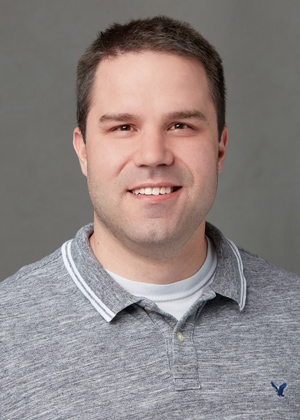
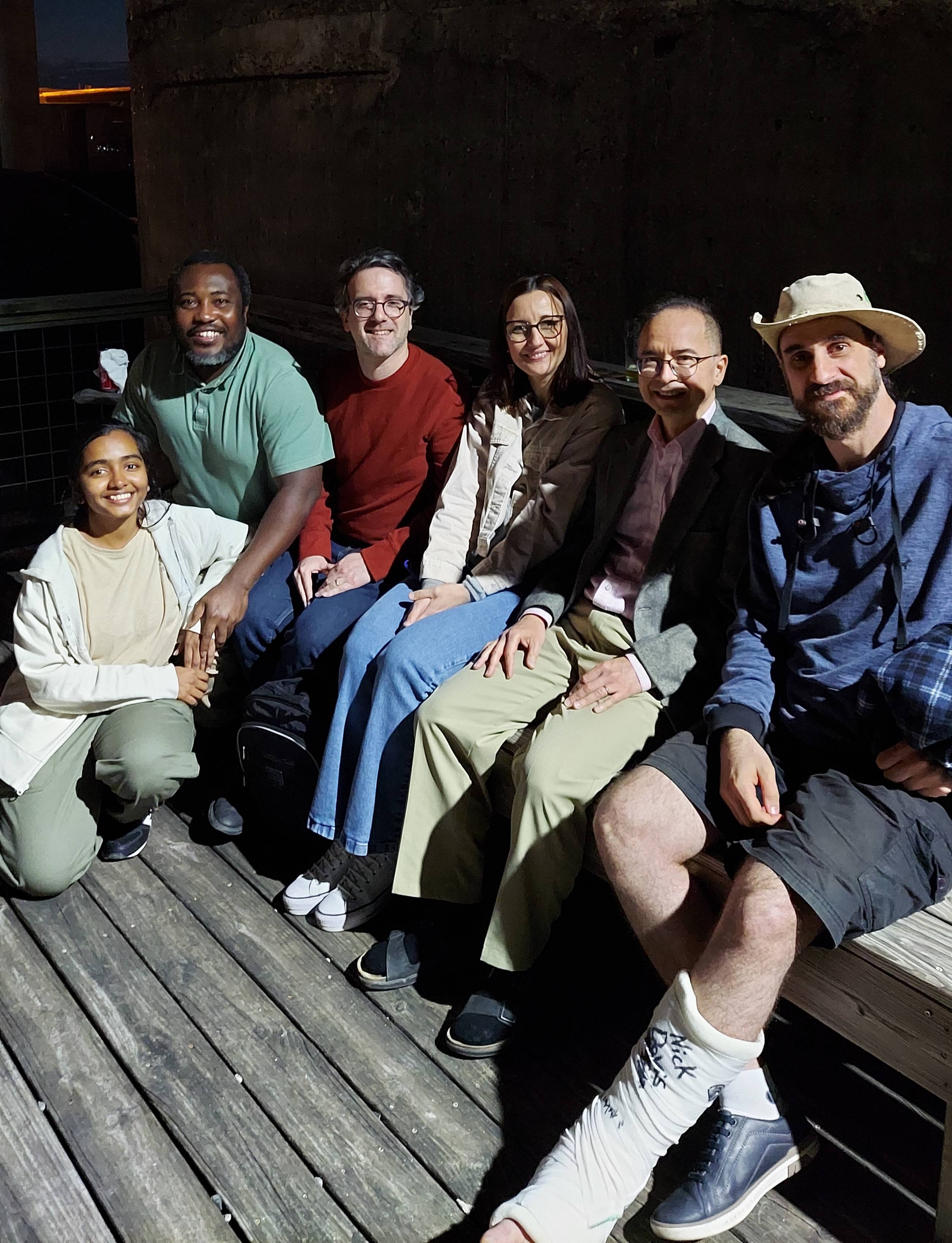
Dr. DeYonker has successfully mentored multiple graduate students to completion of their degrees, including Dr. Atsu Agbaglo (PhD 2024), Dr. Thomas Summers (PhD 2021), and Hannah Lozano (MS 2018). His current research group includes graduate student Haritha Sasi and postdoc Dr. Dominique Wappett. His research is supported by multiple grants including an NSF grant for "Advancing Our Knowledge of the Transition Metal-Carbon Bond" (2022-2025) and the NSF CAREER award mentioned above.
The DeYonker laboratory, also known as the DeYonker Lab, is part of CROMIUM (Computational Research on Materials Institute at the University of Memphis), which he directs. The lab has developed specialized software including the Residue Interaction Network ResidUe Selector (RINRUS) toolkit for building QM-cluster enzyme models. The group maintains active collaborations with researchers at institutions including Ole Miss, Auburn University, and the National Renewable Energy Laboratory.