معرفی
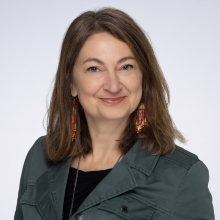
Natasha Ita MacDonald is an Inuit scholar from Nunavik, holding the position of Assistant Professor in the Department of Integrated Studies in Education (DISE) at McGill University's Faculty of Education. Her work focuses on decolonizing academic and healthcare systems, emphasizing culturally responsive practices in Indigenous education and intercultural communication. She is currently completing her Doctorate in Education at Concordia University, expected in May 2025.
Education:
- Doctor of Philosophy (Education), Concordia University (Montreal, QC), Expected 2025
- Masters of Arts in Applied Linguistics, Concordia University
- Bachelor of Education, University of New Brunswick (Fredericton, NB)
Research Interests: Natasha's research explores the intersection of education and Indigenous knowledge systems, employing Indigenous methodologies to innovate pedagogy and healthcare practices. Key areas include decolonizing institutional systems, advancing Indigenous community health, and fostering intercultural communication in contexts such as second-language learning. Her work highlights the critical role of Inuit culture and language in education and healthcare.
Publications Trends: Her most recent articles (2023) center on decolonizing approaches to language learning and intercultural communication within Inuit contexts, leveraging social media as a transformative tool. These works contribute to broader discussions on cultural preservation and systemic change in education.
Awards:
- SSHRC Canada Graduate Scholarships – Doctoral program (2023)
Advising & Grants: Natasha is not currently taking new graduate students for supervision. Specific grant details are not listed in the provided text, but her research likely aligns with funding priorities in Indigenous education and community health. She actively engages with academic and healthcare institutions to promote equity and decolonization.
Labs/Teams: No specific labs or research teams are explicitly mentioned in the text, though her work is deeply collaborative with Indigenous communities and institutions.